Fictions28
The Word for Dust
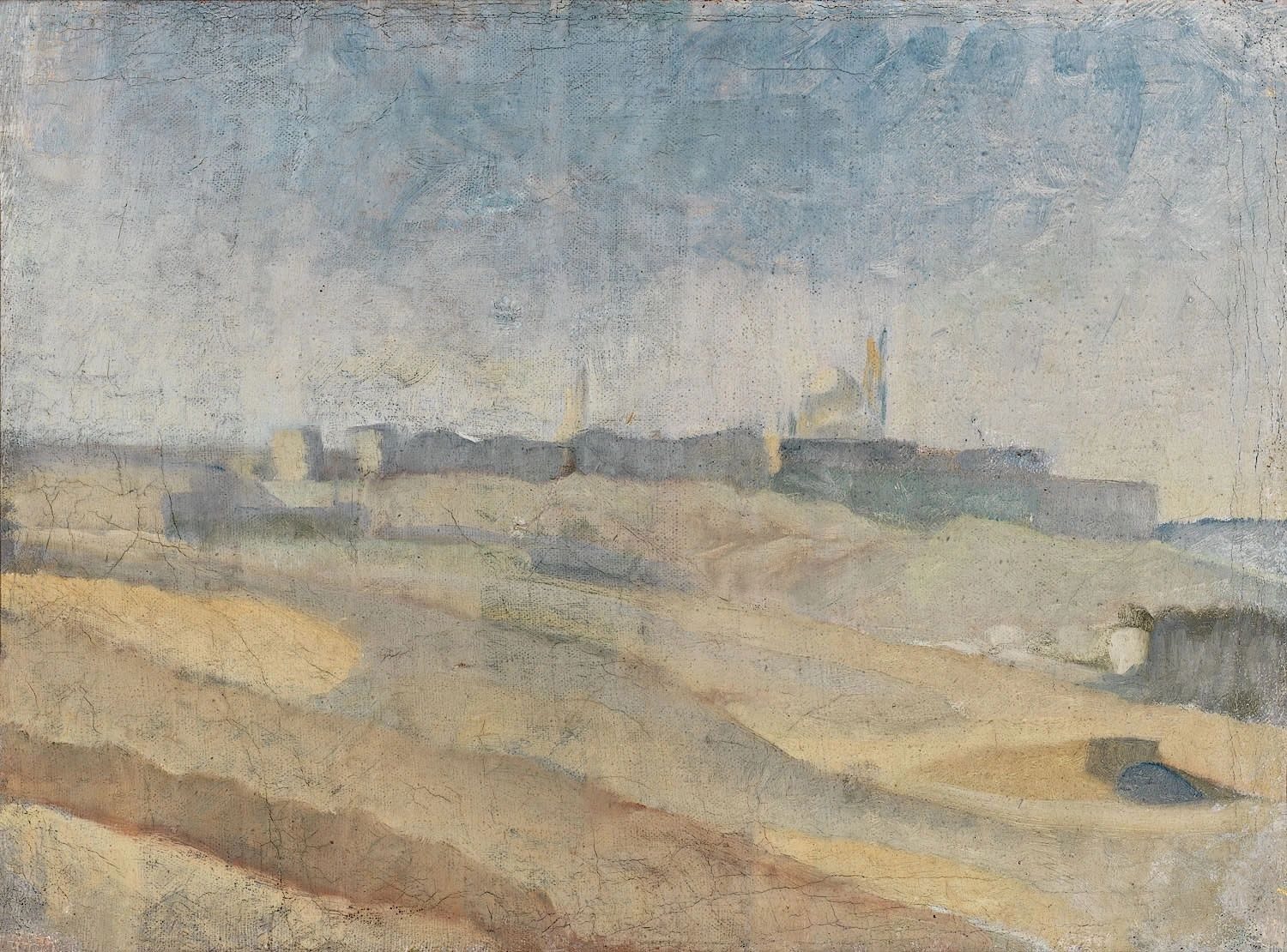
In the highlands of Qashan, there was a word in the local dialect—تلاش (talaash)—that meant something between “dying soil” and “soul leaving the earth.” It couldn’t be translated directly. There was no English equivalent. Maybe decay, maybe despair. But not quite. It was heavier. Sacred. Like grief that never dries.
Mina grew up hearing that word in whispers; when the wheat wouldn’t rise, when the goats died in drought, when her grandfather stood at the edge of the farmland and didn’t speak for hours. The villagers used it like a warning, like a prayer.
No one outside Qashan knew the word existed.
When the multinational mining company arrived, they didn’t ask for it either.
Their trucks came hulking with foreign machines that hummed through the valley like they owned it. Then came the men in neon vests and steel-toed boots, speaking loudly in languages no one in Qashan understood. Engineers set up temporary camps on the village outskirts. The men smoked cigarettes in the evening and laughed like the land didn’t ache beneath them. They drilled exploratory holes, collected soil samples, and laid grids across Ghursaan like it was just another blueprint.
They came with clean boots and laminated permits, pointing to a satellite map and calling it “Zone 4-B.” But to Mina’s family, it was Ghursaan, the spine of the village—where elders collected herbs, where children first learned to name the clouds, where the river once sang before it thinned to a trickle.
“They won’t understand,” Mina’s grandfather had said that day. “Not the land. Not the silence. Not the words.”
The villagers tried anyway. They explained what they could in Qashani, then in broken Urdu, and finally in English pulled from television shows and decades-old textbooks.
“We are… not okay with this,” Mina’s uncle said at a meeting, his hands shaking slightly.
“The earth will bleed.”
One executive smiled and nodded politely. “We understand. But the environmental reports show no significant risk. And compensation will be provided.”
They never used the word talaash.
Because no one asked.
And Mina? She sat in the back of the room, translating in her head and realizing for the first time that there were some things you couldn’t translate at all. Some words only made sense when your hands had pulled the last living plant from the soil and found nothing beneath but dust.
A year later, the river turned the color of ash.
Children developed skin rashes. Women miscarried. The goats wouldn’t drink. A fine grey dust settled over every surface like a second skin. Every breath felt heavier. Like inhaling memory.
Activists came. Journalists, too. Cameras blinked like curious eyes. They wanted soundbites, not stories. A reporter asked Mina, now seventeen and one of the few fluent in English, what she wanted to say to the world.
She looked into the lens and said, “There is a word in our language. Talaash. The soil is dying. We are dying. But it’s not just science. It’s feeling. And no one came to feel it with us.”
The footage went viral for a day.
Then something else happened somewhere else. And Qashan was forgotten.
The mining continued. The dust deepened. The children coughed in their sleep.
At her grandfather’s funeral, Mina stood beside the cracked earth, holding a clump of soil in her palm. It crumbled like dried bread.
“There’s no word for this in their language,” she said.
Her mother nodded. “Then say it in ours. Again and again.”
So she did.
At town halls. At protests. In letters. On school walls. She wrote talaash in black ink on white banners. She made children chant it in classrooms. She carved it into the bus stop pole so that anyone leaving would carry the grief with them.
Some villagers left. Others stayed. The mine expanded.
Years later, Mina became a translator.
Not for tourists. Not for government forms.
For sorrow. For resistance. For every story buried under progress and paperwork. She wrote essays and gave talks. But she never stopped saying the word.
And sometimes, someone would ask her what talaash meant.
She would pause, then answer:
“It means you didn’t listen.
It means we warned you.
It means the earth spoke—
and you mistook it for silence.”
"ابھی وقت ھے، ابھی سانس ھے، ابھی لوٹ آ میرے گمشدھ."