Poems31
A Moment of Stillness: The Sacred in Frost’s "Stopping by Woods"
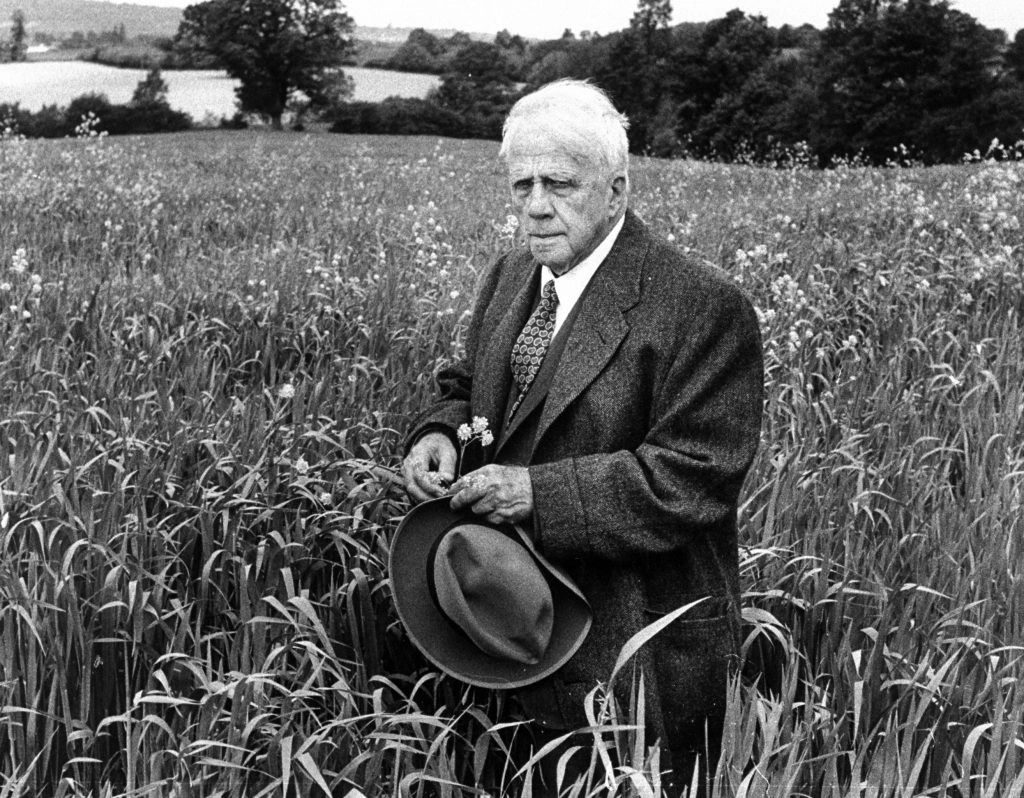
By: Jude Chehab
Stopping by Woods on a Snowy Evening
By: Robert Frost
Whose woods these are I think I know.
His house is in the village though;
He will not see me stopping here
To watch his woods fill up with snow.
My little horse must think it queer
To stop without a farmhouse near
Between the woods and frozen lake
The darkest evening of the year.
He gives his harness bells a shake
To ask if there is some mistake.
The only other sound’s the sweep
Of easy wind and downy flake.
The woods are lovely, dark and deep,
But I have promises to keep,
And miles to go before I sleep,
And miles to go before I sleep.
I always thought that when I’d have a child, they would learn nay before flute, oud before guitar, daf before drum. Darwish before Frost. And now that my daughter is here and I read Frost speaking about woods. Because I look into her eyes, and I am too weak to teach her about stolen land before I tell her about woods on a snowy evening. I cannot bear to tell her about the burnt olive trees before she knows what they are meant to look like. Before she knows what they smell like.
After Frost’s passing, his religious beliefs are still debated. From what I’ve read, honestly not much, as you, the average reader, most probably read Frost in grade school, while I was in an all-girls Muslim school in Lebanon, far from Vermont. But what I need to know is clear - his work is infatuated with nature and death. What God gives and what God takes.
In his short poem Astrometaphysical, he asks God to spare him of hell, for the sake of the love he has for the sky, for God’s creation. A requested reward for loving the heavens, loving the sky. This reminds me of Rabia Al Adawiya’s similar plea: “O my Lord, if I worship you from fear of hell, burn me in hell. If I worship you from hope of Paradise, bar me from its gates. But if I worship you for yourself alone, grant me then the beauty of your Face.”
Astrometaphysical (1947)
Lord, I have loved your sky,
Be it said against or for me,
Have loved it clear and high,
Or low and stormy;
Till I have reeled and stumbled
From looking up too much,
And fallen and been humbled
To wear a crutch.
My love for every Heaven
O'er which you, Lord, have lorded,
From number One to Seven
Should be rewarded.
It may not give me hope
That when I am translated
My scalp will in the cope
Be constellated.
But if that seems to tend
To my undue renown,
At least it ought to send
Me up, not down.
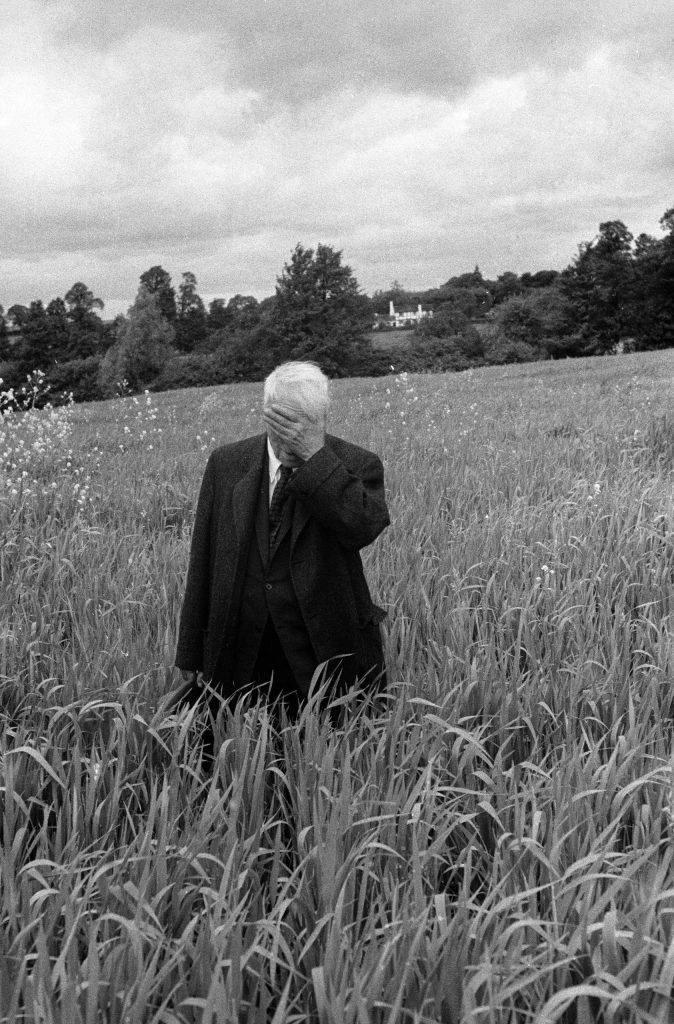
Rabbi Victor Reichert, a close friend of Frost’s and lived only a mile away from him in Vermont, once said when speaking of Frost, “I hear the voice of God in his poems. He was deeply spiritual. He was listening to God.” This is clear in the opening poem of this piece, the one I read to my daughter every day, “Stopping by Woods on a Snowy Evening.” A poem about death written in June of 1922, in his home in Shaftsbury, Vermont - once again far from my Sufi heart in Marrakech and yet so resonant. This moment of stillness in the woods evokes a spiritual moment of reflection and contemplation, akin to tadabbur (contemplation) or tafakkur (reflection). The serene, snow-laden forest becomes a sacred metaphor for spiritual solitude, echoing divine beauty. Yet, the speaker’s decision to return to his “promises” and continue his journey speaks to the Islamic ethos of ʿibādah (worship and devotion) in life. As the poet writes:
The woods are lovely, dark and deep,
But I have promises to keep,
And miles to go before I sleep…
In reference to “I know”: one author said, “By this utterance the traveller is probably proclaiming that he is fully convinced inward about the presence of God. Although you can’t see, touch or hear Him directly by the capacity of physical organs, He can be possibly experienced in one’s inward world by observing the flawless outward working of Him prevailing in nature” (Alam 2019). I feel as though that moment, of stopping, of the pause, the horse asking to keep going, is this moment of utter perfection in life, what more does one want than this perfect snowy evening, and yet, he must continue on as he has many miles before he sleeps. He transcends. And it has been said by one of the noble companions of the Prophet (peace be upon him): "تفكر ساعة خير من قيام ليلة"
An hour of reflection is better than a whole night spent in prayer.
You do not need to place Frost on a religious spectrum. It is not ultimately about Frost, it is about the work and how the work moves you. If a work reminds you of the Divine, then, ultimately, in my humble opinion, it is Godly. We are here to remember, the messenger of the reminder is of incidental importance, it is the reminder that triumphs. Thank you, Robert, for writing on the darkest night of the year.
Robert Frost, American poet, was born in San Francisco, California, and passed away in Boston, Massachusetts, in 1963. His work often explored themes of nature, rural life, and human emotion.
Works Cited
Frost, Robert. 1995. Stopping by Woods on a Snowy Evening. In Collected Poems, Prose, & Plays, edited by Edward Connery Lathem. New York: Library of America. Originally published 1923. Copyright © 1969 by Henry Holt and Company, Inc. Reprinted with permission of Henry Holt and Company, LLC.
Alam, Md. 2019. “Re-Looking at Robert Frost’s ‘Stopping by Woods on a Snowy Evening’ through an Islamic Prism.” Advances in Social Sciences Research Journal 6 (10): 331–39. https://doi.org/10.14738/assrj.610.7112.