Poems33
The Spirit of Iqbal: Jawab-e-Shikwa in English Verse
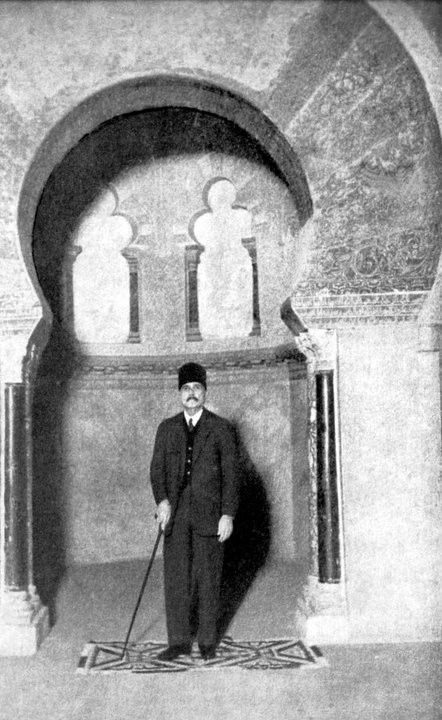
Sir Allama Muhammad Iqbal
Note: The following excerpt is taken from a larger work, originally composed in Urdu. This passage is from Jawab-e-Shikwa, a renowned poetic response by Allama Iqbal, one of the most influential thinkers and poets of the modern Islamic world. While the original text carries the depth and rhythm of classical Urdu poetry, we present here its English translation, allowing a wider audience to engage with its profound themes.
Eternal is the Law of God and Justice is its name,
Should infidels like Muslims live the meed shall be the same.
There is no one among you wants Hourah
Existence is there, not moses
Your nation’s weal, your nation’s woe, in common you all share,
Your Prophet and your creed the same, the same Truth you declare;
And one your Ka’ba, One your God, and one your great Quran;
Yet, still, divided each from each, lives every Mussalman.
You split yourselves in countless sects, in classes high and low;
Think you the world its gifts will still on such as you bestow?
Who now forgetfully neglect My Rasool’s Law sublime?
And whose lives write them clearly down as servers of the time?
To whom now other customs seem far nobler than their own?
By whom your great forefathers’ ways once followed, are forsworn?
Your hearts are now of longing void, your souls now know no zeal,
You have no feelings about the massage of Muhammad
If any fasting’s hardship bear, it is the poor, today;
If worship’s echoes ring in mosques, it is the poor who pray;
It is the humble and the poor who still my name esteem,
Theirs is the word, theirs is the deed, yours the shame they redeem.
The rich are drunk with wine of wealth, their God they hardly know,
It is because the poor yet live that wells of Faith still flow.
That judgment ripe is no more theirs who play your preachers’ role,
Nor kindling accents from their lips, reveal the flaming soul.
Azan yet sounds, but never now like Bilal’s, soulfully;
Philosophy, convictionless, now mourns its Ghazzali,
Untrod by praying feet, the mosques lament their emptiness,
For gone are those exemplars great of Arab godliness
’Tis said: “ The Muslims quit this world, their days are on the wane,”-
The Muslims died out long ago; such a lament is vain.
From Christians you have learnt your style, your culture from Hindus;
How can a race as Muslims pass who shame even the Jews?
You are known as Syed, and Mughal, you call yourselves Pathan;
But can you truly claim as well the name of Mussalman?
The Muslim was sincere of speech, of fear his voice was free;
Just, staunch, he scorned the slightest breath of partiality.
In nature, like a tree, kept fresh by modesty most rare,
Yet braver than the bravest he, intrepid past compare.
Like wine, upon the drinker’s lips, his joy, in losing, lay;
As the cup pours its liquor out, he poured his ‘self’ away.
What the knife is to cankerous growths, to all untruth was he,
His actions, in life’s mirror shone like light, vibratingly.
If he was confident of aught, it was his right arm’s might,
He feared but God, while thoughts of death your craven souls affright.
When sons, lacking their fathers’ worth are neither skilled nor sage,
With what deserving can they claim their fathers’ heritage?
The love of ease, like fumes of wine makes sots of you today,
How dare you pass as Mussalmans? that is not Islam’s way?
Nor Usman’s treasure-chest you own, nor Ali’s empty bowl,
With spirits of such great forbears, what kinship has your soul?
Sir Allama Muhammad Iqbal (1877–1938) was a philosopher, poet, and politician, widely regarded as the spiritual architect of Pakistan. Born in Sialkot, British India (now Pakistan), he was deeply influenced by Islamic philosophy, Sufism, and Western thought. His poetry, primarily in Persian and Urdu, explored themes of self-discovery, revivalism, and the destiny of the Muslim world. His works, including Bang-e-Dra, Asrar-e-Khudi, and Jawab-e-Shikwa, inspired generations with their call for intellectual awakening and self-realization. Beyond literature, Iqbal played a key role in advocating for a separate Muslim state, influencing the creation of Pakistan.