Film as Activism: A Conversation with Iymen Chehade of Uprising
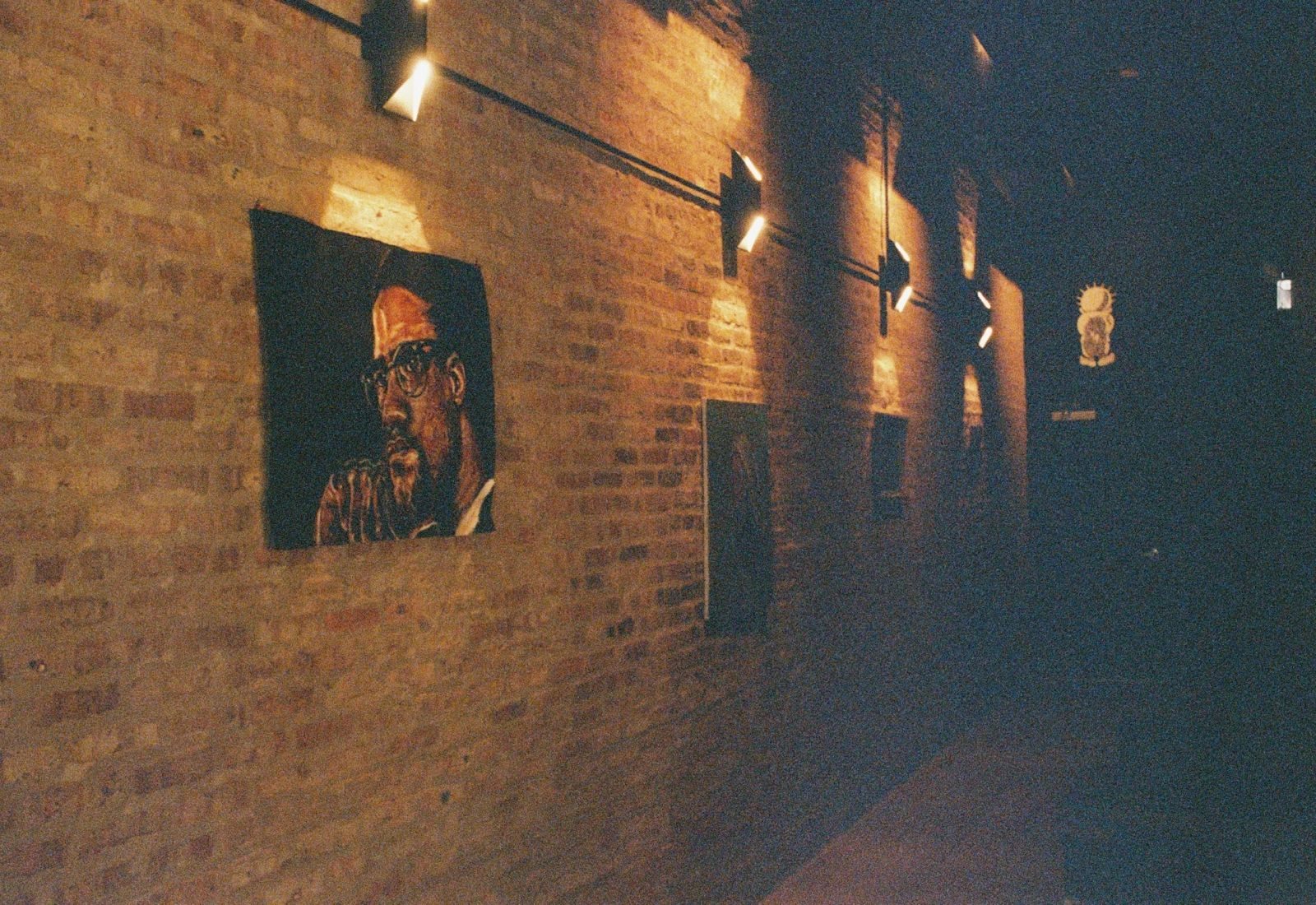
Located on Milwaukee Avenue, six miles northwest of downtown Chicago, Uprising Theater and Cafe is “the first theater in the [United States] to prioritize plays that present the Palestinian experience to the public.” Coupling its baked and caffeinated offerings, Uprising centers and uplifts the speech of Palestinians on their own terms through film and theater. In doing so, the nonprofit reclaims narratives of Palestinian struggle and spotlights the humanity of an occupied and diasporic people.
Founded by Iymen Chehade, Uprising opened its doors in 2025. But the institution's origins can be traced back more than a decade earlier. In 2013, Iymen was teaching at Columbia College, whereafter showing the documentary “Five Broken Cameras” to a class, the college removed his course. This sparked the Respect Academic Freedom: Palestine is No Exception (RAFPINE) campaign. The mission garnered major support, culminating in the reinstatement of his course and laying the groundwork for Uprising.
Underscoring Uprising’s mission is a fundamental conviction in art as resistance, in film and theater as a voice for the oppressed. For Iymen, screens are more than entertainment: they are a tool for shaping political consciousness and spurring collective action. But how exactly can a mission like Uprising open doors to political awareness? What does it mean to be progressive in the face of the Palestine question? Is bearing witness to exploitation the first step towards ending it? The following conversation investigates this philosophy in the context of Iymen’s uncompromising activism.

“You cannot tell professors how to teach their class, as long as they’re not preaching from the pulpit."
[2013] was an important moment… When you’re teaching and your class gets canceled for it, it tells you a lot. It tells you a lot about the environment in which we live, which hasn’t changed much since the class cancellation, which is that it’s very difficult to teach or to discuss Palestine in an honest way. It just is, because there’s always some type of pushback. There’s always accusations of ‘He’s not teaching the class in a balanced way,’ which is impossible, because how do you teach a topic that’s so unbalanced? But since that class cancellation, it’s been less of an issue because of our response, because we said ‘No, we’re not gonna allow you to do this.’
It’s not just a Palestinian issue; it’s an academic freedom issue. You can’t tell professors how to teach their class, as long as they’re not preaching from the pulpit. And so the class cancellation taught me that in institutions, whether in academia, in theater, and especially in politics, this issue [of Palestine] is oftentimes untouched, even by so-called progressives. When it comes to the issue of Palestine, people tend to say ‘Oh, that’s complicated.’ It really isn’t complicated.
[Uprising] is a result of a class cancellation, because even though I got it back, I had to do a campaign. I had to garner thousands of signatures. I had to do math, call-ins, all sorts of things to get the course back. And even though I got it back, I was alarmed. I thought, it’d be nice to have a platform that no one can take from you, where it’s on my own terms. And these platforms are very important because the issue of the Palestinians is very important. It’s often told through the filter of orientalism, even Islamophobia. So you need platforms like this, a platform on my own terms. And it’s not just my speech: it’s [the] speech of Palestinians in general. You can see that now with a theater like [Uprising featuring] films directed, acted, and produced by Palestinians.
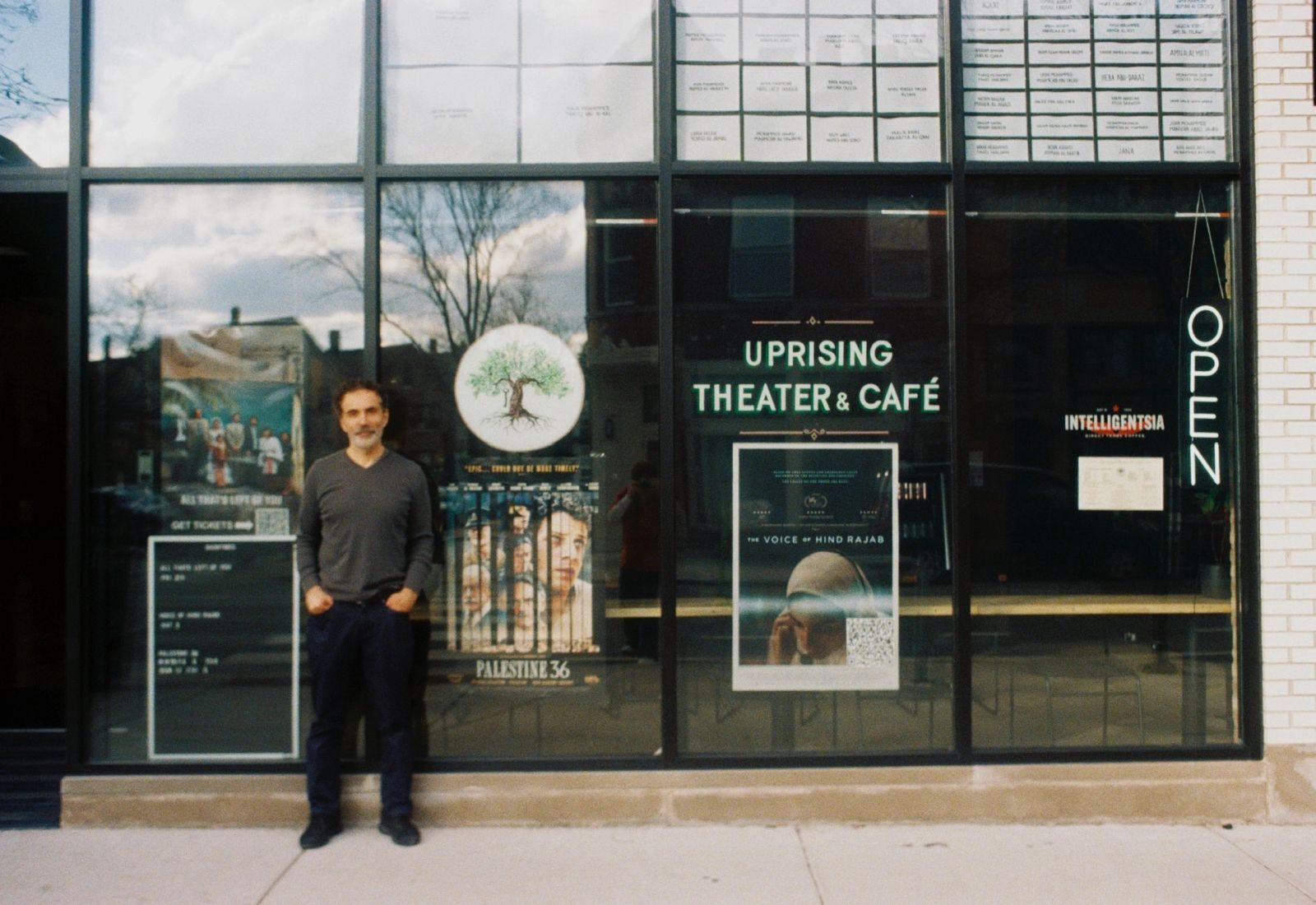
“I believe in the idea of being proactive, of trying to make a bad situation a little better. That’s why I do what I do.”
My father was born about 10 years before the Nakba, and he left [Palestine] at a very young age and went to Brazil as a teenager. You know, towards the end of [your parents’] life, you get to know them more as people than your parents. You get to see them as individuals, and you try to understand them a little bit more in the decisions that they made in life. And I concluded that he’s a very affected and scarred individual. He suffered a lot. Same with my mother. She’s a product of the 1967 war; she was about 11 years old when the Six Day War [happened]. She saw [Israeli] soldiers coming into her village and some of the things that they did there. So she was affected and scarred. And with trauma, there’s a hereditary component to it. It passes from one generation to the other; we live our parents’ experiences. This is the case with the majority of Palestinians, that they carry that with them from one generation to the other.
So it’s been profound. It’s affected my work as well because I believe in the idea of being proactive, of trying to make a bad situation a little better. That’s why I do what I do.
When I was younger, as a first generation Palestinian American, there were these stereotypes. And later on, the stereotypes turn into microaggressions, people being racist and ridiculous without even realizing it. So you have to navigate through that. As far as the city of Chicago, I think that this is a space that’s in the heart of the city. I think people are very interested in what’s happening right now, and they know some bad things are happening, so they want to learn more. And this place is an opportunity for them to do that.
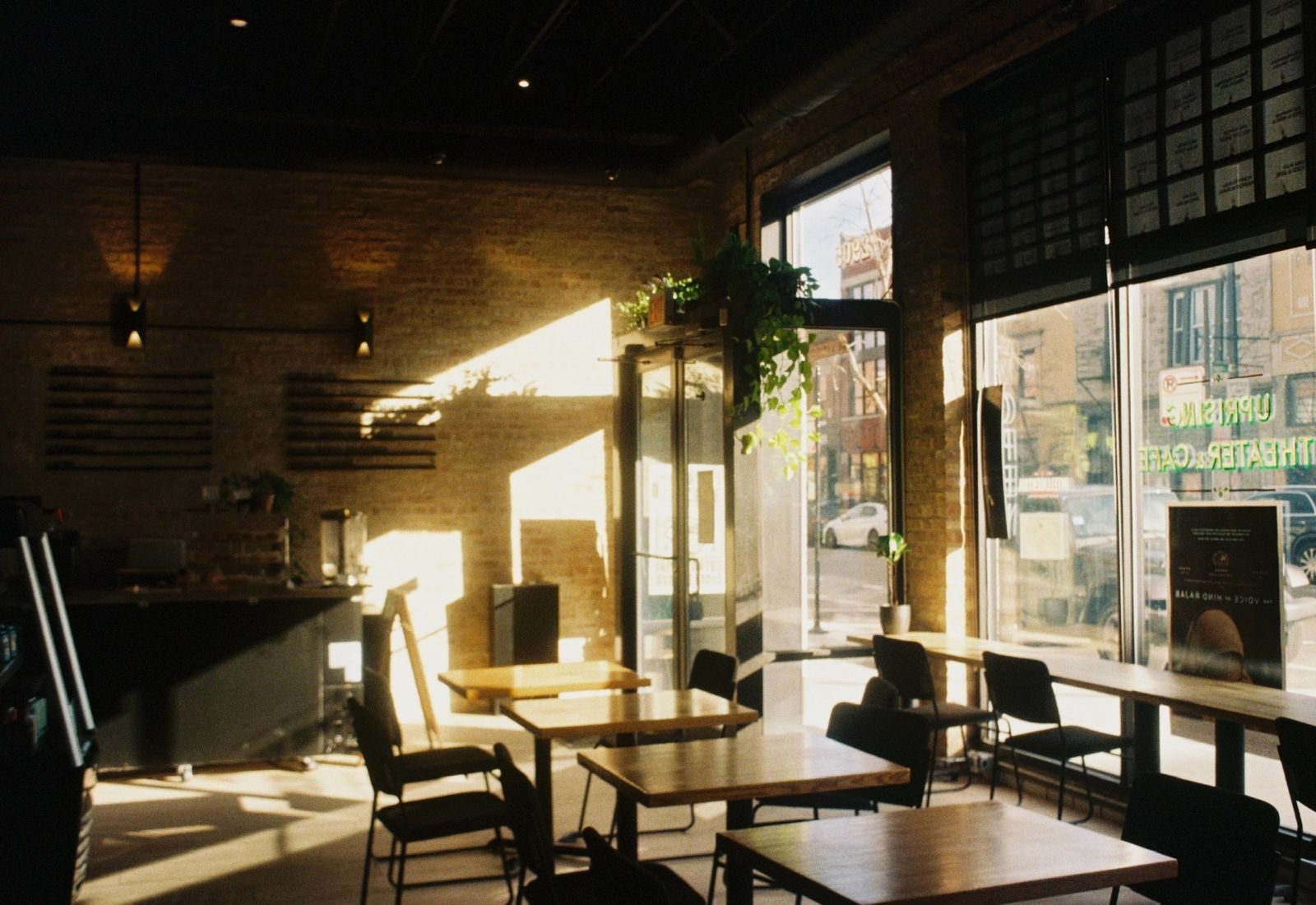
“We [Palestinians] should have ownership of our narrative and Uprising is an opportunity for that.”
[The building] had no roof at one point. You’d walk in and see the sky. Building this space was as a novice; I’m not in construction, I don’t have that kind of background. So I had to learn that as well. There was fundraising and [obtaining] grants, trying to pitch it to people. That’s always difficult, to ask people to build a temple. Once the temple is built, they all come, and they say ‘Oh, we support you.’ But before that, it’s a challenge. Otherwise, I think it’s been positive. We’ve received support on the city and state levels; people have rallied around us. It’s amazing because the majority of the funds that were raised to create this space was actually not from the Palestinian community. It was actually from outside, and that’s great, because it tells you that there is support for our mission and what we’re trying to do in English.
I think [Uprising’s mission] spills over to multiple components. What we do [at Uprising] is we offer the opportunity for people to learn about the Palestinians on our own terms as Palestinian Americans. If you look outside, if you look at the rhetoric that you see on television, [you see] that the president has used the word ‘Palestinian’ as an insult. He did it in the debates against Joe Biden. He called Chuck Schumer a Palestinian in an insulting way. Historically, I don’t recollect one time where it was well intentioned, but if it was, there would be microaggressions or misunderstandings. I have a theater background and have been asked to act in plays that I’ve read, and I think to myself ‘You guys are being racist without realizing it,’ right? So it’s important that the story be told on our own terms, I strongly believe that. We [Palestinians] should have ownership of our narrative and Uprising is an opportunity for that.
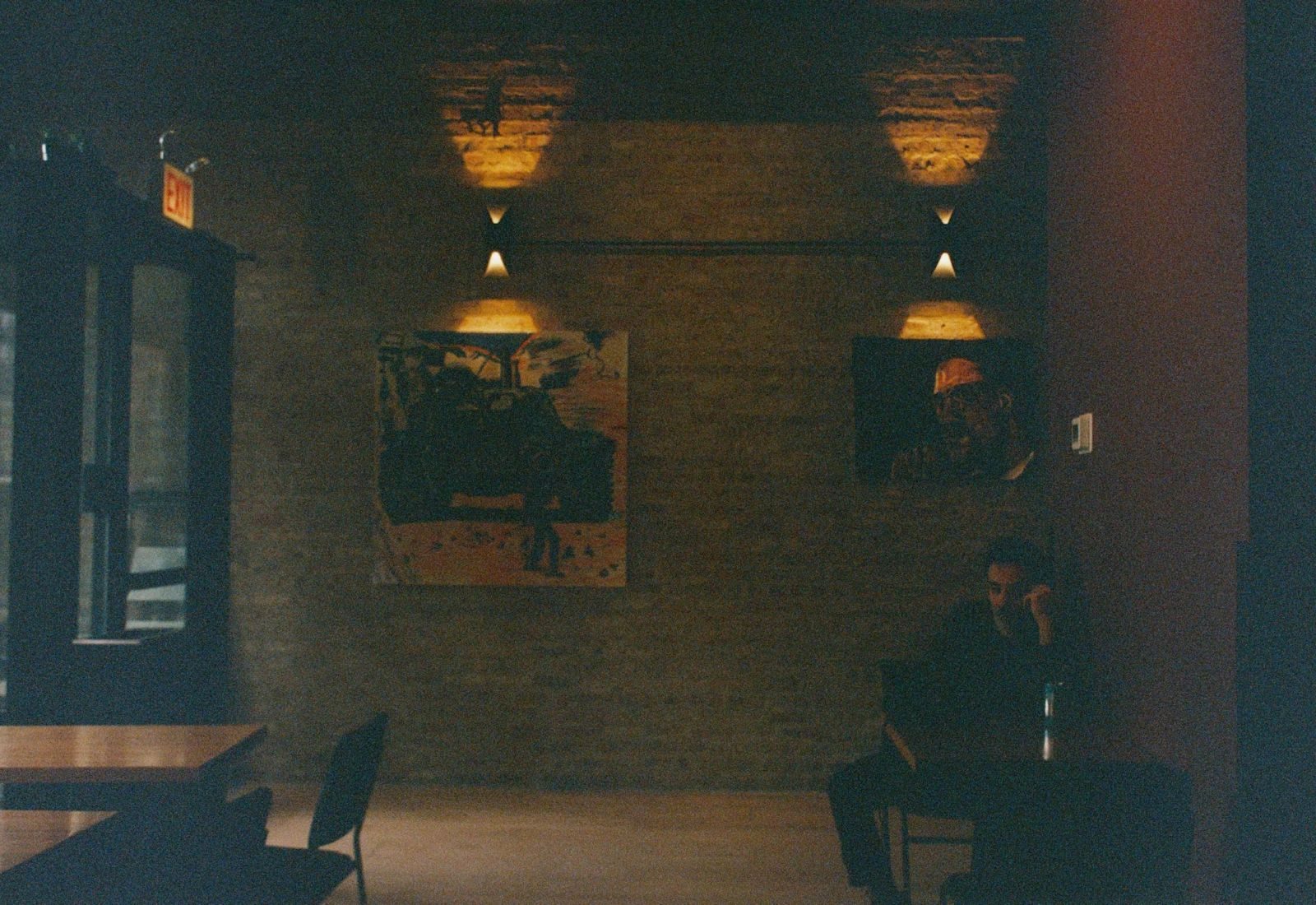
“Its not radical to advocate for humanity.”
We showed the film “All That’s Left of You” to roughly 2000 people, and the majority of them were from outside of the Palestinian community. The responses were like, ‘I didn’t know this was happening,’ ‘This opened doors for me,’ ‘I really want to learn more about this,’ ‘Are there any other shows coming up?’ You’re not necessarily gonna learn everything from a film or a play, but it opens doors because it humanizes Palestinians. And that’s very important, the humanization of a dehumanized population. You’re saying to people, ‘That’s not who we are, this is who we are.’ I think it’s refreshing for a lot of people, even those who have been fed a particular narrative for a very long period.
I don’t think [Uprising’s] mission is radical. Our mission is anything but radical. And if people think that’s radical, they are wrong. How could you be radical when all you want to do is to tell your story on your own terms, without the lens of bigotry, racism, orientalism, or even anti-Palestinianism? In this day and age, people are more upset when you say, ‘Look at the tens of thousands of Palestinian babies who have been killed in this genocide.’ If you advocate for them, you’re often attacked and run out of Hollywood, politics, or academia. It’s not radical to advocate for humanity.
The issue of Palestine is generational; it’s not something that’s going to be resolved quickly over time. When you dehumanize a population, what you do is you extract their humanity, and when you extract their humanity, you get to do what you want to do to them. That’s why you see the ongoing genocide in Palestine. At the height of the genocide, the world didn’t lift their fingers, even the people in the area didn’t lift their fingers because of the dehumanization that has been incurred over the course of time. So there’s a lot of damage, and the idea is that, hopefully, we get bigger and bigger as time goes on in response to that. We should all be doing something to try and take ownership of the narrative.
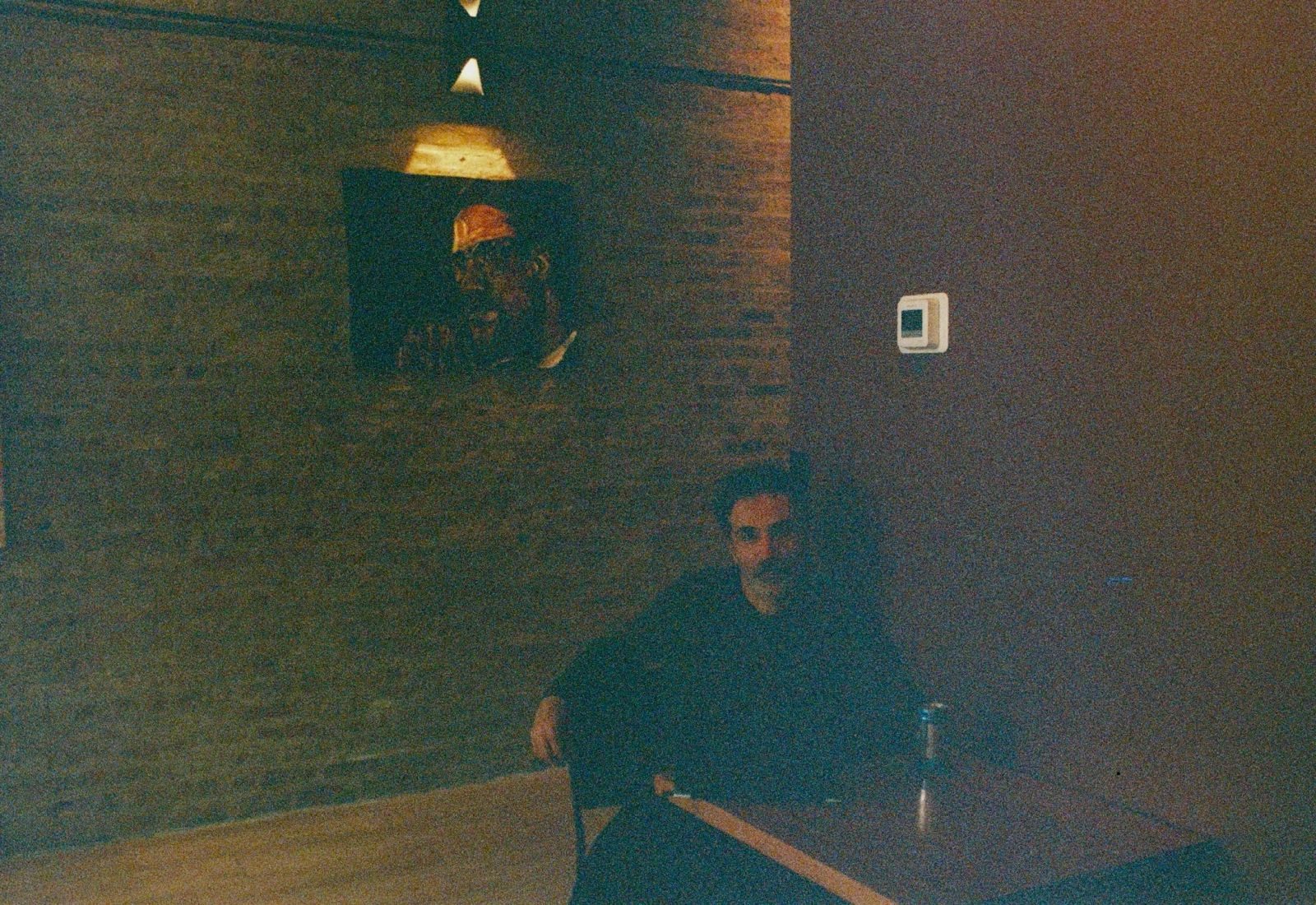
“When I show others, it really changes people’s minds.”
I do think that there is a tradition, a heritage, of the arts as a form of resistance and as a form of the dissemination of knowledge. We’re excited and happy to be a part of that. This initiative is a combination of two components: theater and academia. It is a new initiative, and it is a part of a particular historic movement, but I think it has its own roots as well. There’s really nothing like this in Chicago or in the United States. I don’t know of any Palestinian theater [elsewhere].
It really dawned upon me the first time I showed “Five Broken Cameras.” When you talk about occupation, and you talk about different rules and systems for groups based on their ethnic, cultural, or religious makeup, they don’t know what that entails on the ground. If I’m lecturing to you as an academic, it’s great, but when I show others, it really changes people’s minds. This particular documentary really resonates because it’s a visual frame of reference of the system that exists that oppresses a particular population simply for being that particular population.
I think it’s a good opening, a good way to expose people to the history and the background of the Palestinians. But it depends on the film or the documentary, because no, they’re not all equal. And after that, it’s up to the individual to take it to the next level. You can only do so much to teach them within this space.
“Knowledge is empowerment.”
There’s been so much misinformation about [Palestine], so it’s important to grasp what this issue is really about; you must empower yourself as far as knowledge is concerned. Knowledge is empowerment. As far as what to do, it depends. Action could be joining an organization, even as much as joining a book club. It also depends on what you bring to the table. If you’re a politician, and you want to do something about it, then you have that platform to use. If you’re a journalist, that’s your platform to advocate through. I’m a professor on this issue. I also have a theater. So instead of showing “Jaws,” I show these films.
I tend to veer away from this belief that the art in the films we show is political. I think it’s reductive to look at it that way because of the connotations behind this idea of politics. These films are necessary not for their political agenda; they’re necessary for the expression of the humanity of Palestinians. This is the primary reason why we have these films and these plays that we have.
I think we’re actually on our way. In the short time that we’ve been around, we’ve shown these films to hundreds of people. People are coming back; they want to learn more. I’m constantly getting very positive feedback. We want to grow our audience, that’s the bottom line. We want our audience to be in the tens of thousands, and we want to continue hosting events and films. For example, “Palestine 36,” which was shortlisted for an Oscar, was only shown by Uprising in Chicago this past Friday. That tells you something, right? It tells you that these platforms are necessary. We want to see other Uprisings out there. We want to make this something that is accessible to as many people as possible.
Learn about the Palestinians and learn about the struggle, and support them. This is the litmus test, the Palestinian issue, for what a progressive truly is.
For more information on how you can support or plan a visit to Uprising Theater, please check out - https://uprisingtheaterchicago.com/
Noah Range is a writer focused on the human experience, often at the intersection of art and culture. A graduate of the University of Florida with degrees in Economics and Environmental Science, he writes poetry, fiction, and cultural criticism.