Knowing Self, Imagining History: A Conversation with Jamal Cyrus
Jazz Pianist Cecil Taylor remarked at least once that his purpose was “to carry on the tradition of Fletcher Henderson and Duke Ellington…to reaffirm and extend the line of black music that goes back thousands of years.” In this one almost hears a fragment, albeit probably unintentional, of Walter Benjamin’s sixth thesis, “in every era the attempt must be made anew to wrest tradition away from a conformism that is about to overpower it.” For both Taylor and Benjamin, tradition’s enemy is not the future. Rather, the foe is a particular posture towards the past that dresses up the present’s most unsavory elements as history and carries them into tomorrow as the naturalized order of things. For both Benjamin and Taylor, tradition involves time’s three dimensions: past, present, future.
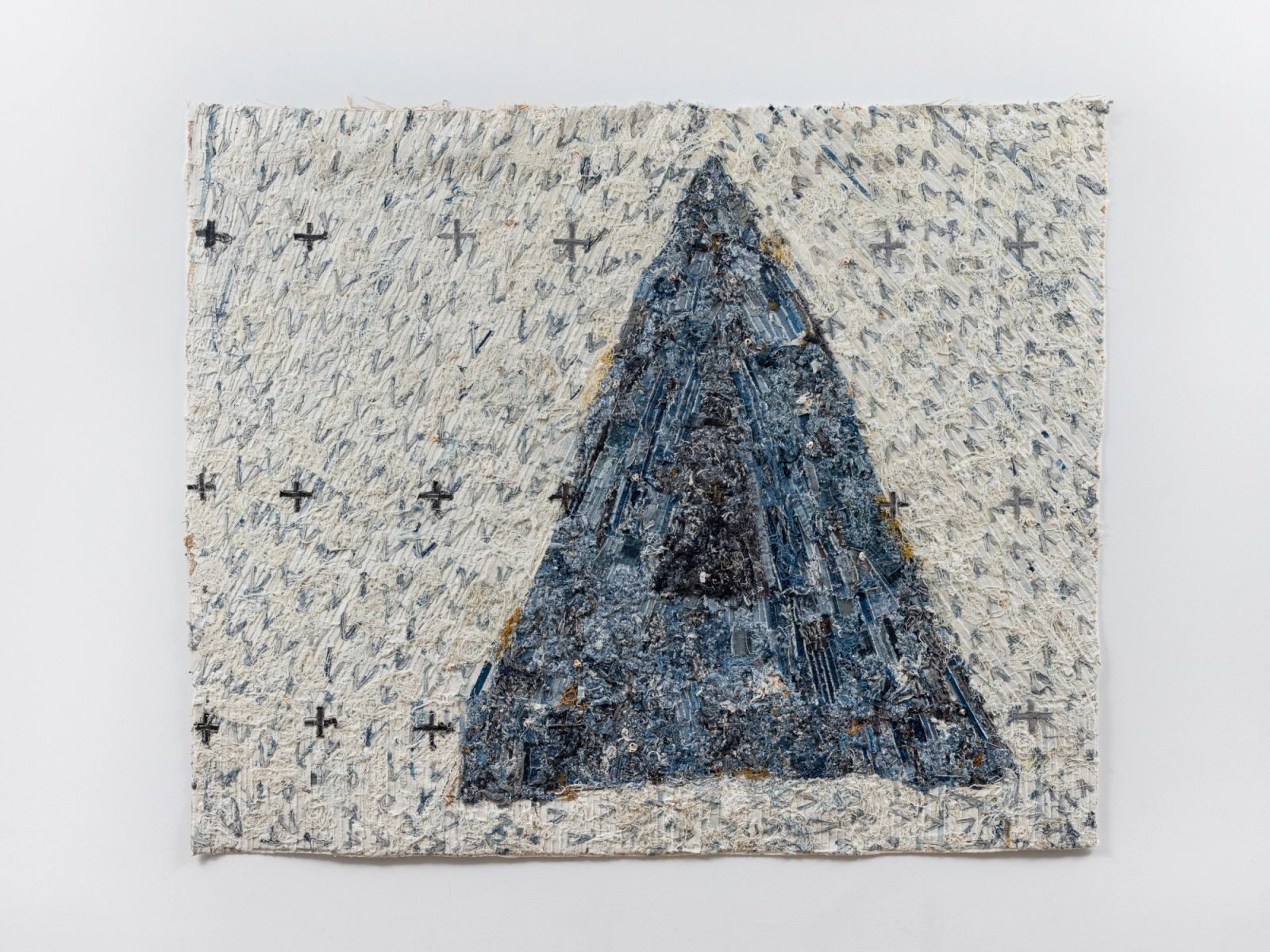
A similar threading is found in the work and thought of Houston-based artist Jamal Cyrus. Thinking about his own engagement with artistic traditions, Cyrus contends his practice builds “upon the work of…predecessors…find[s his] own voice within, and then extend[s] it into the future.” Past, present, and future are all present in the work of art. In what follows, Cyrus reflects on time, tradition, practice, spiritual struggle, and everyday life. Taking readers through FBI files, denim, knowledge of self, and saturation of place, Cyrus offers a non-historian’s posture towards the past. He casts light artistically on the past as a means of imagining new futures.
Benjamin concludes his sixth thesis by saying “only that historian will have the gift of fanning the spark of hope in the past who is firmly convinced that even the dead will not be safe from the enemy if he wins. And this enemy has not ceased to be victorious.” Perhaps it is also true “only that artist…fanning the spark of hope in the past…” If we can say this, Jamal is squarely in that tradition.
history|knowledge of self|houston
I really inherited a certain perspective on history from a couple different places. One was the art curriculum or art education I received at Texas Southern University. One of the people who spearheaded that program was Dr. John Biggers. He saw reclaiming knowledge of one's past as being essential to be able to have a sense of oneself but also to be able to achieve great things within society. That's one thing. I was also very inspired by the sense of history that was a part of late 80s and early 90s hip-hop music. Which is essentially kind of like this five-percenter paradigm of knowledge of self, right? In order to combat certain pressures of Western society, a knowledge of one's past was really essential and could prepare one for struggle.
I would lastly say growing up in a city like Houston and in a state like Texas, where we know historical education at least in public schools is very controlled and takes on political dimensions. There was a lot of information that I knew nothing about but was being presented to me in informal ways in music and in my art classes. It really challenged me to want to go and find out more. That kind of search became a part of my understanding of what was my role as an artist, but also my role as a person, you know, like a young black man living in that time period. They're all kind of like working simultaneously and became part of my work as an artist on those different levels. Right now I'm in a place where [history]is used to inspire the imagination and is addressed more speculatively in terms of the effect it has on the work or how it manifests within my work as an artist.
feds|redactions|black messiahs
Around 2008, I found out about the FBI reading room. You can still go to it [online] and it has in alphabetical order, you know, the names of different activists or criminals or different subjects or organizations that have been surveilled by the FBI, and you can access some of those files. The Five Percenters, Nation of Gods and Earth, has one. I initially started looking into activists. And slowly began to notice artists, primarily writers, who also were involved with COINTELPro. I started research into the Harlem Renaissance, but also the Black Arts Movement, and their interactions with the FBI.
One of the things that really jumped [out was] what's not there in the files. The redactions just don’t necessarily cover up, you know, what is underneath. I was making a connection with the work of Franz Klein. In the redactions, there is one mode of abstraction and then other kinds of marks and blobs and shapes that are in the FBI files. There’s a formal reading, but there's another kind of conceptual layer there in terms of how I was thinking about them. J. Edgar Hoover used this concept of the “Black Messiah.” So that adds this whole other kind of religious or spiritual layer to it.
I do not consider myself a historian. There are certain rules that historians have to play by. As an artist, I really didn't want to be beholden to that. For a while, all these artists were gaining the title of researchers, and I wouldn't think of myself as that either. I'm really interested in, I don't want to say apocryphal histories, but word-of-mouth kind of things that address those absences. Those stories the archive wants to leave behind, erase, or would never want you to look at.
materials|concrete| quilts
David Hammons was one of the artists who really started to use everyday materials that have a presence or importance within black American culture. He would use a wide variety of found objects and materials. He's most famous for his hair sculptures. There are others as well. There's a woman named Senga Nengundi, working on the West Coast, in LA in particular. She started to formulate these ideas, which also are related to African sculpture. But they were working with them as these contemporary sculptors and art makers. I’d say that's a material tradition I come from.
The power of an object is not solely or the innovation of an object is not solely within the form of something. But also what you're pulling from or what you've collaged together, assembled together in terms of different materials.
One of the things that I was really into was doing rubbings of concrete. I went to the museum at the Lorraine Hotel in Memphis, Tennessee on a day it was closed. I have no idea how I got up there, but I was able to get on the second floor, on the balcony, and do a rubbing of the concrete [where Rev. King was assassinated.] There might be some kind of idea in there, at least for me, about the land or about territory. So maybe it's not just particular objects, maybe it's the kind of energetic fields that are created.
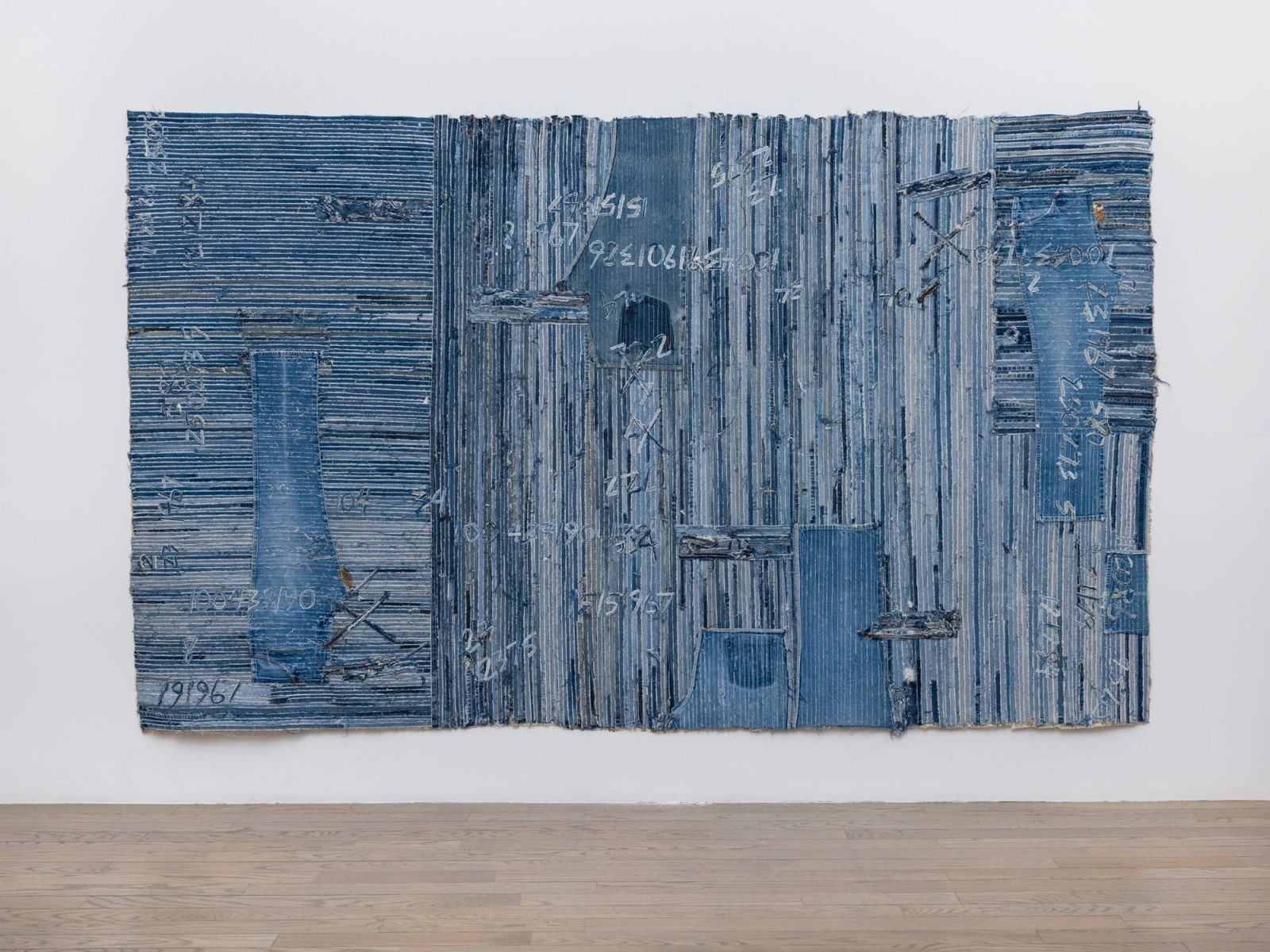
There were really two or three things primarily which interested me about denim. One is seeing Stokeley Carmichael and other SNCC activists wearing it. Another was seeing quilts from the women of Gee’s Bend, Alabama. They're called the work-clothes quilts and are these kinds of commemorative pieces that honor the passing of loved ones and family members. I found them incredibly beautiful because of the different tonalities of blue in these pieces, because of how they were worn and how they were used. But there's also this element within them which you cannot really see in a photograph, a kind of invisible line which goes through the works that are hand-stitched, also in blue.
denim| tradition|time
There was just something about denim which was really attractive and inspired me to utilize this material in the studio. It wasn't until I had worked with denim a few years that I started to learn about indigo and negro cloth and all of these other aspects of the material’s history.
Within the South, there are these materials that plantation owners were known to purchase because of their low cost. But also because of their durability. This category of textiles became known as slave cloth or negro cloth, and denim was one of those fabrics. One thing that interested me was the plant used to dye early denim. The kind of indigo that was cultivated in the United States was a West African strain. And the people who helped develop the cultivation in this country were West Africans who had experience with this plant.
When SNCC activists started to use this workwear, they began to align themselves with an earlier black nationalist politics. That interested me because before I had used denim, I worked with black leather as a material to talk about the Panthers and their status within American history. I was looking for materials that could address these politics in different ways.
It is an issue of reclaiming history. I still feel knowledge of self is an important thing because of the constant struggle in this country, not only in this country, with history, in recording and interpreting the past. Within black America, even before hip-hop, there was this idea that we needed to look towards our past. Marcus Garvey said, ‘If you don't know your past you know your future.’ To build ourselves up in a society that was always trying to tear us down.
I’ve always understood the necessity for tradition. I understand the use of that term artistically, right? The idea of building upon the work of your predecessors, being inspired by their work, finding your own voice within that, and then extending it into the future.
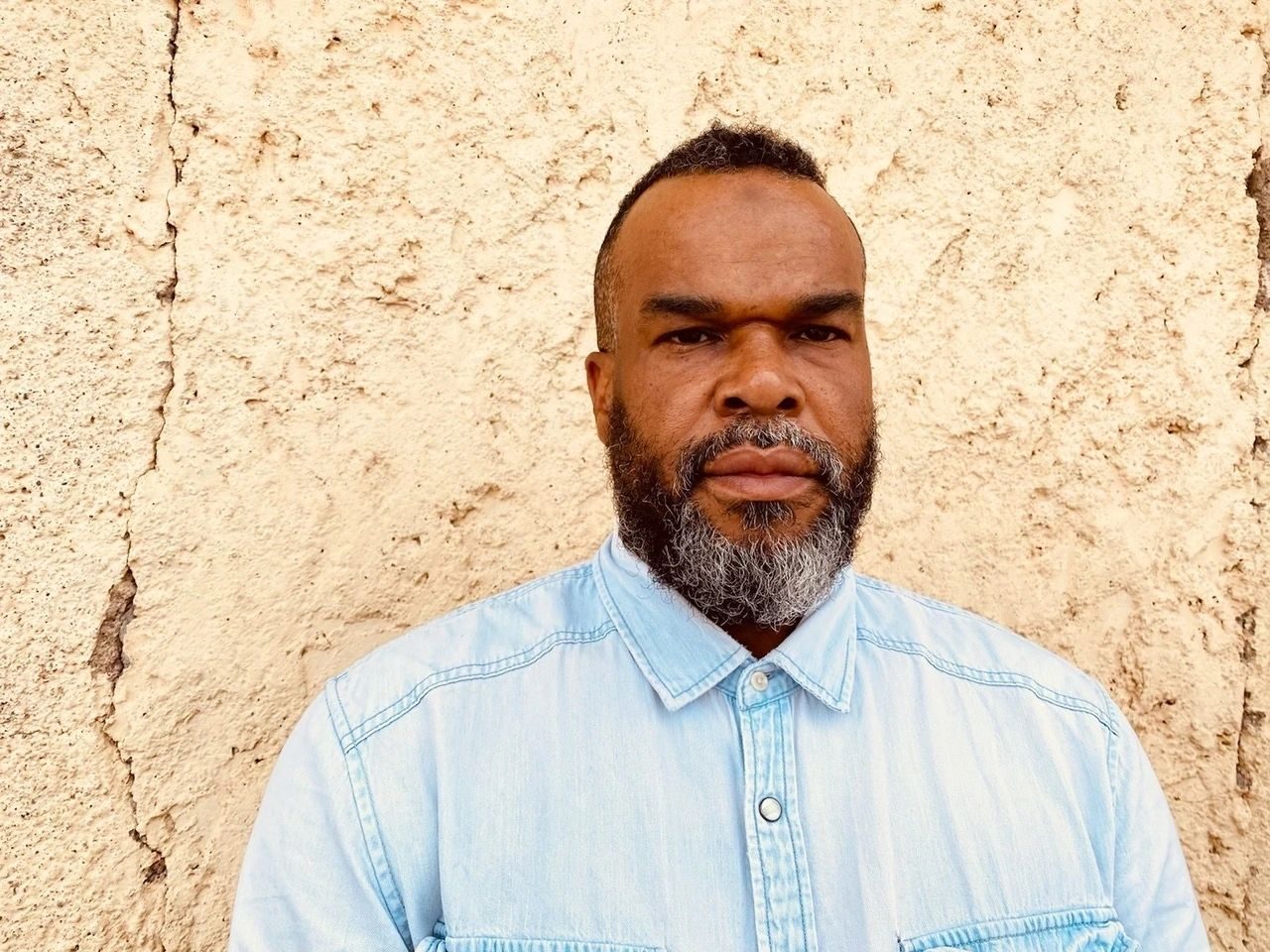
Jamal Cyrus received his BFA from the University of Houston in 2004 and his MFA from the University of Pennsylvania in 2008. He has won several prestigious awards, including most recently a Guggenheim Fellowship (2023). Cyrus was awarded the Driskell Prize, (High Museum of Art, Atlanta, GA) in 2020. The artist's mid-career survey, The End of My Beginning, opened at the Blaffer Museum of Art in 2021 before continuing on to the Institute of Contemporary Art, Los Angeles and the Mississippi Museum of Art. Cyrus was also a member of the artist collective Otabenga Jones and Associates, active from 2002 to 2017.