Essays18
Of Things We Almost Lost: Weaving Ourselves in Carpets
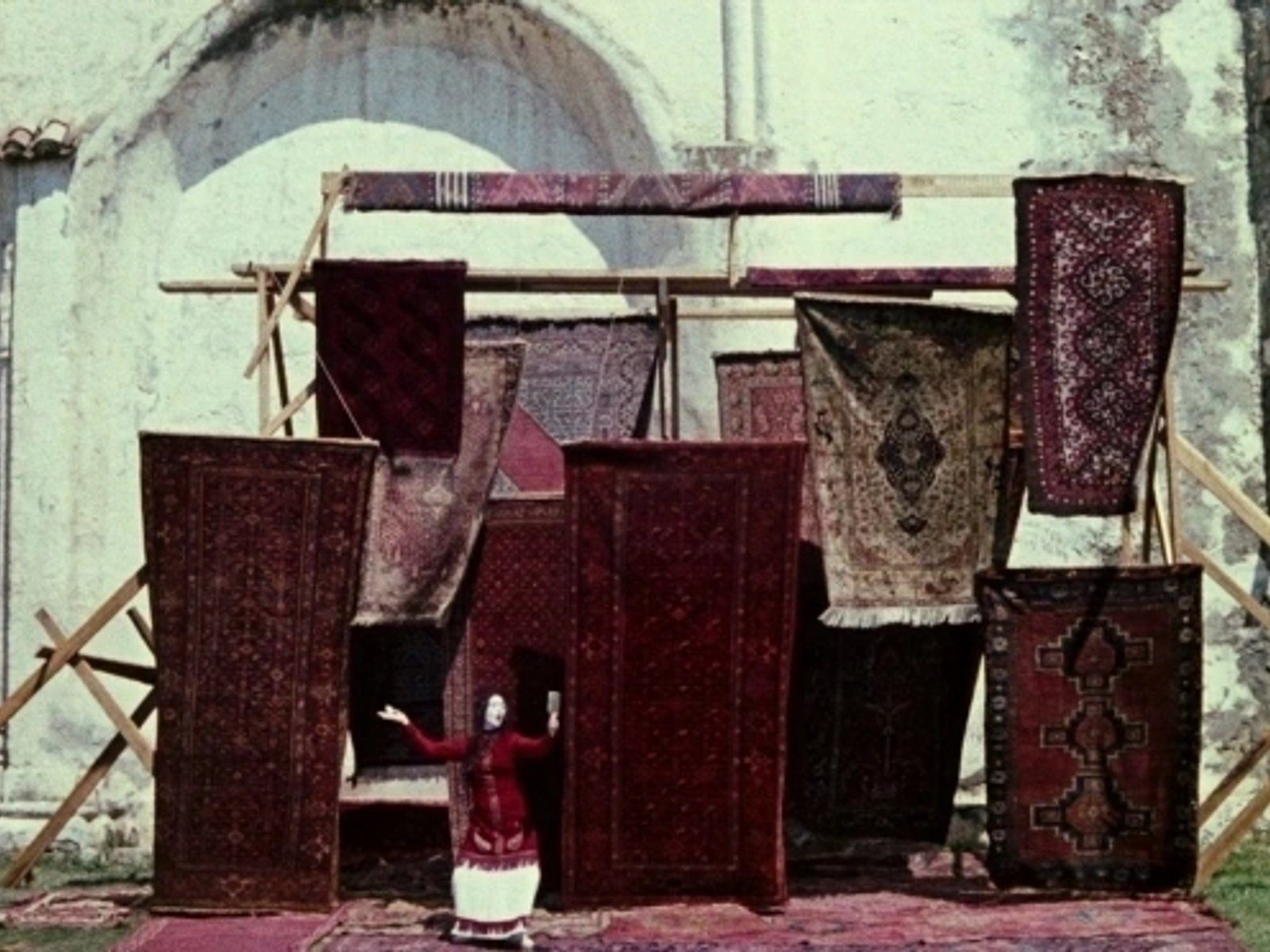
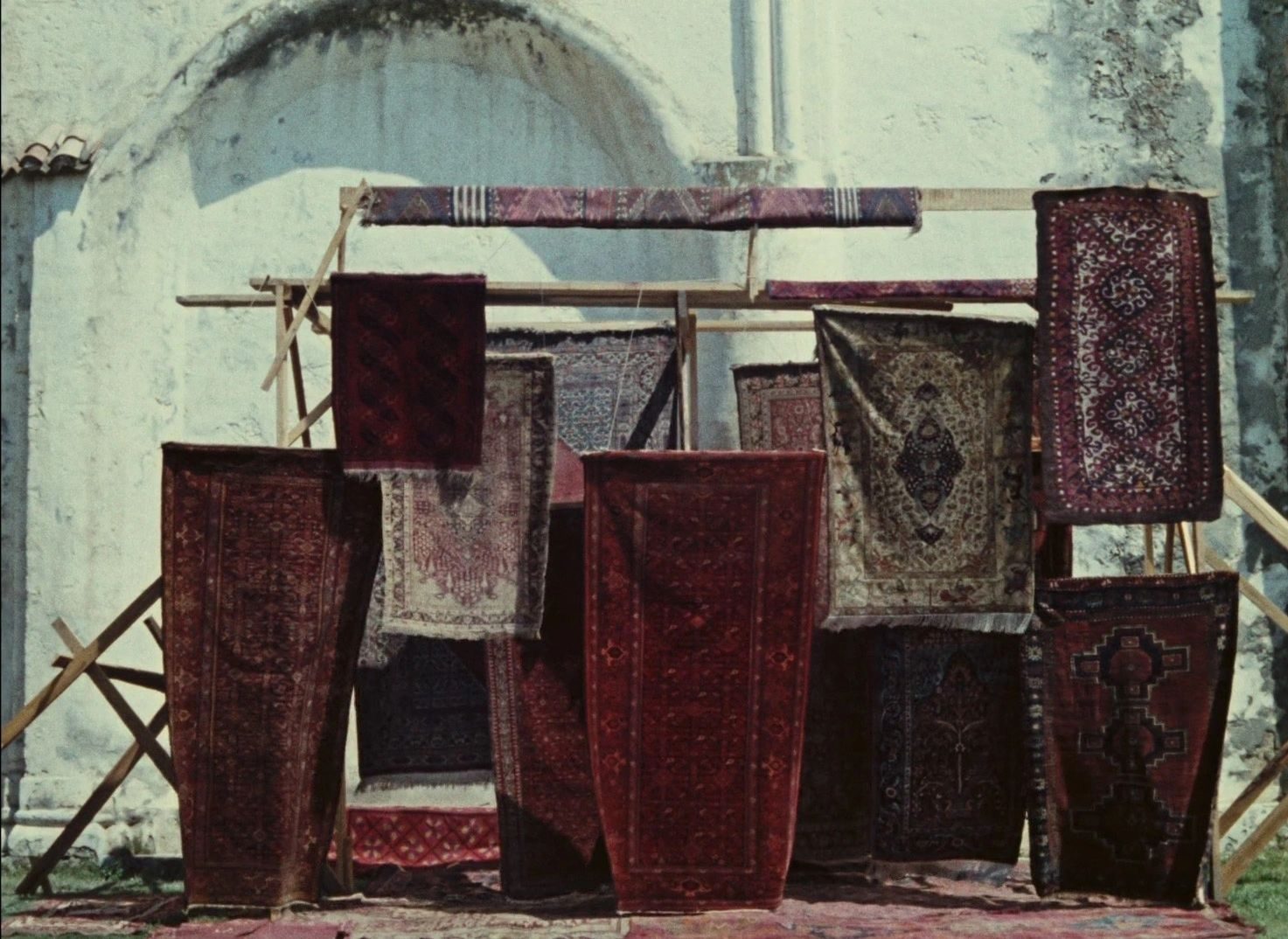
Fattima Naufil Naseer
“Memory is a strange thing. It doesn’t work like I thought it did.”
[Dr Louise Banks, Arrival (film), 2016]
And why was I deep in the alleys of the old walled city of Lahore, curious to know what happened to an art form that people quite literally wove into an ode to their lives, beliefs, land, and ancestors.
--
Storytelling is integral to memory. The story of each rug is the collective memory of the carpet’s weavers.
--
In 2021, I was working as a university lecturer in Lahore and got woven into the world of Islamic carpets. My curriculum included narrative textiles - tracing the stories, origins, histories, changes, and so on of an object like a person. In the course, I assigned students with tracing a particular regional textile or technique. I decided to carry out the task myself.
I started tracing my family’s history with carpets, mostly manufacturers and industrialists. Yet over time the craft did not carry on and was alternated, left, and sold off.
--
982 CE - Lahore first appears in the historical record in the Hudud-i-Alam (Chronicles of the World). Hindu, Buddhist, and other Asiatic mythological tales detail Lahore’s richness and trade. In other words, the city has long been in the human imagination.
It is no surprise Lahore has a history with carpets. Rug production, crafting, and innovation have, historically, been mostly concentrated in Sirinagar valley, Kashmir. Perhaps, this is why most manufacturers to this day are of Kashmiri origin.
Kashmir’s geography and history meant the carpets were heavily influenced by central Asia, Persian and Turkish aesthetics mixed with indigenous styles. Such transregional confluences shouldn’t be surprising. The Mughal king Akbar first formally industrialized rug production. In doing so, he created various urban production hubs (karakahana) across his empire. Again, the history of Lahore is long.
--
All my searchings’ eventually led me to Lahore’s historic carpet neighbourhood, a short jump from the old walled city. In the bustling alleys of Lakshmi Chowk, a few traders and some sparsely scattered residents remained. There, I met the less than handful of remaining people still trying to make fine, handwoven carpets here and lots of stories to tell me there.
Curious to understand their craft’s heritage, I had increasingly longer conversations with people still in Lahore’s carpet business. During one of these mid-monsoon excursions to old Lahore, I spoke with Mr. Shah. He was the proprietor of a small rug shop in what was once considered the carpet neighbourhood.
Mr. Shah’s sliver of Lahore has been reduced to less than a handful of shops. And, what remained was now populated mostly with imported products. He talked about shared spaces holding nostalgia for a bygone time:
This was a thriving area at one point, people would come from everywhere to see what was new, it was a place filled with craftspeople from various regions and designers creating things we had not seen before.
If I think about the people I talked to then, old manufacturers and businessmen, the stories they told me of their youth which was over a century ago were even more odd. They saw the mohalla destroyed and then resuscitated, people came together after the civil unrest and then partitioned to save some parts of what they held valuable, and carpets were one such thing.
Of course, if you compare this with its even older history, this neighbourhood is so different. Once, it was the center of trade in Lahore but has since been reduced to a small forgotten street.
--
Storytelling is essential to the craft of weaving. Carpets often depict complexity through simple tales: Mughal and Persian hunting carpet come to mind. Weavers frequently depicted an individual’s struggle with their nafs, symbolically sketching the ego’s worldly trappings through animals and flowered lattices.
A baby donkey, for example, can symbolize a mystical free agent or an animal bound to work hard or the butt of a joke depending on context. Take another example, the ‘Sun Gate’ motif represents an entrance to heaven. This is very beautifully depicted in the famous Ardabil carpet. Two lamp symbols on the side of the center representing the Sun and Moon.
Joining animal symbols and solar motifs, traditional rugs are also narrative windows. A carpet’s framing borders can depict the barrier between people and a world beyond. Carpets depicted folk tales such as the seventh century Arab tale of Laila and Majnun. In South Asian regional folklore Laila and Majnun’s romance was almost like Romeo and Juliet with a dash more mysticism. A story about two star-crossed lovers, a tale about longing for the Divine.
--
Stories of craft and heritage are not recollections of a personal memory. Many times, their experiences were not even their own. They were what they had heard, techniques learnt, aesthetics observed and somehow adapted as their own.
I became curious as to how, through a chain of memory snippets pressed into oral traditions, half-written texts, and some tangible pieces passed down over time, collectively shared experience was crafted?
In my interviews with weavers, craftspeople and manufacturers, I was struck by a thought: at what point does a memory itself become what creates it. There was no way to come to the beginning, or end for that matter, of their experiences. It seemed every family, alley, conversation, archive, visual material or whatever medium looped back both onto itself and anew.
--
Walter Benjamin's essay “The Storyteller” brought my understanding of traditional rugs into sharper focus - “Memory creates the chain of tradition which transmits an event from generation to generation…Foremost among these is the one practiced by the storyteller. It starts the web which all stories together form in the end.”
Carpets are a vessel, repository, archive, and witness to the people entwined with it. The intimacy of a rug’s production is not lost on weavers either. The process is a discipline in-itself.
Schools were made and people organised around craft. Education and lifestyle dictated family names and social identities became synonymous with production areas. Craft ownership and practice changed the way people lived and determined how people related to each other. The product mixed with the qualities of the people imbuing it with the memories and presence of all those that had a part in creation.
--
Knee deep in tracing the story of a regional carpet I turned to my mentor, Tariq Habib Mirza. He is one of the oldest and maybe last person in Lahore still practicing the traditional art of weaving and conserving Indo-Persian carpets. I ask him about preserving memory through craft and reliving it in practice. He tells me I think too much. I tell him he needs to read less. At some point our conversation settles, and he points out:
You see...traditionally and historically, carpet weaving was a communal process. People sat together and determined together what they wanted to say with what they made.
What were they trying to say? To show or reflect, what they felt about certain materials or patterns and what was their own understanding of symbols or colors. Why did those things mean so much or anything to them? It was about shared living, it was about becoming what your stories are, your thoughts.
This was a different kind of art; based on this relationship of people coming together to create something and literally weave it together. It has become a shared memory.
--
The act of making a carpet is as important as the rug itself. From sericulture, spinning, cleaning, dyeing, drawing, weaving, knotting, cutting, and checking- every point of the process has hands of people that are connecting at every step with the same medium.
An intersection of Sufism, symbolism, and textile techniques; the applied practice of traditional Indo-Persian carpet production and the quest for mystical storytelling. A conceptual mouthful and earful, to say the least. The layers kept adding up, visually and now the art of creating was a discipline that had transformed.
--
On a hot July afternoon in 2021, I re-checked the categorization of pictorial symbols. Skimming through copies of carpet drawings and maps. I came across a small inscription on the border of a rug sketch.
The inscription lettering woven on an Ardabil carpet by the designer Maqsud of Kashan, quoted the poet Hafez:
“But for thy Gate, I have no refuge in this world; My head has no place of trust except this Door”