Essays03
Pozo muerto, 60 años después
Luis Fraga Lo Curto
No tiene sentido, decía Carlos Rebolledo en 1984, buscar el lado no espectacular del cine, pues el cine es espectáculo por definición; la tarea es encontrar la manera espectacular de ver y contar la realidad.
En 2026, el restaurador Andrés Prypchan digitalizó dos documentales venezolanos que llevaban décadas circulando en copias de baja calidad: Pozo muerto (1967), de Carlos Rebolledo, y La ciudad que nos ve (1967), de Jesús Enrique Guédez. El trabajo, hecho dentro del Programa FilmMemory, partió de materiales dispares y deteriorados. En el caso de Pozo muerto, un positivo y dos negativos de distinta marca y relación de aspecto, que se encontraban depositados en el Archivo Fílmico de la Cinemateca Nacional de Venezuela. Prypchan pasó meses buscando a los titulares de Pozo Muerto, pues casi nadie recordaba ya a quién pertenecían los derechos de autor. Que una obra fundadora del Tercer Cine llegara a este estado de orfandad dice algo de cómo se ha contado, o no, la historia del cine venezolano.
Rodada en 1966, procesada en el Laboratorio Cubanacán del ICAIC y exhibida en el Primer Encuentro de Cineastas Latinoamericanos de Viña del Mar, Chile, en marzo de 1967, Pozo muerto es una producción de El Techo de la Ballena, el colectivo de vanguardia caraqueño que estuvo activo entre 1961 y 1969.
En Pozo muerto, una voz en off acompaña los testimonios de varios habitantes de Cabimas y Lagunillas, donde se concentraba la mayor parte de la extracción petrolera de Venezuela, testimonios que reconstruyen una memoria que va desde el reventón del pozo Barroso II, en 1922, hasta mediados de los años sesenta. Son relatos duros: mientras los expatriados estadounidenses e ingleses vivían en urbanizaciones cercadas, los obreros venezolanos habitaban infraviviendas, experimentaban la esclavitud moderna y veían sus reivindicaciones laborales reprimidas por una policía al servicio de las compañías transnacionales. En uno de los pasajes más memorables de la película, un pescador dice: «da la casualidad que somos venezolanos y los venezolanos no tenemos derecho en este mismo país». Caracas se llenaba de autopistas modernas, se construían los grandes campus universitarios, museos y bibliotecas, se inauguraba la Cinemateca Nacional, pero las ciudades Cabimas y Lagunillas, de donde salía buena parte de la riqueza que financiaba esa modernización, permanecían en la pobreza extrema.1
Contar esto en 1966 exigía tomar partido en una disputa que atravesaba entonces al documental latinoamericano: la del cinéma-vérité. Rebolledo, en una entrevista de julio de 1968 para la revista Cine al día, sostuvo que esa corriente europea fallaba al registrar la realidad sin una intención de interpretación o de compromiso, y que por eso terminaba «al mismo nivel que cualquier reconstrucción hollywoodense».2 Pozo muerto responde a esa disputa con una imagen deliberadamente poética, que se niega a ser neutra y que pone la música, el ritmo del montaje, y el encuadre al servicio de los derechos de los trabajadores.
Esa misma convicción llevó a Rebolledo, apenas terminada la película, a convertirse en uno de los arquitectos institucionales del Tercer Cine: reestructuró el Departamento de Cine de la Universidad de Los Andes y organizó allí, en 1968, la Primera Muestra de Cine Documental Latinoamericano, que reunió en Mérida a cerca de cuarenta cineastas del continente: Jorge Sanjinés, Marta Rodríguez, Fernando Birri, Santiago Álvarez, Nelson Pereira dos Santos, Jesús Enrique Guédez, Mario Handler, Ugo Ulive, Miguel Littín, Luis Armando Roche, entre otros. Colaboró también desde 1967 con la revista Cine al día, publicación responsable de haber inaugurado el término Tercer Cine.3
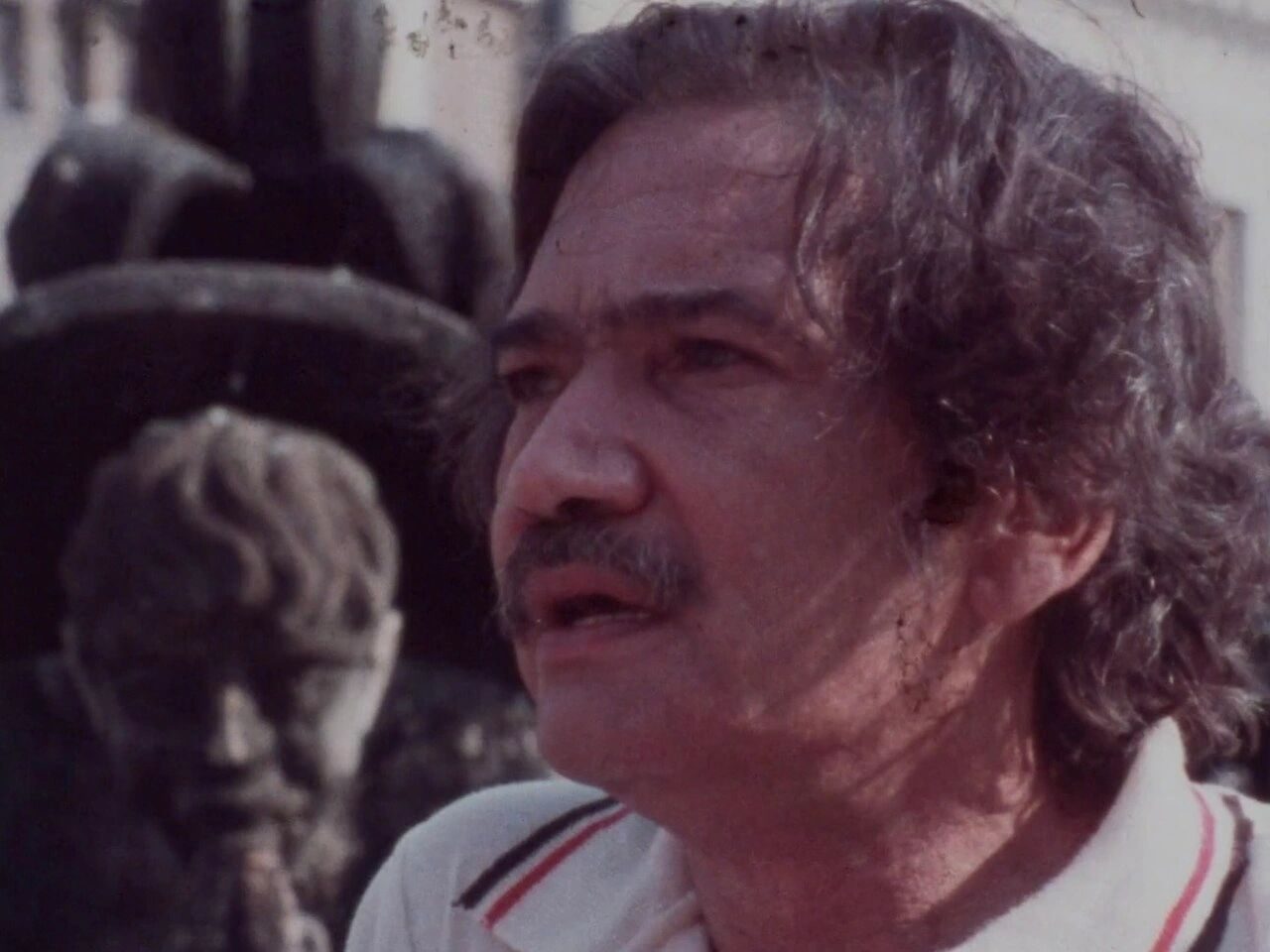
Ese lugar central que tuvo Rebolledo quedó registrado en Claves (1984), la serie documental que Atahualpa Lichy dedicó a la historia del Nuevo Cine Latinoamericano, donde formula la idea que abre este texto y que cierra, retrospectivamente, su disputa de 1968 contra el cinéma-vérité: no tiene sentido buscar el lado no espectacular del cine, porque el cine es, por semántica, espectáculo. Dice Rebolledo: «lo que el cine Ese lugar central que tuvo Rebolledo quedó registrado en Claves (1984), la serie documental que Atahualpa Lichy dedicó a la historia del Nuevo Cine Latinoamericano, donde formula la idea que abre este texto y que cierra, retrospectivamente, su disputa de 1968 contra el cinéma-vérité: no tiene sentido buscar el lado no espectacular del cine, porque el cine es, por semántica, espectáculo. Dice Rebolledo: «lo que el cine latinoamericano debería buscar de forma permanente e implacable es la manera espectacular de ver nuestra vida y nuestra realidad».
¿Qué ha cambiado en nuestra vida y en nuestra realidad desde el estreno de Pozo muerto? Según cifras de INSO-ENCOVI, en 2021 el 96% de la población de Cabimas y el 95% de la de Lagunillas seguían viviendo bajo la pobreza.4 En lo que respecta al reclamo de soberanía, desde los bombardeos del 3 de enero de 2026, Venezuela vive bajo un protectorado de facto, en el que los Estados Unidos extrae y reparte la riqueza petrolera a su antojo, y a la vez entorpece toda forma de transformación democrática.
Sesenta años después de Pozo muerto, el lugar de Rebolledo se ha vuelto discreto, casi invisible. Restaurar esa película en 2026 significa devolver a un cineasta fundamental al lugar que le corresponde, pero también a los que protagonizan su cine: quienes sostienen, con su trabajo, una riqueza que todavía no les pertenece.
1 La cuestión de la extracción petrolera que no se traduce en bienestar para la gente aparece, directa o indirectamente, en el propio Rebolledo en Venezuela tres tiempos (1974), y también en otros cineastas de su generación: La ciudad que nos ve (1967), Pueblo de lata (1972) y Testimonio de un obrero petrolero (1978), de Guédez; ¡Basta! (1969) y Caracas, dos o tres cosas (1969), de Ugo Ulive; o 22 de mayo (1969), de Jacobo Borges y Cine Urgente. Si algo engloba a estas películas, además de su posición política, es la aproximación poética al tema.
2 «La Muestra de Mérida y los problemas del cine latinoamericano: Una entrevista con Carlos Rebolledo», Cine al día, no. 4 (julio de 1968): 15–16.
3 Cuando desde Montevideo se lanza la revista Cine del Tercer Mundo, en Caracas la revista Cine al día reproduce el manifiesto «¿Por qué Tercer Cine?», de Fernando Solanas y Octavio Getino, y anota, no sin orgullo, que el término «Tercer Cine» había sido «inaugurado» en abril de 1968 por la propia revista venezolana, en un artículo de Oswaldo Capriles titulado «Cinema Novo: realidad y alternativa». Vid: Cine al día, no. 3 (abril de 1968): 4–13 y Cine al día, no. 8 (junio de 1969): 46.
4 Instituto de Investigaciones Económicas y Sociales, Universidad Católica Andrés Bello, Indicador de Pobreza, INSO-ENCOVI, acceso: 12 de julio de 2026, https://insoencovi.ucab.edu.ve/indicador-pobreza/.
Dead Well, Sixty Years Later
Translated by Clara González Portela
“It makes no sense,” Carlos Rebolledo said in 1984, “to look for the non-spectacular side of cinema, because cinema is spectacle by definition; the task is to find the spectacular way of seeing and telling reality.”
In 2026, restorer Andrés Prypchan digitized two Venezuelan documentaries that had spent decades circulating in low-quality copies: Dead Well (1967), by Carlos Rebolledo, and The City That Watches Us (1967), by Jesús Enrique Guédez. The work, carried out as part of the FilmMemory Program, was based on disparate and deteriorated materials. In the case of Dead Well, these consisted of one positive print and two negatives of different film stocks and aspect ratios, deposited in the Film Archive of the Venezuelan National Cinematheque. Prypchan spent months searching for the rights holders of Dead Well, since almost no one any longer remembered who owned the copyright. That a foundational work of Third Cinema should have reached such a state of orphanhood says something about the way the history of Venezuelan cinema has, or has not, been told.
Filmed in 1966, processed at the Cubanacán Laboratory of the ICAIC, and screened at the First Meeting of Latin American Filmmakers in Viña del Mar, Chile, in March 1967, Dead Well was produced by El Techo de la Ballena, the Caracas avant-garde collective active between 1961 and 1969.
In Dead Well, a voice-over accompanies the testimony of several inhabitants of Cabimas and Lagunillas, where most of Venezuela’s oil extraction was concentrated. Their accounts reconstruct a memory extending from the Barroso II oil well blowout in 1922 to the mid-1960s. They are harsh accounts: while American and British expatriates lived in fenced residential compounds, Venezuelan workers lived in shanties, endured a form of modern slavery, and saw their labour demands repressed by a police force serving the transnational companies. In one of the film’s most memorable passages, a fisherman says: “As it happens, we are Venezuelans, and Venezuelans have no rights in this very country.” Caracas was filling with modern highways, great university campuses, museums, and libraries were being built, and the National Cinematheque was inaugurated, yet the cities of Cabimas and Lagunillas, from which much of the wealth financing that modernization was extracted, remained in extreme poverty.1
To tell this story in 1966 required taking sides in a debate then running through Latin American documentary cinema: that of cinéma-vérité. In an interview published in Cine al día in July 1968, Rebolledo argued that the European current failed because it recorded reality without an intention to interpret or commit itself, and therefore ended up “on the same level as any Hollywood reconstruction.”2 Dead Well responds to that debate with a deliberately poetic image that refuses neutrality and places music, editing rhythm, and framing in the service of workers’ rights.
That same conviction led Rebolledo, immediately after completing the film, to become one of the institutional architects of Third Cinema. He reorganized the Film Department of the University of Los Andes and organized there, in 1968, the First Latin American Documentary Film Showcase, bringing together in Mérida nearly forty filmmakers from across the continent. He also collaborated from 1967 onward with the journal Cine al día, the publication responsible for introducing the term Third Cinema.3
Rebolledo’s central place was recorded in Claves (1984), Atahualpa Lichy’s documentary series on the history of the New Latin American Cinema, where he formulates the idea that opens this essay and retrospectively concludes his 1968 dispute with cinéma-vérité: there is no point in looking for the non-spectacular side of cinema, because cinema is, by definition, spectacle. Rebolledo says: “What Latin American cinema should seek, permanently and relentlessly, is the spectacular way of seeing our life and our reality.”
What has changed in our life and our reality since the release of Dead Well? According to INSO-ENCOVI figures, in 2021, 96% of the population of Cabimas and 95% of that of Lagunillas were still living in poverty.4 As for the claim to sovereignty, since the bombings of 3 January 2026, Venezuela has lived under a de facto protectorate in which the United States extracts and distributes the country’s oil wealth at will, while at the same time obstructing every form of democratic transformation.
Sixty years after Dead Well, Rebolledo’s place has become discreet, almost invisible. Restoring the film in 2026 means restoring a fundamental filmmaker to the place that belongs to him, but also restoring visibility to those who are at the centre of his cinema: those whose labour sustains a wealth that still does not belong to them.
1 The question of oil extraction that does not translate into well-being for the people appears, directly or indirectly, in Rebolledo himself in Venezuela Three Times (1974), and also in other filmmakers of his generation: The City That Watches Us (1967), Tin Town (1972), and Testimony of an Oil Worker (1978), by Guédez; Enough! (1969) and Caracas, Two or Three Things (1969), by Ugo Ulive; or 22 May (1969), by Jacobo Borges and Cine Urgente. If anything encompasses these films, besides their political position, it is the poetic approach to the subject.
2 “The Mérida Showcase and the Problems of Latin American Cinema: An Interview with Carlos Rebolledo,” Cine al día, no. 4 (July 1968): 15–16.
3 When the journal Cine del Tercer Mundo was launched from Montevideo, in Caracas the journal Cine al día reproduced the manifesto “Why Third Cinema?” by Fernando Solanas and Octavio Getino, and noted, not without pride, that the term “Third Cinema” had been “inaugurated” in April 1968 by the Venezuelan journal itself, in an article by Oswaldo Capriles titled “Cinema Novo: Reality and Alternative.” See: Cine al día, no. 3 (April 1968): 4–13 and Cine al día, no. 8 (June 1969): 46.
4 Institute of Economic and Social Research, Andrés Bello Catholic University, Indicador de Pobreza, INSO-ENCOVI, accessed 12 July 2026, https://insoencovi.ucab.edu.ve/indicador-pobreza/.
Luis Fraga Lo Curto (Caracas, 1989) is a writer. He is the author of the book La tierra firme (2026, Lecturas de Arraigo). His texts have appeared in the anthologies Inventus (2022), Artificium (2024), and El libro de los libros (2025, Editorial Graviola), as well as in the magazines Habitar el Cine, Digo.palabra.txt, Sinestesia, Weird Review, and Saranchá. He is the director of the streaming platform Margen TV.