Essays34
A Sound Maqām: God's Melodious Word and Sacred Music in Islam
Ali Hussain
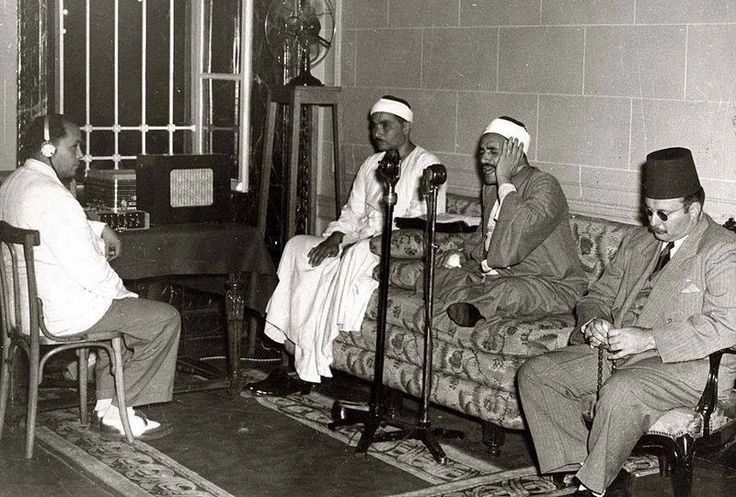
The renowned Egyptian Quran reciter Mustafa Ismail begins his 1970 recitation of chapter 35, Fatir, from the Quran in a humble voice, as is the case in all his recordings. But as we journey with Ismail over the course of 1 hour and 40 minutes, we find ourselves traversing an exquisite melodic landscape. This reciter, celebrated by his listeners as amīr al-naghamāt (prince of melodies), beckons all the major maqāmāt of Arabic music (e.g., bayātī, hijāz, sabā, sīkāh, rast) and many more that bewilder his audience into ecstasy.
Ismail himself explains in an interview that his ability to traverse this vast melodic landscape of maqāmāt, or modalities of Arabic music, depends largely on the liveliness of his audience, and in this 1970 recording, the sammī’a (maqām-conscious listeners) do not disappoint. As Ismail’s voice grows in pitch and melody, we can hear people screaming Allah, while others cry or beg the reciter to repeat a particular verse. One realizes that both Ismail and his audience are experiencing the Word of God in real-time. The clothing of melody revitalizes the listener’s taste of the Quran, paying homage to the original spark of revelation.
This generation of Mustafa Ismail, in the early to mid-20th century, is considered the golden age of Arabic music for a very good reason. The harmonious marriage between the twin cultures of Quran recitation and Arabic music betrays a contemporary Muslim misunderstanding of the importance of sound and melody in Islam. This is not simply about whether music or musical instruments are permissible in Islam but also involves a deep appreciation of the inherent ṭarab (musical ecstasy) that one experiences while listening to the Quran. More than that, the golden age reveals the indispensable importance of Quran recitation to Arabic music and vice versa.
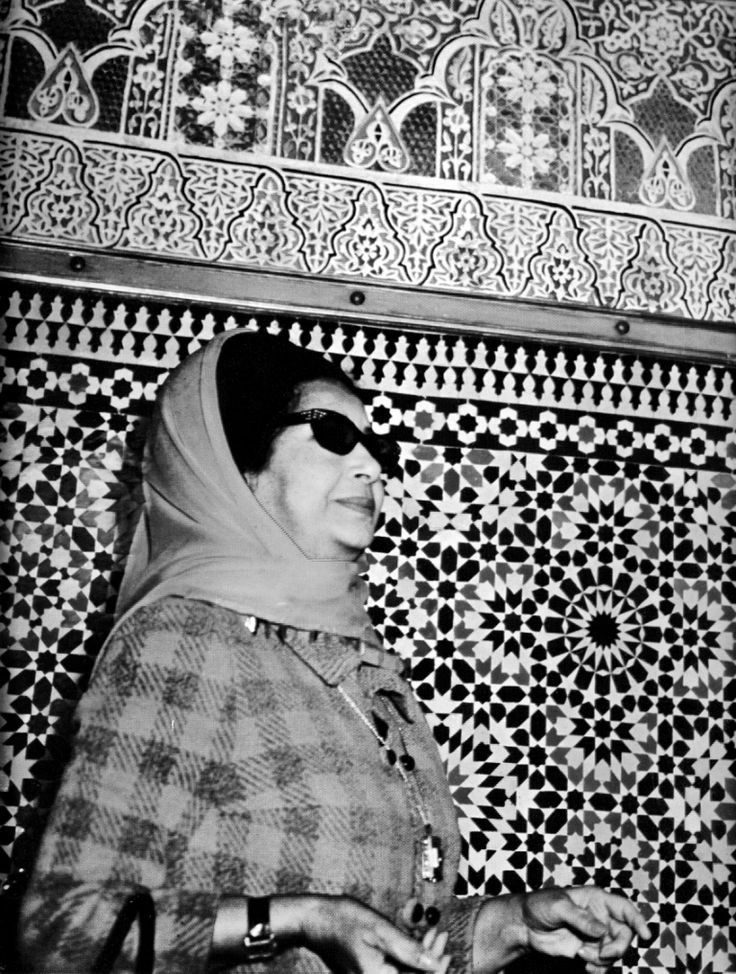
Mustafa Ismail mentions in another interview that the first time he was invited to perform in Cairo, he found himself in a neighborhood filled with oudists, at which point he became anxious, realizing that “these are people who know their maqāmāt”. Inversely, the first lady of Arabic music Um Kulthum regularly consulted Ismail on the melodic narratives in her songs. In one instance, he suggested that a qafla (closure in a musical phrase) be changed slightly, to which she responded: “You are unbelievable! I had the exact same idea.”
Even today, one finds many Egyptian musicians, like the late ‘Abduh Dagher, who emphasizes that in order to learn maqāmāt properly one needs to begin with Quran recitation. The celebrated composer ‘Ammar al-Sheree’i remarked in a show where he analyzed the melodic narrative of Mustafa Ismail, that “Ismail is a musical genius. If he does not understand music then we musicians have no business calling ourselves as such.” What mesmerizes the composer about Ismail’s recitation is the latter’s ability to use a somber maqām like sabā while reciting the heart-wrenching supplication of prophet Nuh, peace be upon him: “He called upon his Lord: ‘I am defeated, so be victorious’” (54:10) but then suddenly does a naqla (modulation or transition) to the joyous maqām ‘ajam when God accepts the prophet’s supplication: “So we opened the gates of heaven with gushing water” (54:11).
Mustafa Ismail never formally studied Arabic music, but he matured in a culture that was immensely maqām-conscious. Walking through the streets of Cairo and many surrounding villages, the young reciter would have heard the recitations of Abu al-‘Aynayn Shu’aysha’, Muhammad Rif’at, and others. However, he would have also ingested the songs of Sayyid Darwish, ‘Abd al-Wahab, Riyad al-Sunbati, al-Qasabji, and Um Kulthum herself. Another reciter, the celebrated ‘Abd al-Basit ‘Abd al-Samad, can be seen holding the oud and remarks that he listens to all the aforementioned singers. There was no dissonance in the hearts of these artistic giants between music and Quran recitation since both mediums involved a sacred experience of sound.
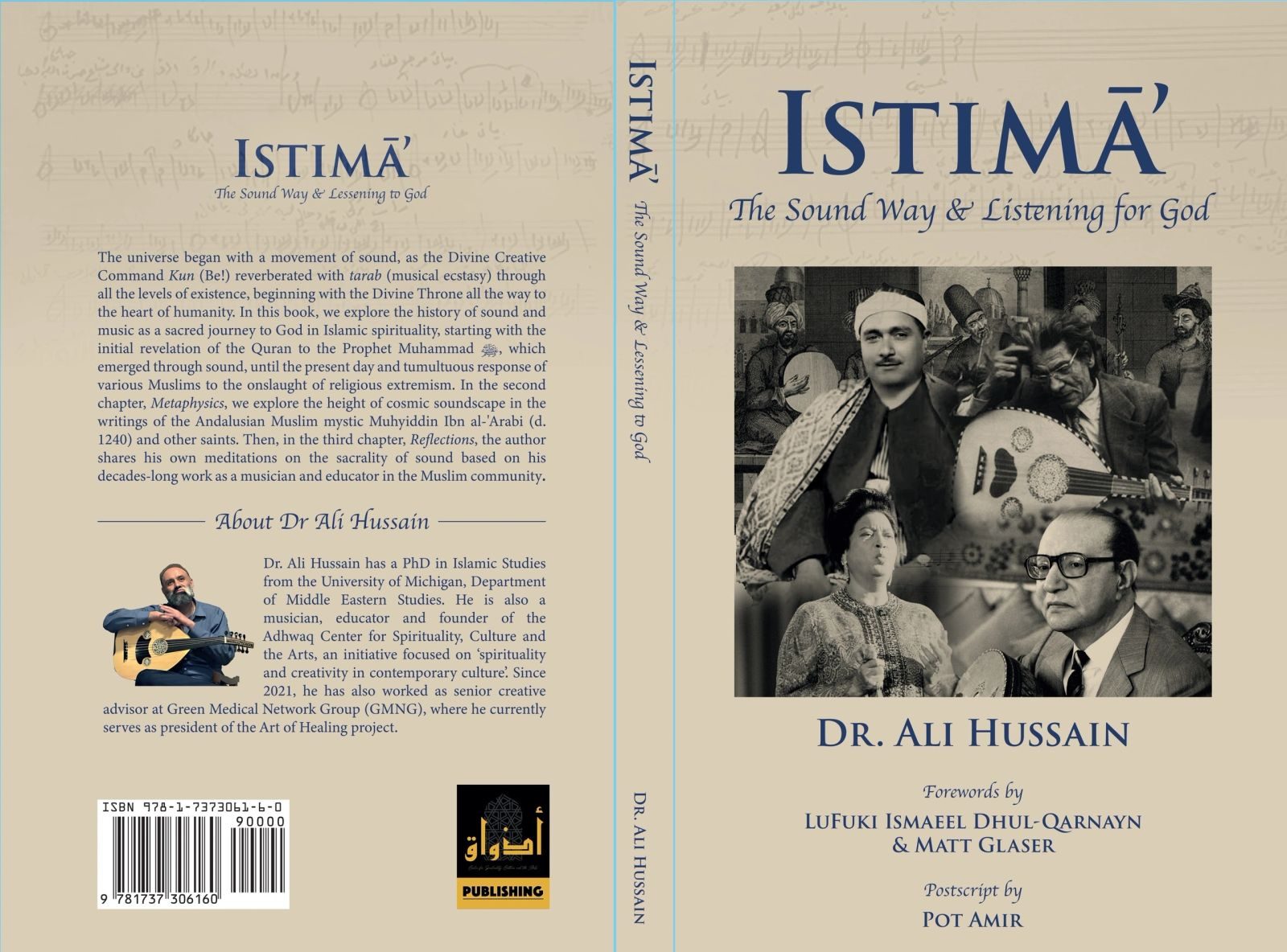
In my most recent publication, ISTIMĀ’: The Sound Way & Listening for God, I explore this rich culture and golden age of Arabic music in lieu of a much longer history and metaphysics of sound and its sacrality in the Muslim world. In order to fully appreciate the origins of this harmony of sound in 20th century Egypt, one must return to both the horizontal beginnings of Islam and the vertical origins of creation, which I explore in my book through the lens and teachings of the Andalusian mystic Ibn al-‘Arabi (d. 1240), who provides an insight into a rich heritage that has not only been lost but colonized and exiled from our collective consciousness.
Both creation and Islam began with sound. The Divine Creative command Kun ushered life in the empty canvas of creation and, as Ibn al-‘Arabi states, also gave birth to the first instance of ṭarab (musical ecstasy), when the ‘arsh (Divine Throne) heard this command and began to tremble from joy, whence all the heavenly orbits and galaxies also began to move in pleasure and sound glorification. Thus, Ibn al-‘Arabi emphasizes, God’s first movement of love towards us is speech and sound, while our first response of love towards Him is listening. This is why God’s Hearing always precedes both His Seeing and Knowledge in the Quran: “He is the All-Hearing and All-Seeing” (42:11) or “He is the All-Hearing and All-Knowing” (2:137).
Islam also began with sound, as the Prophet Muhammad ﷺ heard the Divine Command iqra’ (recite) while secluding himself in the cave of Hira. Revelation continued to descend in various garments of sound: the humming of bees, the ringing of bells or a metal chain being dragged across rocks. The Prophet ﷺ also tethered melody to Quran recitation in various hadiths, such as “they are not from us those who do not melodiously recite the Quran”, “beautify the Quran with your voices”, “God listens more attentively to the reciter with a beautiful voice than one of you listens to their instrument” and even praised the beautiful recitation of ‘Abdullah b. Mas’ud: “You have been gifted a reed flute from those given to the people of Dawud [peace be upon him]”.
Islam is a sound faith of sacred sound, and we need to understand that reviving the heritage of maqām-consciousness and musicality is an act of resistance and decolonization. For alongside Muslim lands, it was both our metaphysics, a la Ibn al-‘Arabi, as well as the arts and especially music that was colonized by imperialism, whence poetry, painting, and the craft of sound making was exiled from our collective consciousness. In Intellectual Life in the Hijaz Before Wahhabism, Nasir Dumairieh shows that as late as the 17th century, Muslim scholars taught music theory and practice and even held musical gatherings in Makkah and Medina.
As we rediscover and remember this lost heritage, we must realize that it is not enough to simply support Muslim artists but also invest in hundreds if not thousands of art schools and conservatories, in order to produce the next Ibn al-‘Arabi’s Meccan Openings or al-Farabi’s Great Book of Music, still considered an authority on music theory even in the West. We need to solemnly acknowledge what has been forgotten and oppressed into exile. Only then can we liberate our hearts and ears into a sound existence, whence our musical memories can become a remembrance of God.
Works Cited
Dumairieh, Naser. 2021. Intellectual Life in the Ḥijāz before Wahhabism Ibrāhīm Al-Kūrānī’s (D. 1101/1690) Theology of Sufism. Boston: BRILL.
Muhammad b. al-ʿArabi. 1911. Al-Futūḥāt Al-Makkiyya III . Cairo: Al-Maymaniyya.
Muhammad al-Farabi. 1980. Kitāb al-Mūsīqā al-Kabīr. Cairo: Dar al-Katib al-Arabi
Dr. Ali Hussain is a poet, Oud musician and has a PhD in Islamic studies from the University of Michigan, Department of Middle Eastern Studies He is also the founder of the Adhwaq Center for Spirituality, Culture and the Arts (@adhwaq.center), an initiative focused on "exploring the intersection of spirituality and creativity in contemporary culture". He is also the senior creative advisor @greenmedicalonline and president of @artofhealingio.