Essays35
Reflections on Love: Requiem For A Pan-African Dream
Dounia El Barhdadi
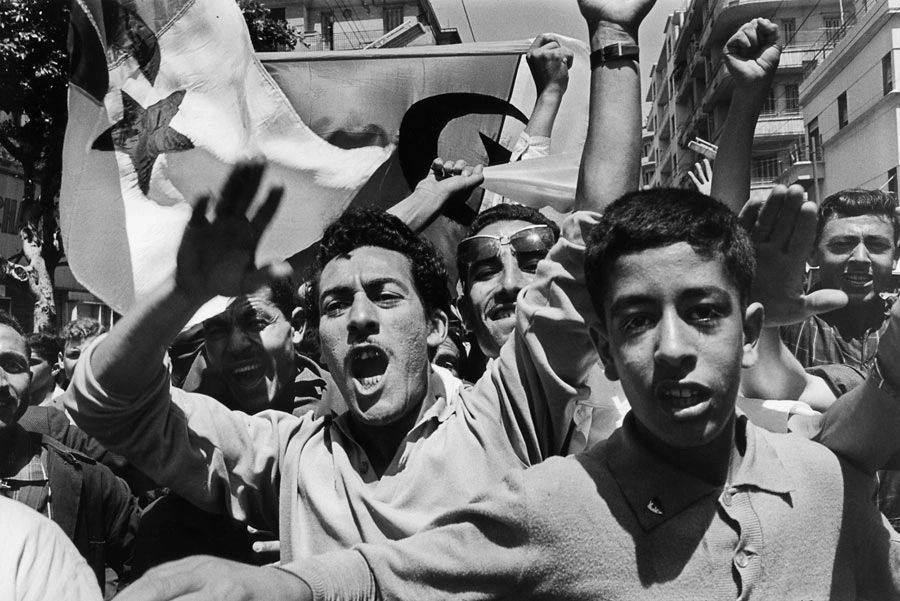
On the day that the Évian Ceasefire was announced, March 19th, 1962, Algeria was ablaze with love - for country and community. The sun had set that night on French Algeria, and with the fiery dawn came long-awaited Algerian sovereignty, although complications were yet to arise. As the foundations of the Casbah trembled with the footsteps of survivors racing to share the news, the still-subjugated looked to them as heroes, and to Algeria as the first of her African siblings to free herself from the shackles of colonialism through sustained militant resistance. The Algerians had shaken off the grip of the French Empire, and their liberation was a promise to others that they, too, could emerge from the belly of the beast, victorious.
It is in this freshly independent Algeria that a particularly promising, utopic iteration of the pan-African dream was born, a dream that germinated beneath soil still wet with the blood of the martyred; a dream that was watered with the tears of the survivors; a dream which traveled around the world in pockets of rapt conversation between people to whom such liberation had until then been a fantasy attainable only when they lay their heads down at night. For a distinct time in history, the idea of collective African independence seemed within reach, more so than ever before, and by extension, the demise of colonialism felt close. The funeral bells were tolling, and the opening notes of a requiem could be heard in the distance.
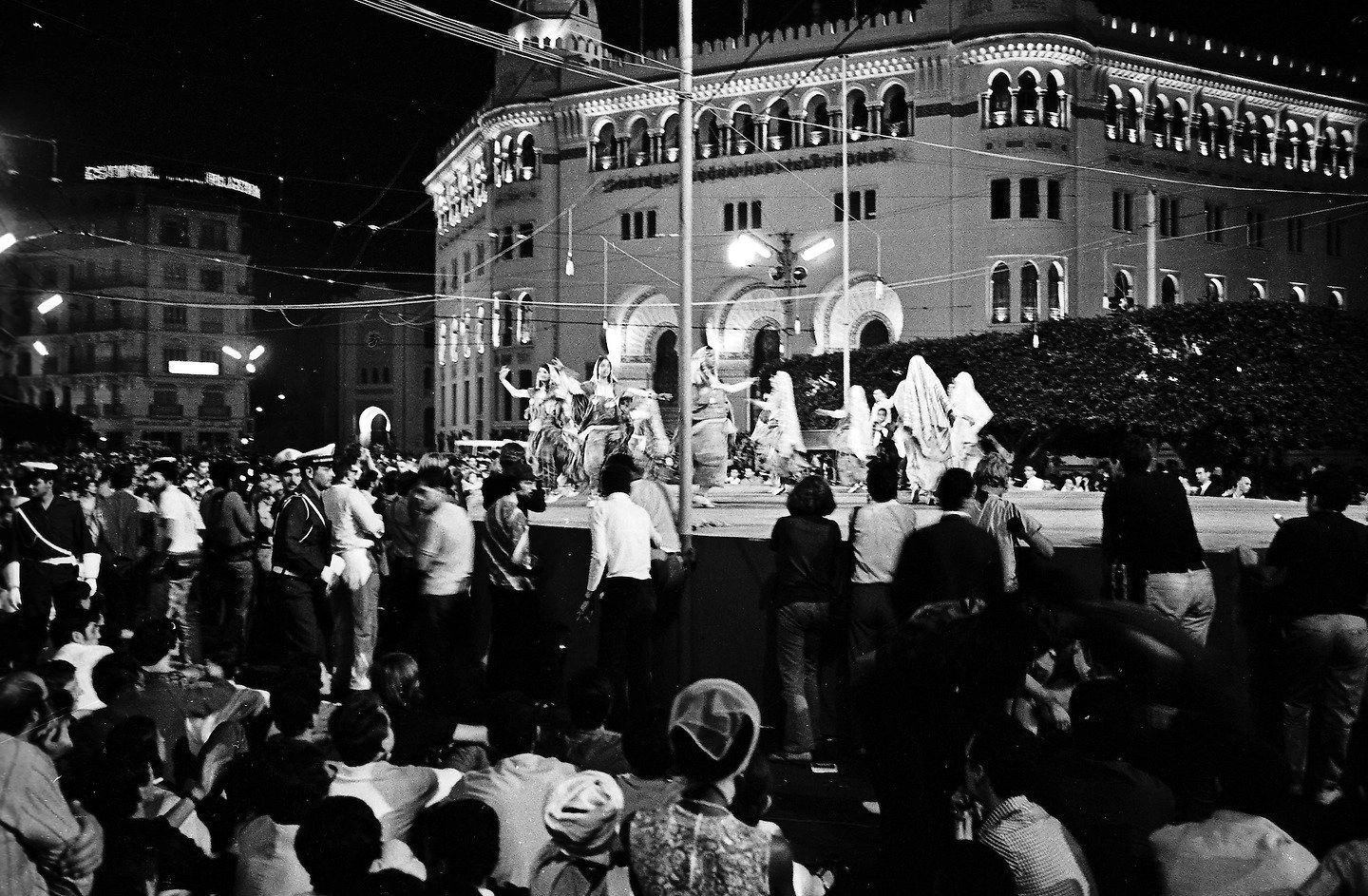
In its glory, this dream drew exiled revolutionaries from across the globe to Algiers, transforming the nascent city into a haven of radical anti-colonialism. The world looked to Algeria as ‘the country that fought the enslaver and won…the revolutionary stronghold of African nationalists…‘the place’ to stage the First Pan African Cultural Festival.’1 Thus, in 1969, the First Pan-African Cultural Festival took place in Algiers - a celebration of its new status as the ‘capital of the Third World’2 and the last rites of colonialism in all its forms. Never before, nor ever again, was the pan-African dream so tangible.
The festival hosted over 10,000 delegates and visitors from over thirty nations in Africa and beyond, including a cohort of the Black Panthers at the height of the American civil rights movement, who had settled in Algiers after escape from the United States and exile from Cuba. Nina Simone, Miriam Makeba, and Archie Shepp performed alongside Tuareg musicians, and leaders of the Angolan, Cape Verdean, Rhodesian, Palestinian, Western Saharan, and South African resistance processed through the streets of Algiers to traditional drumbeats and raucous applause. Algerian president Houari Boumediene declared at the festival’s opening that the event, although spectacular, was not a spectacle, but rather ‘an inseparable piece of the battle in which we are engaged together in Africa.’3
Even the journey to Algiers itself is described as a political pilgrimage. Algeria's long battle with France had catalyzed a series of other global independence movements, and so visiting Algiers felt to some like visiting the birthplace of their own resistance. Henri Lopes, former Prime Minister of Congo-Brazzaville, wrote, ‘My arrival in Algiers was met with great emotion in large part because our political consciousness…was cultivated as a result of the Algerian war for independence, more so than most African countries, and to arrive there, it was like going to a Rome or a Mecca.’4 Amilcar Cabral, a Bissau-Guinean anti-colonialist, also proclaimed, ‘Muslims go to pilgrimage in Mecca, Christians go to the Vatican, and national liberation movements go to Algiers.’5
Intended to be the grand first episode of a series of events by the same name, the festival of 1969 was, in fact, never replicated, bar a lackluster anniversary offering in 2009, which was described as distasteful and, unsurprisingly, lacking in the original spirit of 1960s Algiers. Thus, the dream remains locked in the archives of that fortnight, a momentary beacon of radical African unity. Accounts of the festival describe a euphoric sense of fraternity and an elemental feeling that we were on the cusp of a collective liberation, for which Algeria was only the first step. Michele Russell, a young African American attendee, wrote of her time at the festival: ‘We saw Algeria in terms of our pasts and what our futures might be.’6
Drunk on radical love and community spirit, it seemed to attendees like Lopes and Russell not only plausible but imminently inevitable that the Black Panthers would indeed emancipate African Americans from racial subjugation in the United States. It seemed that Nelson Mandela, trained by the FLN and imprisoned at Robben Island Prison in 1964, would be freed without delay and the ANC Party would succeed in dismantling the apartheid system. It seemed that the rest of Algeria’s African siblings would soon join the ranks of the liberated, and together they would enter a new age, one where Africa was respected and adored by the rest of the world, not undermined and mistreated. It seemed also to attendees that after all of this, sister Palestine, too, from the river to the sea, would inevitably be free. There would be lasting freedom and peace for all, before the turn of the century.
And there was liberation, even after the retreat of the radical pan-African dream. South African apartheid did collapse, albeit thirty years later, and many an African nation did win independence from colonial powers. Only a year after the death of Amilcar Cabral, Guinea-Bissau was liberated from Portuguese colonialism, the first liberation post-festival. Angola, too, won her independence from Portugal in 1975, Djibouti from French rule in 1977, and then Namibia and Eritrea in the early 1990s.
Yet, the Pan-African Dream in 1969 entailed so much more than a series of national liberations. When people spoke of freedom, they spoke of dismantling not only each colonial regime in turn but dismantling the very philosophy that allowed these regimes to endure for so long. For Algeria, sovereignty was won in 1962, but the journey towards French-Algerian equality is ongoing, the journey towards an age where Algeria, even implicitly, is no longer the ‘barbaric’ counterpart to an enlightened France. But dismantling the intangible, battling the invisible, is an impossibly daunting task.
Indeed, so fantastical a dream must have been paralyzing to consider at the time. Perhaps that is why it lost momentum so rapidly, buried and left dormant in 1969, banished to the confines of history and muffled by the weight of ever more creative forms of Western oppression. Like a shooting star, moving at more than 200,000 kilometers per hour, the Pan-African Dream of 1969 streaked past and burned out in less than a decade. Stars appear beautiful only from a distance, and as this one burned with the heat of a thousand injustices, moving ever closer to the Earth’s surface, awe became terror, hope became fatigue, the warm glow of potential became blinding, and the radical collective dream was abandoned as the weight of possibility became too much to bear.
A funeral was held in 1969, but we continue to see the insidious traces of Empire in global systems and judicial institutions all around us; in repeated headlines of racialized police brutality in the United States; in Israeli impunity since, and well before, October 2023; in the silenced cries of Sudan amid brutal civil war; in the United Kingdom’s simultaneous infatuation with and loathing for her own ‘multi-culturalism’; in sustained infighting between diasporic communities forced to compete for opportunities, forced to present ourselves as palatable versions of more ‘savage’ minorities.
However, as we watch each other struggle through war, genocide, famine, poverty, racism, imprisonment, and subjugation with unprecedented clarity, our technological interconnectedness fuels a new fire: a different pathway back to the radical dream, driven by disillusionment, frustration and untaxable empathy for one another. Collectivity has been forced upon us by globalization, and so perhaps collective liberation is closer than we can imagine, with the help of an untapped store of love we have been convinced should never be given free of charge.
While genocide continues to be live-streamed from Gaza and the West Bank, I am awed by a seemingly insurmountable Palestinian love for God that permeates through the screen, in spite of catastrophe. Just as we revel in the toppling of the Assad regime in Syria, and revelry turns to revulsion with every carceral discovery, Syrians themselves refuse to let even Israeli annexation undermine their love for freedom. Despite the persistence of white supremacy in the United States, in ever more insidious ways, African-American love for life endures, even in the face of death at the hands of those charged to protect.
It was this kind of love that underpinned the Pan-African Dream of 1969, and as we unearth it en masse, perhaps we may return to that dream with even greater commitment than before. Perhaps the dream will burn brighter than ever this time, and after every injustice we have seen, every futile action we have taken, every crushing despair we have felt, and every helpless tear we have shed, we will have the strength not to turn away and shield our faces from the heat. Perhaps, this time, the dream will not be like a star, quick and hot. Perhaps it will be like a tree, and it will grow slow and steady, with a thick trunk and sturdy branches, and it will not sway in the wind. Where the earth was once watered by the blood of the martyrs, this tree will take root in soil cultivated by the living, and the tree will bear fruit, and the fruit will be sweet, feeding us for generations to come.
Works Cited
1 Joans, Ted. 1970. ‘The Pan-African Pow Wow’, Journal of Black Poetry 1, no. 13 pg 4
2 Mokhtefi, Elaine. 2018. Algiers, Third World Capital. Verso Books.
3 Youcef L'Asnami. 2019. “Festival Panafricain d’Alger : Discours d’Ouverture Par Boumediene. Juillet 1969.” YouTube. February 17, 2019. https://www.youtube.com/watch?v=8ln7B535j3k.
4 Marable, Manning, and Hisham Aidi. 2009. Black Routes to Islam. Palgrave MacMillan.
5 in. 2019. “Ibn Ibn Battuta.” Ibn Ibn Battuta, August. https://doi.org/105850435/rwade10.
6 Russell, Michele. 1969. ‘Algerian Journey’, Freedomways pg 357
Dounia El Barhdadi is a British student and journalist of Moroccan and Algerian descent. She takes a special interest in Maghrebi culture, music, and history, having studied French and Arabic at the University of Cambridge, where she focussed on national memory, public memorialization, and contemporary traces of the Empire in France and the United States in her final year. She lived and worked in Cairo as a writer last year, and hopes to do the same in Morocco after graduation.