Essays65
God in Cinema
Jude Chehab
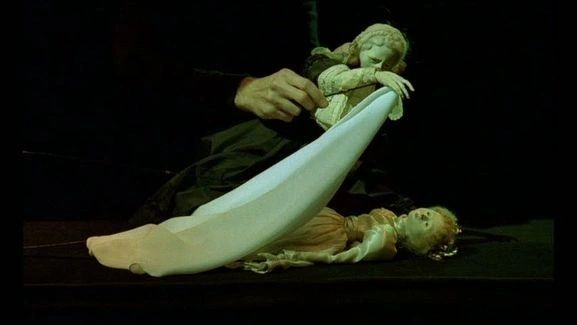
Sometimes when I think about God, I think about Steve Buscemi’s character in “Spy Kids 2.” He created all these creatures in the film and yet they despised him. He was desolate and thought why would they forget who created them? “Do you think God lives in heaven because he too lives in fear of what he’s created here on Earth,” he says. I believe our minds form in our youth through patches of images that define that which we learn. The anxious, reflective, Steve, represented the Creator. “Toothless” (1997), painted the image of purgatory, an illimitable space, lacking warmth and purpose. “What Dreams May Come” (1998) forever created my image of heaven and hell, if I close my eyes, I see no other version of them. So, you see, the power of cinema and the power of the image is unerasable. As I grew, and subsequently grew with God, I looked to these images for Him. I looked in all images for Him, He is hard to look away from. In “The Double Life of Veronique,” He is the puppeteer that she can’t turn away from, the audience is entranced by the puppet, however, after we’ve seen the Creator once it is impossible to look away. These expressions are rays of God’s light and filmmakers have continued to spread this light over their work, it is up to us to feel its warmth.
Our entire search in life is for that which is beautiful. We are people of beauty and we long for it. Most of the time it slips away from us, moments from our youth that have vanished, never to be heard from again. We then continue on in hopes of seeing this beauty once more, only to be left despondent. The beauty we find in cinema reminds us of that which we already know. Distant memories of God filter through, whispering to us, “Am I not your Lord?” This is the process of film, it gently finds these memories brings them to the forefront, and gives us back the beauty that has slipped for us.
Art is what reinvigorates the soul, and specifically, the seeing of this Beauty within the art wakes up the soul from the caged body. And there is no doubt, that cinema is art. The artistic eye in cinema is a reflection of God's beauty and we are searching for that Beauty; seeking God in cinema.
Jude Chehab is a Lebanese-American filmmaker whose cinematic interests have drawn Jude to the exploration of the esoteric, the spiritual, and the unspoken. A richly layered visual and intimate personal shooting style developed under the mentorship of Abbas Kiarostami's final student group. Jude has worked as a DP internationally, on films in Somalia, Sudan, and Pakistan, and has been credited with collaborations with the BBC, Hot Docs, and Sesame Street. Her work has been awarded fellowships through CAAM, BGDM, NeXtDoc, Points North Institute, Firelight Media, Close-Up, and Chicken & Egg. Jude's first feature documentary has been supported by: IDA, ITVS, TFI, and Sundance and went on to win the Albert Maysles Award for Best New Documentary Director at Tribeca 2023. In 2021, Filmmaker Magazine named her one of the 25 New Faces of Independent Film.