Essays64
Exploring the Aesthetic in Quranic Hermeneutics
Fahd Ahmed
وَعَنْ عَائِشَةَ أَنَّ الْحَارِثَ بْنَ هِشَامٍ سَأَلَ رَسُولَ اللَّهِ ﷺ فَقَالَ: يَا رَسُولَ اللَّهِ كَيْفَ يَأْتِيكَ الْوَحْيُ؟ فَقَالَ رَسُولُ اللَّه ﷺ: أَحْيَانًا يَأْتِينِي مِثْلَ صَلْصَلَةِ الْجَرَسِ وَهُوَ أَشَدُّهُ عَلَيَّ فَيَفْصِمُ عَنِّي وَقَدْ وَعَيْتُ عَنْهُ مَا قَالَ
“… Al-Harith bin Hisham asked Allah's Messenger (peace be upon him) "O Allah's Messenger (peace be upon him)! How is the Divine Inspiration revealed to you?" Allah's Messenger (PBUH) replied, "Sometimes it is (revealed) like the ringing of a bell, this form of Inspiration is the hardest of all and then this state passes off after I have grasped what is inspired...” (Sahih al-Bukhari 2)
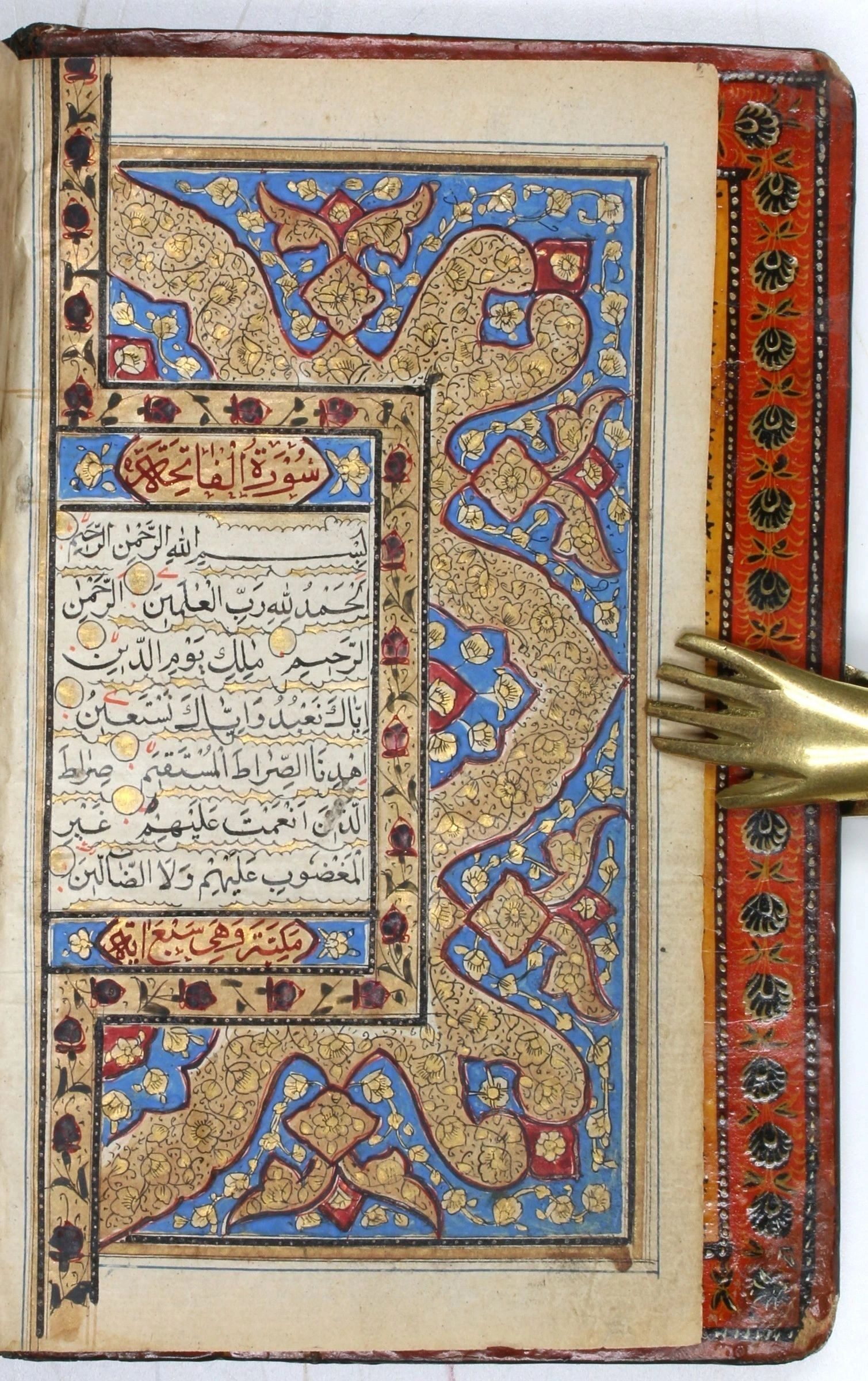
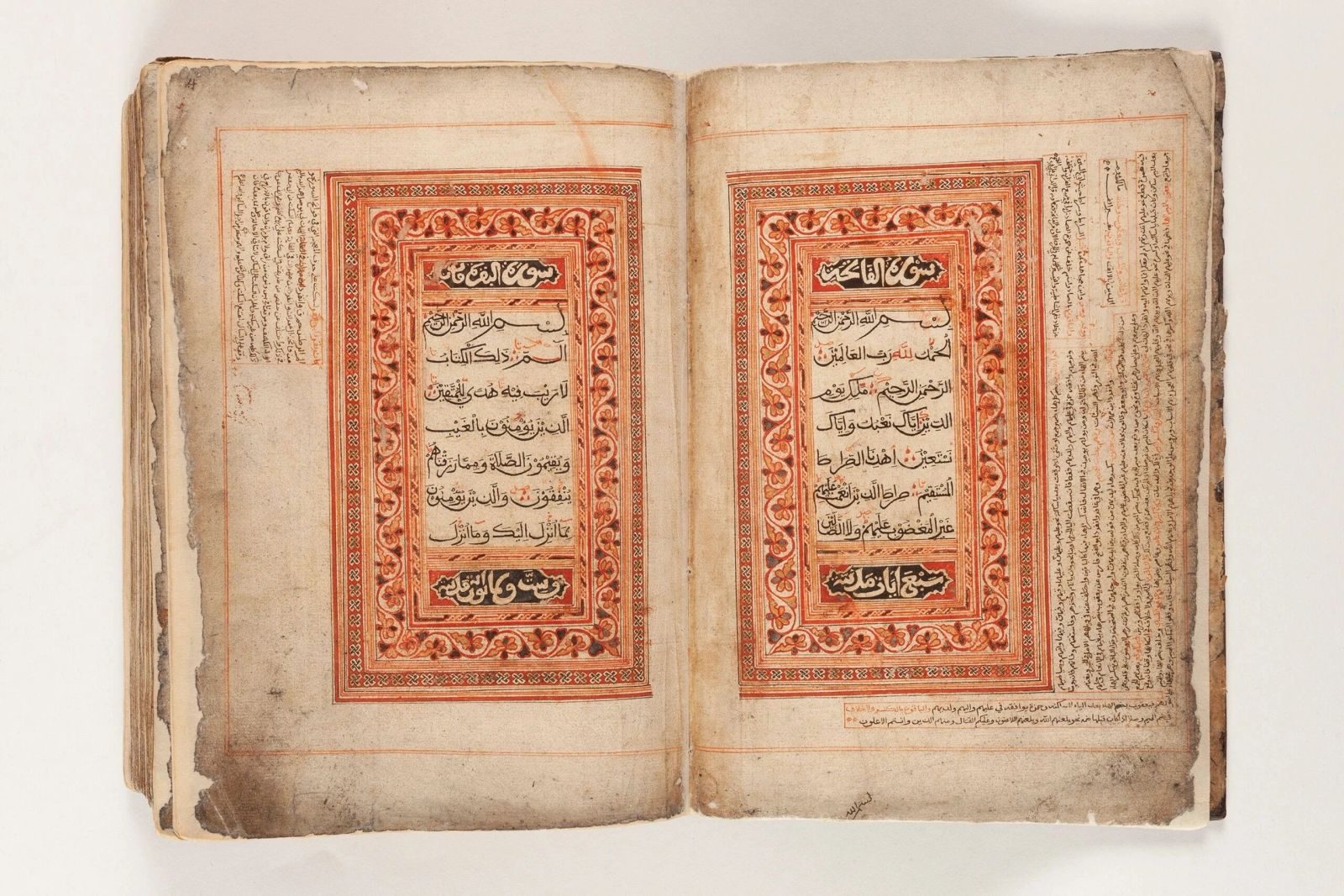
The aesthetic has forever been associated with the divine. It is said that when someone asked Bach how he played so divinely, he answered, “I play the notes, in order, as they are written. It is God who makes the music…” (Bateson, Gregory. 2015). From the very beginning of revelation, the linguistic and rhetorical qualities of the Quran have been connected to the miraculous (Ijaz); that language, or more precisely its use of speech as sound is directly the most prominent and irrefutable proof of its divinity. The study of the aesthetic is central to the Quran exactly due to this proposition. Without an understanding of its effects, we fail to perceive the sacred in a sacred work; and without a grasp of what makes the Quran sacred, how can we come to formulate a proper understanding or approach to its nature and through it an effective ontology for life and living?
Traditionally understanding the Quran has been the place of hermeneutics (through exegetes); the method whereby an extractive approach is applied to render meaning, information, and judgments from the text. It facilitates a process of meaning-making whereby both personal and social life is rendered through the lens of the Quran. There were - though with some variations - traditional positions that governed the processes through which exegesis took place involving all manner of preconditions, including precedence, history, linguistics, etc. Interestingly in their original formulation, they echoed a certain plurality of approach that seemed to be imbued with – if not always the spirit, at the very least an awareness – of the essential aesthetic quality of the Quran.
Aesthetics by definition isn’t an objective category of information or shared experience; it is by nature indivisibly personal, unique, and arguably incommunicable. There is a natural tension in the Quran, between its self-stated clarity and simultaneously its equally self-stated (unfathomable) depth that produces a paradox regarding its comprehensibility. This poses an essential logical problem with the consistency of any hermeneutical approach to the Quran for “… defining can undermine our investigative aim, for defining can confine…” (Furani, Khaled. 2020).
The challenge to evaluating an aesthetic assessment of the Quran has come both from within and without the Muslim world. Within the rigid radical hermeneutics of Ibn Taymiyyah who essentially rendered the Quran a closed text and gained widespread appeal in the 20th century “… amongst modern conservative Muslim intellectuals…” (Shah, Walid. 2010) And without from Western academia, who refuse to read the Quran as anything other than a literary cultural text.
The orientalists, colored by cultural bias at best and bigotry at worst, give us our first insight into this window of the Quranic aesthetic. “… Wansborough has called the language of the Quran ‘a torso’ – which suggests incompleteness, a fragmentary transmission.” (Kermani, Navid. 2018) A reading based upon a literary assessment of the text; ironically, Wansborough has highlighted features of the Quranic language, which will become salient later; that the Quran doesn’t fundamentally work as a literary work. A fact that will bear considerable weight in how the hermeneutics of the Quran operate.
The hegemonic impetus of reading all texts solely as literary is a surprisingly modern phenomenon. Ong highlights that “… Literacy was still thought of in nineteenth-century America as somehow serving the needs of oratory.” (Ong, Walter. 1979). Literary approaches were in the echo of traditional Quranic sciences, mnemonic to the oral character of human language; it was seen as supplementary to speech and not absolutely equivocal to it. This ambiguity even within Western tradition to do with the treatment of texts as literature, is demonstrated in Shakespeare – as one example. Shakespeare didn’t write literature but plays and though profound meaning can be drawn from the texts, it discounts the intended possibilities of meaning that the action – existing in the margins of the stage direction - come to provoke through performance. The text provides a reference point for the locus of action, which will in performance manifest the author’s ultimate intent.
There is an intransmutability of effect between the means of reading, or understanding a text, if taken out of its author’s intended context. Isadora Duncan, a famous 19th-century American said of this phenomenon, “If I could say it, I would not have to dance.” (Bateson, Gregory. 2015) We can recognize this approach as ubiquitous in modernity. That the world is approached through the process of mind as opposed to heart.
“… The authority of sacred texts is rooted in the magical power of ordinary language.” (Kermani, Navid. 2018). The Quran refers to itself as beautiful and recognizes its language as such; it equates the experience of its beauty with its divinity and here is where the essence of the Quran’s aesthetic lies and through it a proper determination of its meaning. It contains the inception of its message in the spoken word and its terminus in the profound experience that only a work of beauty can incite. The ambiguity the listener of the Quran experiences is its most essential aspect. It is the incomplete canvas of its unique and aesthetic effect, which forces a hearer to grasp, that which is ungraspable.
What is rendered poetic and inspirational in one medium is rendered obsolete and absurd in another. It becomes obvious, that what are rendered as inconsistencies are, of course, the intentional design of the author. Do we approach Picasso’s Guernica skeptical of its human forms? Or rather, do we see within the inconsistencies of human shapes and aesthetic impressions, a series of non-verbal and impressionistic ideas the author is trying to convey?
Ibn Taymiyyah says: “Knowledge is that which is truthfully transmitted from an infallible [individual] or a statement that can be defended by an accepted [logical] proof. Anything else is either a fabrication [attributed to an infallible source] to be rejected or a statement that is impossible to verify [logically], either positively or negatively.” (Shah, Walid. 2010) One can sense the soul of Ibn Taymiyyah in his theory; he is a man who could brook no ambiguity and someone who took the exercise of logic to such an extreme that the aesthetic must by definition be completely discounted. In this radical reformulation of treating the Quranic text as closed knowledge, “… Ibn Taymiyya was the first to offer a systematically articulated prescriptive theory of Qur’ānic interpretation in a pure form.” (Shah, Walid. 2010) What he developed enclosed the Quran in a cage of fixed propositions, rooted in the Quran itself, and ratified by the Hadith and traditions of the immediate companions, with no means of penetration from readings outside of those qualifiers.
“Sunni jurisprudence had already posited the Sunna of Muḥammad (PBUH) as the interpreter of the Qur’ān, but only in a loose sense of ‘interpretation,’ that is, not as commentary but as clarification of obscure rules in the Qur’ān.” (Shah, Walid. 2010) Where tradition treated the Sunna as a loose framework from, which a plural constellation of meanings were ever present; Ibn Taymiyyah wanted to develop a model of analysis with which to draw clear, concise information from the Quran. He wanted to essentially close its reading, remove its ambiguity and to ascertain a clear set of standards by which it could be applied systemically as a uniform guidebook for Muslim life, and so, Ibn Taymiyyah made of the wellspring of the Quran, a placid lake.
This double bind that occurs through Ibn Taymiyyah; locks in a cyclical chain, where the stronger the aesthetic, the greater the exertion to supress the natural ambiguities it produces. Ibn Taymiyyah’s method is to tame a tiger, yet by taming it, he removed its claws and teeth and so does it any longer remain a tiger? By depriving an aesthetic appreciation of the Quran, he essentially removed the sacred from the text; leaving behind only the words.
What this paper ultimately must conclude in finding; is that the aesthetic represents a negative space; and essential emptiness, which though ambiguous, uncomfortable, disconcerting, provokes occupation, engagement, and infinite revisitation. As a parable, home may be made brick by brick, but it is in the emptiness the bricks create through the separation of outside and inside, and even within the inside of its partition of rooms, which gives it the cognition of home. It is the ambiguity of emptiness, which the bricks create that forms the function of a home, yet to confuse the bricks as the home would be incorrect. The aesthetic is the emptiness at the center in the locus of meanings that a word, a sentence, or a verse in scripture creates. The aesthetic of the Quran acts like any work of art, or of beauty; it begins by arresting us, by captivating our senses, then our thoughts, our being.
It is only a blank page that can be written on, it offers the endless in its emptiness. The aesthetic precludes a condition of empty receptivity and so the Quran, like the ocean of ink, which the divine pen could drink up time and time again; it is the empty polished heart that can reflect the sea, and bring the unfathomable infinite into the sensible. The aesthetic is being, and only in being, we can interpret the divine through the immanent words and speech of the Quran.
References:
Bateson, Gregory.(2015). Form, Substance and Difference. Institute of General Semantics.
Furani, Khaled. (2020). Ethics and Aesthetics Are One.Critical Times, Duke University Press.
Kermani, Navid. (2018). God is Beautiful: The Aesthetic Experience of the Quran. Polity Press.
Kermani, Navid.(2000). The Aesthetic Reception of the Quran as Reflected in Early Muslim History. Routledge.
Ong, Walter.(1979). Literacy and Orality in Our Times. Modern Language Association.
Shah, Walid.(2010). Ibn Taymiyya and the Rise of Radical Hermeneutics: An Analysis of an Introduction to the Foundations of Qurʾānic Exegesis. Oxford University Press.
Fahd Ahmed is a British/Pakistani editor and producer based in London. He is the founder and creative director of Studio Amorem, a studio located in East London. He was the producer on the leading multi-series Arab Ramadan show, Kannak Tarah. He has edited for the BBC and was a story editor on the PBS-funded 3-part docuseries, A Town Called Victoria. He has been an editing fellow in the Gotham Edit Lab, Close-Up Initiative Edit Lab as well as the Sundance Story and Edit Lab. Recently, he co-produced and edited the feature documentary - Q (Jude Chehab, 2023.) Q has been awarded the Albert Maysles Award (Tribeca), the Grand Jury First Feature Award (Sheffield Docfest) and was named by Vogue as one of the best documentaries of 2023. He was nominated for an IDA Award for Best Editing.