Essays62
Lilies Tell Us Not to Worry

Kahf Magazine
Prophet Mohamad (PBUH), Jesus (PBUH), and Søren Kierkegaard tell us not to worry
عن عمر رضي الله عنه قال: سمعت رسول الله صلى الله عليه وسلم يقول: "لو أنكم تتوكلون على الله حق توكله لرزقكم كما يرزق الطير ، تغدو خماصاً وتروح بطاناً" ((رواه الترمذي ، وقال حديث حسن )).
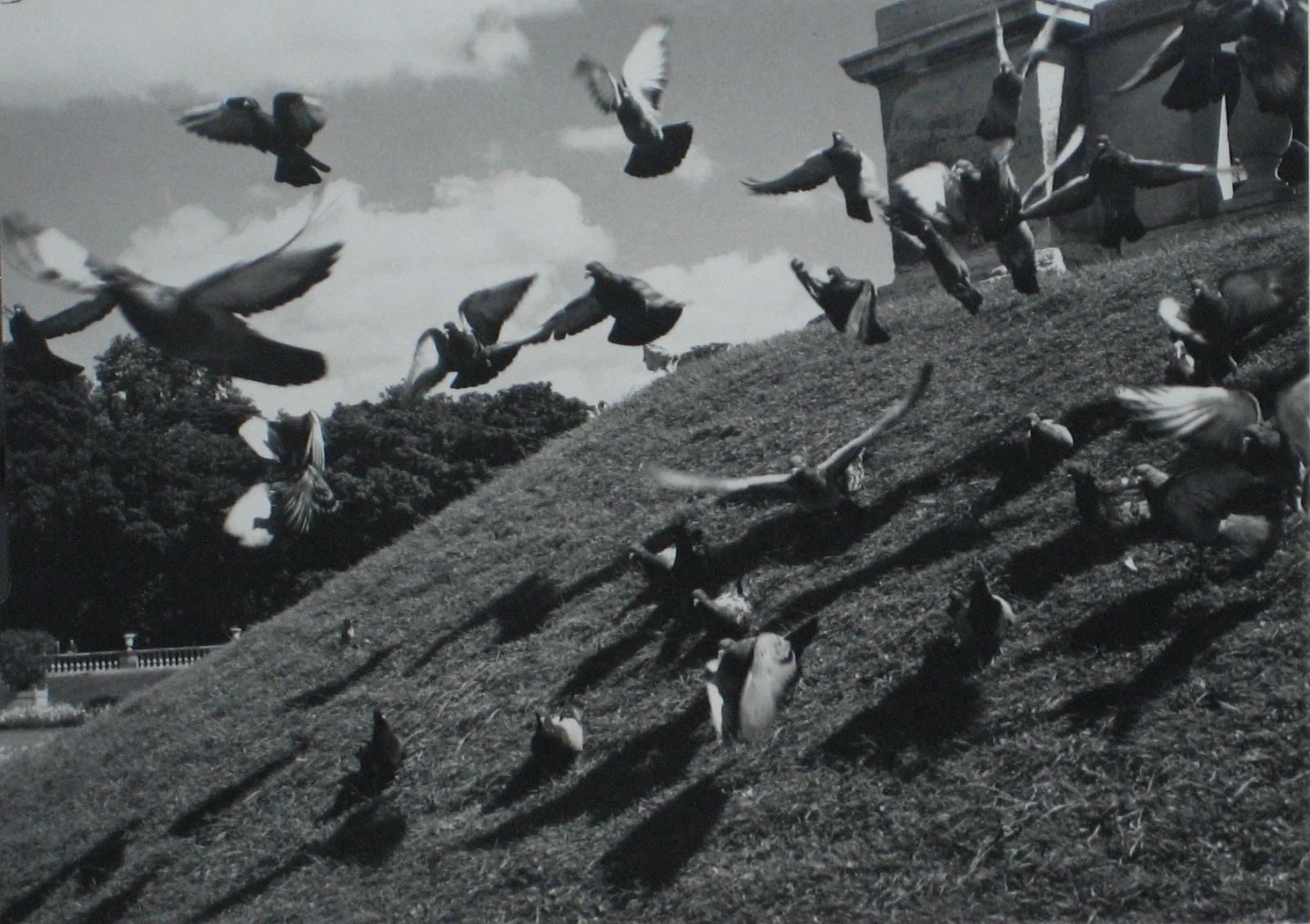
Umar, may God be pleased with him, said: I heard Messenger of God (ﷺ) saying: "If you all depend on God with due reliance, He would certainly give you provision as He gives it to birds who go forth hungry in the morning and return with full belly at dusk".
“Look at the birds of the air; they neither sow nor reap nor gather into barns, and yet your heavenly Father feeds them…consider the lilies of the field, how they grow; they neither toil nor spin, yet I tell you, even Solomon in all his glory was not clothed like one of these.” Matthew Chapter 6
What exactly do the birds of the air and lilies of the field teach us that can help stave off our worrying?
It is precisely this question that Danish philosopher Søren Kierkegaard (1813-1855) so eloquently addresses in his work, The Lily of the Field and the Bird of the Air: Three Godly Discourses, first published in April 1849.
From the lily and the bird, we learn to keep silent (i.e. not to question):
The bird:
“The bird keeps silent and waits; it knows, or rather it fully and firmly believes, that everything takes place at its appointed time. Therefore the bird waits, but it knows that it is not granted to it to know the hour or the day; therefore it keeps silent. ‘It will surely take place at the appointed time,’ the bird says. Or no, the bird does not say this, but keeps silent. But its silence speaks, and its silence says that it believes it, and because it believes it, it keeps silent and waits. Then, when the moment comes, the silent bird understand that this is the moment; it makes use of it and is never put to shame.”
The lily:
“because it knows that [Spring] will come at the appointed time; it knows that it would not benefit in any way whatever if it were permitted to determine the seasons of the year. It does not say, ‘When will we get rain?’ or ‘When will we have sunshine? Or ‘Now we have had too much rain,’ or ‘Now it is too hot.’…no, it keeps silent and waits…”
It is what their silence expresses, however, that is most important:
“[Their silence] expresses respect for God, for the fact that it is he who rules and he alone to whom wisdom and understanding belong. And just because this silence is respect for God, is worship – as it can be in nature – this silence is so solemn. And because this silence is solemn in this way, a person perceives God in nature – so what wonder it is, indeed, that everything keeps silent out of respect for him!”
Before you say that this is silly because the lily and the bird cannot speak, consider this:
“Before God, you shall not become more important to yourself than a lily or a bird…And even if what you want to accomplish in the world were the most amazing feat: you shall acknowledge the lily and the bird as your teachers and before God you are not to become more important to yourself than the lily and the bird.”
Because it is not about us, or our plans:
“Would that in the silence you might forget yourself, forget what you yourself are called, your own name, the famous name, the lowly name, the insignificant name, in order in silence to pray to God, ‘Hallowed by your name!’”
2. From the lily and the bird, we learn to obey God…
“Out there with the lily and the bird there is silence, we said. But this silence – or what we strove to learn from it, to become silent – is the first condition for truly being able to obey.”
Just think of all the things in nature that seamlessly unfold at God’s command:
“…[t]he sighing of the wind, the echo of the forest, the whispering of the leaves…the rise of the sun at a given hour, and its setting at a given hour…and the agreement of the seasons of the year in their precise alternation: everything, everything, everything is obedience. Yes, were there a star in the heavens that wanted to have its own will, or a speck of dust on earth: they are instantly annihilated, and with equal ease. For in nature everything is nothing, understood in the sense that there is nothing other than God’s unconditional will; at the same instant that it is not unconditionally God’s will, it has ceased to exist.”
Human beings, on the other hand, are apt to complain:
“Finding themselves in the lily’s circumstance, they might question ‘why’ and ‘to what purpose’ – esteeming themselves too ‘lovely’ to be ignored, and thus withering from grief.”
Because, unfortunately, we are situated between the opposing forces of good and evil:
“No one can serve two masters; he must either love the one and hate the other, or hold fast to the one and despise the other. You cannot serve God and mammon, not God and the world, not good and evil. Thus, there are two powers: God and the world, good and evil, and the reason a human being can only serve one master is certainly that these two powers – even though one power is infinitely stronger than the other – are in mortal combat with one another.”
And to succumb to one power, even in the slightest, is to wholly disregard the other.