Essays52
Sacred & Profane: Animist Ontologies in Islam and Modern Society
Fahd Ahmed
“… Abu Laila reported the Prophet (PBUH) as saying, ‘When a snake appears in a dwelling say to it, 'We ask you by the covenant made with Noah and the covenant made with Solomon son of David not to harm us'…” (Mishkat al-Masabih, 4137)
The sacred the profane, the immanent the transcendent, religion and society. The debates over the true states of these terms have existed since time immemorial. Within the intrinsic dualism of these subjects, the argument is over the liminal spaces that divide and unite them; for the borders of these words carry potent implications for how we see the world and how we place ourselves within it. Animism is considered the most immanent form of religion, whereby “man does not . . . ascend to heaven . . . the gods descend to earth.” (Lambek, Michael. 2013). In his landmark study of totemism, Durkheim highlighted the key facet of animist belief, in which the entire world is sacralised with spirit. He introduced a methodological framework of study that removed it from the apparatus of superstition; opening a serious enquiry into its ontology and the forms of existence it engendered. Animism, and specifically the idea of the primitive – against Durkheim’s best efforts, has remained a slur; whereas the primitive that was to be found in animism denoted a social order where religion and society are so co-intermingled that the inexorable link between the two became tangible.
Durkheim was inspired to explore the functionalist role religion plays in society based upon rising suicide rates across an increasingly industrialised Europe. He saw danger in a world without religion, as it would not ground the individual in an understanding of society. The sudden, exponentially accelerating shifts in human life that modernity brought, would ultimately result in dangerous and destructive pathologies within a society.
“Religious practice is an expression, elaboration, and enlargement of the ethical.” (Durkheim, Emile. 1975). Islamic law as expressed in the Sharia isn’t a single codified body of work. Of the 6,232 verses that make up the Quran, only 500 could be said to be of a legal nature. The Quran opts to teach through parable, allusion, paradox, and likewise, the traditions that have formed the ethos of Islam, whether rooted in the Hadith or extra-textual sources all express an idea of being through way of action. Due to this dichotomy as a faith of practice, which through the immanence of actions espouses a certain ontology, Islam has a unique response to the question of the transcendent in life, and in turn an approach to life itself.
Why is this question pertinent and why should we care? The issue of ontology can be argued to be a global issue now. Durkheim wasn’t a prophet, but he saw the trajectory of a sociological phenomenon, that could cause nihilism in the individual and disintegration in the social fabric. What he couldn’t have foreseen was how rampant and runaway this process would become. We live in an age where nuclear proliferation and irreversible environmental damage have resulted in the objective potential for an apocalyptic outcome as an ultimate conclusion to human history. Fossil fuels are sourced at immense damage to the environment, the seas are poisoned and large tracts of once lush land is turned into landfills and waste; there is nothing sacred in the immanent world so it can be profaned utterly.
There is something grossly cyclical in the transcendent ontology of modernity. Whether scientifically or due to modernity’s broad roots in the Abrahamic religion’s apocalyptic traditions; believers and non-believers alike live carelessly anticipating a potential but as yet, unrealised end-of-the-world scenario over the horizon of some future point in time.
In our case, it is transcendence taken to its zenith, it is an ontology of rampant disregard for the material world as an immanent place of experience. It produces catastrophe through accident, disregard, and mistreatment of its social and natural fabric. And with this in mind, how we understand our being through the ontology of our beliefs becomes central to the question of resolving the destructive paradoxes central to modern society.
It is capitalism as the hegemonic force organising social principle through a pervasive perspective that quantifies not only things but fundamentally being itself. We ultimately confine ourselves to a live within “… fears that force us to painfully, even fatally, define and domesticate infinity and its puzzles.” (Furani, Khaled. 2020).
It is only natural then, that Islam, facing the inexorable ties that bind a religion to a society in the echo chamber of human life comes to mirror the social values of the world it finds itself within. There is a dissonance, resulting from the overarching ethos of capitalism emerging in the social life of Muslim discourse, which seems to run counter to the essential ontology of Islam itself; an ontology, which produces a very unique form of immanent relation between being and others that must be characterised as animistic.
We can discover similar notions within further examples of the Hadith literature, regarding the animation of otherwise inanimate things:
“The Prophet ascended the mountain of Uhud and Abu Bakr, Umar and Uthman (RA) were accompanying him. The mountain gave a shake (i.e. trembled underneath them). The Prophet (PBUH) said, “O Uhud! Be calm.” The Prophet (PBUH) hit it with his foot, adding “For upon you there are none but a Prophet, a Siddiq and two Martyrs.” (Sahih Al-Bukhari, 3699)
This Hadith brings the idea of animist personhood from the transcendent space of the afterlife into the immanent, for it describes the mountain shaking or responding to the presence of the Prophet (PBUH) and the Companions (RA) upon it; as though it had been disturbed. This is Mount Uhud, a mountain that in another tradition, the Prophet referred to as “… a mountain that loves us and is loved by us” (Sahih Al-Bukhari, 4084). The mountain shaking seems to be almost nervous in character; which only stops after the Prophet (PBUH) calms it with a direct address through name, “Uhud” as if speaking to a person, and then hits it with his foot, as though bringing it to attention. He speaks to the mountain again, introducing himself and his companions to it. The important point to note here is that the companions themselves experienced this miraculous exchange between the Prophet (PBUH) and the mountain, and so the story itself brings the otherwise miraculous, the realm of the supernatural within Abrahamic traditions into the everyday and ordinary.

To recall the Hadith with, which the paper began of course also makes this point salient. For it infers a correlation of language between the snake and man, yet it brings it even deeper into the mundane, for the one who speaks to the snake is an ordinary person. The address itself references the religious covenant between the human and animal world as a point of moral coda to be acknowledged by the snake. This covenant is connected to two specific Prophets, whose association with the animal world is also current in both the Judaic and Biblical traditions. This brings us to the story narrated by the Prophet (PBUH) regarding the Prophet Solomon (AS):
“I heard God's Messenger say that a prophet took the people out to pray for rain, and when he saw an ant raising some of its legs to the sky he said, ‘Return, for your prayers have been answered because of another’.” (Mishkat al-Masabih, 1510).
There is a common theme that emerges in the experience the Prophets have of the immanent world compared to that of the ordinary man who is afflicted with spiritual and sensorial deafness to the empirical cognition of beings other than human – for he cannot hear all creation constantly in a state of religion through praise and worship of God. Hence you can speak to a snake, but do not expect a reply except by way of action. So the notion of being or personhood is expanded, and “Instead of the solipsistic formula ‘I think, therefore I am’ the indigenous cogito must be articulated in animistic terms, as in, ‘It exists, therefore it thinks’.” (Lambek. Michael. 2013)
One of the Prophet Solomon’s (AS) marked qualities was to be able to commune freely with Jinn and animals alike. His awareness sheds light on an immanent quality of reality that otherwise remains transcendent for being fundamentally unseen. As Lambek notes with religion in general that “transcendence is always mitigated by or folds into immanence and vice versa.” (Lambek. Michael. 2013). The Quran as the word of God, or Christ as God incarnate on Earth can be taken as examples of this, but here in the story of Solomon (AS) the objective ontology is not of a miracle that is localised in a particular time and space, but speaks to the ontology of an “other” than human “being”; and in one stroke also positions human ontology in correlation to it.
This story is interesting for several reasons; the implied independent sentience of the ant and the fact it desired and prayed to God, the same as any human. God weighted the prayer of this ant higher than that even of a Prophet of God or his followers. Why may that be? Here we feel the touch of the transcendent, in the immanent. There is no answer given, other than we assume that God weights the prayers of animals and beings, we can’t hear and in the case of the ant - easily miss while walking - as ones that can fulfill the mutual wish of another group of beings. The natural ambiguities in the narrative, force the reader, the believer or sceptic to ponder upon this essential question. The story is one which in the Durkheimian mode is religion as it informs ethics. The prayers of an entire community were fulfilled because of a lowly ant; so, it begs the question what if it had been thoughtlessly tread upon?
I’ve observed even within contemporary Sufi tradition, an emphasis on learning to walk with one’s head ever bowed. Primarily as a mark of humility, but also to watch one’s steps so as not to ever tread on something so small as an ant (which is also expounded to be a great sin.)
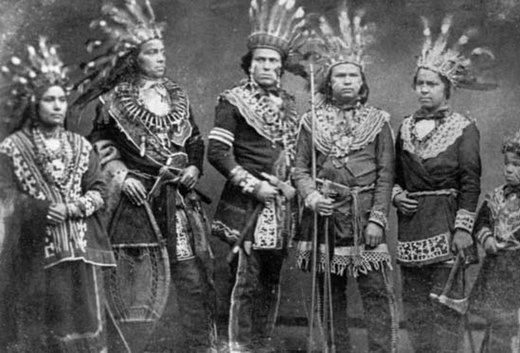
It may be pertinent to recall Hallowell’s research amongst the Ojibwa at this juncture. “They speak of them (stones) with personal or impersonal pronouns respectively.” (Harvey, Graham. 2005) Hallowell observes the Ojibwa differentiate a stone possessing or lacking personhood, which is often based upon a direct interaction, or an observed action on part of the stone. In Islamic ontology, the idea of being seems to be an ever-present quality of all animate and inanimate things. A hadith demonstrates this point:
Once when he was leaving home, a cat had gone to sleep on his cloak. Rather than move the cat, he took a knife and deftly cut the edge of his cloak so as to not disturb the cat’s nap.
Islamic ontology seems in essence, to present both a uniquely primal and simultaneously transcendent form of animism. “Transcendence and immanence do not refer to distinct realms of thought, practice, or being in any absolute sense, but are matters of scale or perspective.” (Lambek, Michael. 2013). And so our ethical relations aren’t anthropocentric but animistic; for humanity as only one being amongst other beings in creation are tied together through equivocal moral and social duties:
"I heard the Messenger of Allah say: Whoever kills a small bird for no reason, it will beseech Allah on the Day of Resurrection saying: O Lord, so and so killed me for no reason. And he did not kill me for any beneficial purpose." (Sunan an-Nasa'I, 4446).
“A woman entered Hell because of a cat which she tied up and did not feed, or let it loose to eat of the vermin of the earth, until it died.” (Sunan Ibn Majah 4256)
There is an emphasis on ethics placed in the heart of these narratives; it is not worship or piety alone that distinguishes man above any living or inanimate thing – for in another Hadith, it is said that “… If one mountain had acted tyrannically towards another mountain, the aggressor would have been pulverised” (Al-Adab Al-Mufrad, 588); the immanent world is expressed in morally relative terms; mountains, animals, even the earth itself seem to be cognisant of and bare ethical responsibilities in relation to the totality of existence. Tradition also states that stones and inanimate objects will bare witness to our actions on the day of judgment; implying a whole host of other animistic conditions; sight, speech, hearing, and memory for instance. In this state of affairs, the presence of God isn’t only transcendent in character; but likewise relational. It is said that God has forbidden the earth to consume the body of the Prophets; in another hadith, God ordered the earth and the waters to “collect and return” the ashes of a man who had himself cremated and spread across land and sea for fear of God; yet when the earth and sea bought him together before God so he could be judged, God forgave him (Sahih al-Bukhari, 7506).
At the centre of the nexus of this ontology of beings is God. The Islamic paradigm is based upon God's direct and immediate presence in this life. “Otherness is not stable; it requires a completion through immanence, in which deity does become partly discernible or approachable within the human world.” (Lambek, Michael. 2013).
Ultimately, it is reasonable to argue, that Islam certainly has an animist ontology, though the arrangement of its principal components is unique, and likewise its social repercussions are unique. The ontology of animism is surrounded by silence and this silence seems to work as an ethos; inhabiting a way of being. Where senses fail, the transcendent comes into effect in the form of faith. This is actualised in the ethos of being, which can be seen most distinctly in Islamic cultural traditions rooted in Sufism, or the Sufis themselves; as inheritors of a pedagogy incepted by the Prophet (PBUH).
To conclude finally, what relation does such an ontology have for a world, teetering headlong into an inevitable ecological crisis of apocalyptic proportions? The ontology of modernity is ill-equipped with a form of the religious and social broken into what “Levi-Strauss called bricolage” (Lambek, Michael. 2013), to address a problem that is fundamentally rooted in our relationship to the immanent world. There is an ugliness in how society sees itself, and the engine of civilisation that moves modernity seems little different from that of the Romans, when Tacitus said, “Rome makes of a place a desert, and then calls it peace.”
To invoke Durkheim again is to invoke a man whose words so often seem uncomfortably Prophetic: “… That religion is ultimately society’s image of itself, the flash of recognition in the dialectic of social life…” (Lambek, Michael. 2013) expressed fundamentally what the ontology informed by the religious life ultimately means. Society and Religion are two sides of the same coin; Narcissus eternally gazing upon himself. The animism central to Islam sacralises a world, through the moral bindings of equivocal and unilateral ethics. In a society, where such an ontology is prevalent, how could mankind possibly exceed the limits of his needs and not only bring harm to the natural world, with all its independent agencies of life; but ultimately to himself, for he is practically also bound to each living thing in a network coterminous existence? A final ethnography drawn from life will illustrate this simple point:
My father is not a religious man, but when I was young, I went out with my siblings and bought a bird home in a cage. My father didn’t say anything at first seeing how happy we were, but eventually, he spoke to me with a sensitivity that was not common to him. He simply said, that “… a bird by nature is free. It is a sin to cage it up.” Not immediately, but a few days later, my siblings and I went to the local park, and with some tears, let the bird free…
Works Cited
Harvey, Graham. (2005). Animism: Respecting the Living World. Columbia University Press
Furani, Khaled. (2020). Ethics and Aesthetics Are One. Critical Times, Duke University Press.
Lambek, Michael. (2013). What Is “Religion” for Anthropology? And What Has Anthropology Brought to “Religion”? John Wiley & Sons.
Bateson, Gregory. (--). Output-4.PDF from Dr. Perdigon. Title, date and publisher unknown.
Durkheim, Emile. (1975). The Elementary Forms of Religious Life: The totemic system in Australia.London: Routledge.
Fahd Ahmed is a British/Pakistani editor and producer based in London. He is the founder and creative director of Studio Amorem, a studio located in East London. He was the producer on the leading multi-series Arab Ramadan show, Kannak Tarah. He has edited for the BBC and was a story editor on the PBS-funded 3-part docuseries, A Town Called Victoria. He has been an editing fellow in the Gotham Edit Lab, Close-Up Initiative Edit Lab as well as the Sundance Story and Edit Lab. Recently, he co-produced and edited the feature documentary - Q (Jude Chehab, 2023.) Q has been awarded the Albert Maysles Award (Tribeca), the Grand Jury First Feature Award (Sheffield Docfest) and was named by Vogue as one of the best documentaries of 2023. He was nominated for an IDA Award for Best Editing.