Essays51
Spirituality in Psychology: Bridging Science and Faith

By: Noura Amkieh
When Carl Jung, a well-known Swiss psychoanalyst, was asked in an interview on BBC if he believed in God; he answered with confidence and Witt that “I don’t believe in god, I know”.
The field of psychology, which is relatively recent in the sphere of the scientific community, has been grappling with its struggle and divorce of spirituality in and out of the discipline. It’s not uncommon to see that one day scientists and psychologists are curious about the soul within the person and the metaphysical world, and the other day they declare this as voodoo science that is no longer accepted and needs to be replaced with fMRI scans of the brain.
Going back to Jung, when he delved deeper into his research, he found himself drawn to the spiritual dimensions of human experience. He believed that beyond the surface of our conscious minds lay a vast and interconnected realm known as the collective unconscious. Here, he discovered universal symbols and archetypes—ancient motifs that echoed across cultures and ages, bearing profound spiritual significance. Guided by his intuition and a thirst for understanding, Jung immersed himself in the study of religious and mythological symbolism. He saw in these age-old tales and sacred images a reflection of the timeless truths that underpin human existence. From the ancient myths of gods and heroes to the symbols of the Christian faith, Jung found a rich tapestry of meaning that resonated with the deepest depths of the human soul.
Now, let’s take a step back and state what we already know about faith and mental wellbeing:
Mental illnesses are multi-factorial, they can come from genetics, biology, environment, and spirituality. Having faith has been linked to having better relationships, lower suicide risks, and an overall better sense of life satisfaction. Faith and spirituality frequently serve as crucial elements in the healing journey for individuals who practice a religion. Interestingly, within these communities, individuals grappling with mental health issues often turn to their faith leaders as their initial source of support. Reliant on divine intervention for healing, they may perceive seeking psychiatric assistance as a sign of spiritual weakness. Some may interpret their symptoms as a form of divine punishment, a consequence of their sins, or a feeling of abandonment by God. Unfortunately, these doubts might be confirmed by religious leaders or even friends and family who would confirm that the reason why they’re currently struggling is largely due to their “lack of faith” or something wrong they have done in their relationship with God. Typically, this would lead the person to feel even worse about themselves, question if they’re doing anything right, or even doubt the relationship they have with God, thinking “Maybe he is mad at me and I do deserve what is happening to me”.
Our great scholars who were the pioneers in the field thought differently. When Abū Zayd Al-Balkhī’ used to treat his patients, he did not only prescribe meditation and prayer, but he also worked on more than 20 herb combinations for depression, aroma therapy, exercise, fasting, exposure therapy, and talk therapy. Therefore, it would be really unfair to really throw all the blame on the person’s lack of faith, when there exists other ways to provide treatment. Al-Balkhī’ gave us a stepping stone on the diversity of approaches used to treat mental illness and to highlight our need to seek proper specialized care.
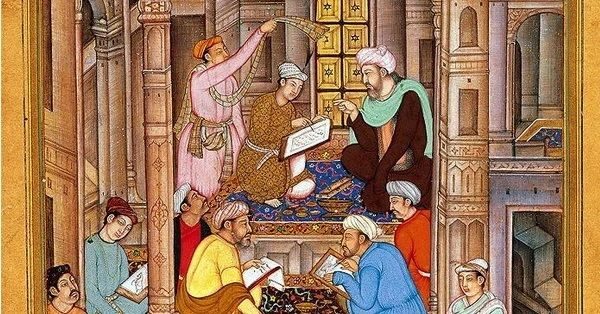
Also, at a time when the boundaries between spirituality and psychology were blurred, Al-Ghazali recognized the interconnectedness of faith and mental well-being. He understood that mental illnesses, like all human afflictions, were multi-faceted in nature—arising from a complex interplay of genetics, biology, environment, and spirituality. With unparalleled insight and empathy, Al-Ghazali sought to bridge the gap between the spiritual and the psychological, offering solace and guidance to those grappling with inner turmoil and affliction.
In his seminal work, "The Revival of the Religious Sciences," Al-Ghazali explored the depths of the human soul, offering profound insights into the nature of spiritual healing and self-discovery. He emphasized the importance of inner purification and moral rectitude as pathways to inner peace and spiritual fulfillment. Through contemplation, prayer, and the cultivation of virtuous qualities, Al-Ghazali believed that individuals could overcome the shackles of despair and find refuge in the boundless mercy of the Divine.
There is no need for us to choose between the mind and soul; we have been given both, and we shall indulge in all.
Noura is a Clinical Psychologist based in Beirut, Lebanon, she holds an MA in Clinical Psychology and a diploma in Islamic Psychology from Cambridge Muslim College. Her practice is centered around bridging the gap between spirituality and psychology, making the two meet to cater to the diverse needs of individuals. She also works in trauma research within the MENA region.