Essays58
Seeing Faith: Shaping Ontologies through Film and Prophethood
Fahd Ahmad
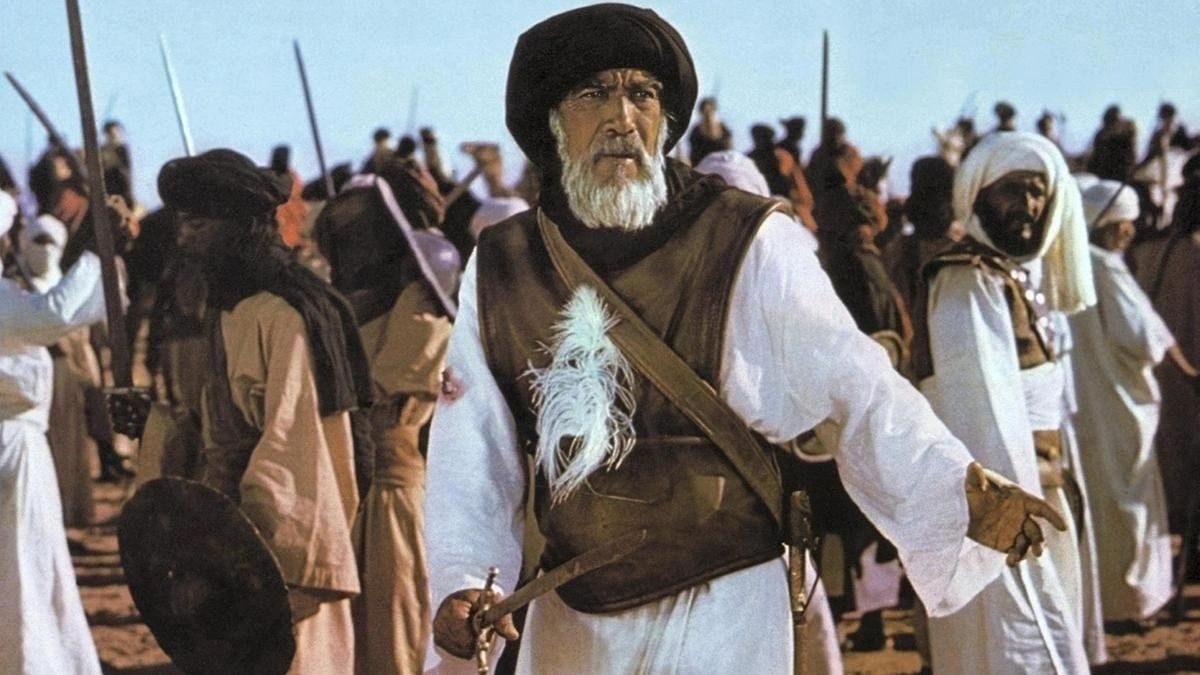
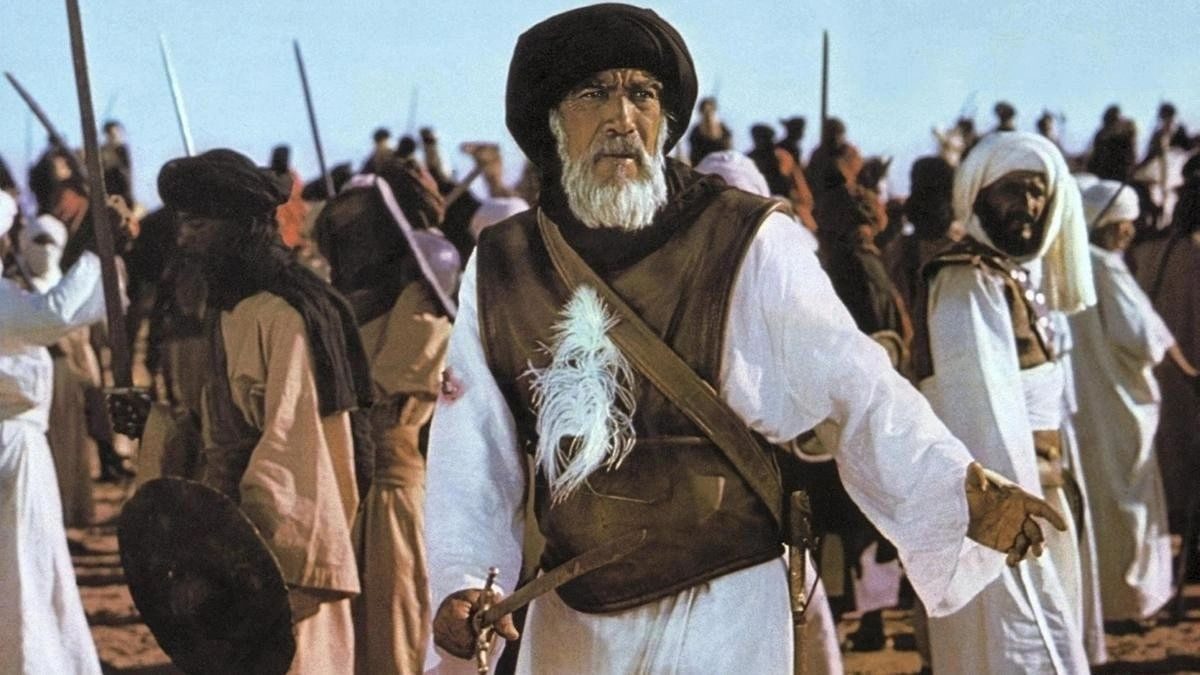
By drawing on both the Christian and Islamic traditions, we can see that there is a fundamental semiotic difference in not only how the Prophet (PBUH) and Christ are represented; but also how they are treated as peculiar cultural artifacts contingent upon the ontologies that articulate them. Utilising “visual sociology” along with the philosophy of “aisthesis” as methods interesting results abound from what is observed sensorially through visual treatment and its sociological implications.
The Prophet of Islam (PBUH) is universally characterised by a sort of absence; even when present in traditional art forms (i.e. illuminated manuscripts) the representations are never objects of devotions themselves. The Prophet (PBUH) has a unique aesthetic quality of absence (paradoxically even when present through an actor) as seen in the films studied; that the aesthetic of absence, the aesthetic of the unseen Prophet itself is a sort of cultural archetype unique to Islam. There is a resistance to being locked into the coda of a fixed or even singularly definable visual representation; a natural pendulum of anxiety weighs upon even celebrated Muslim films.
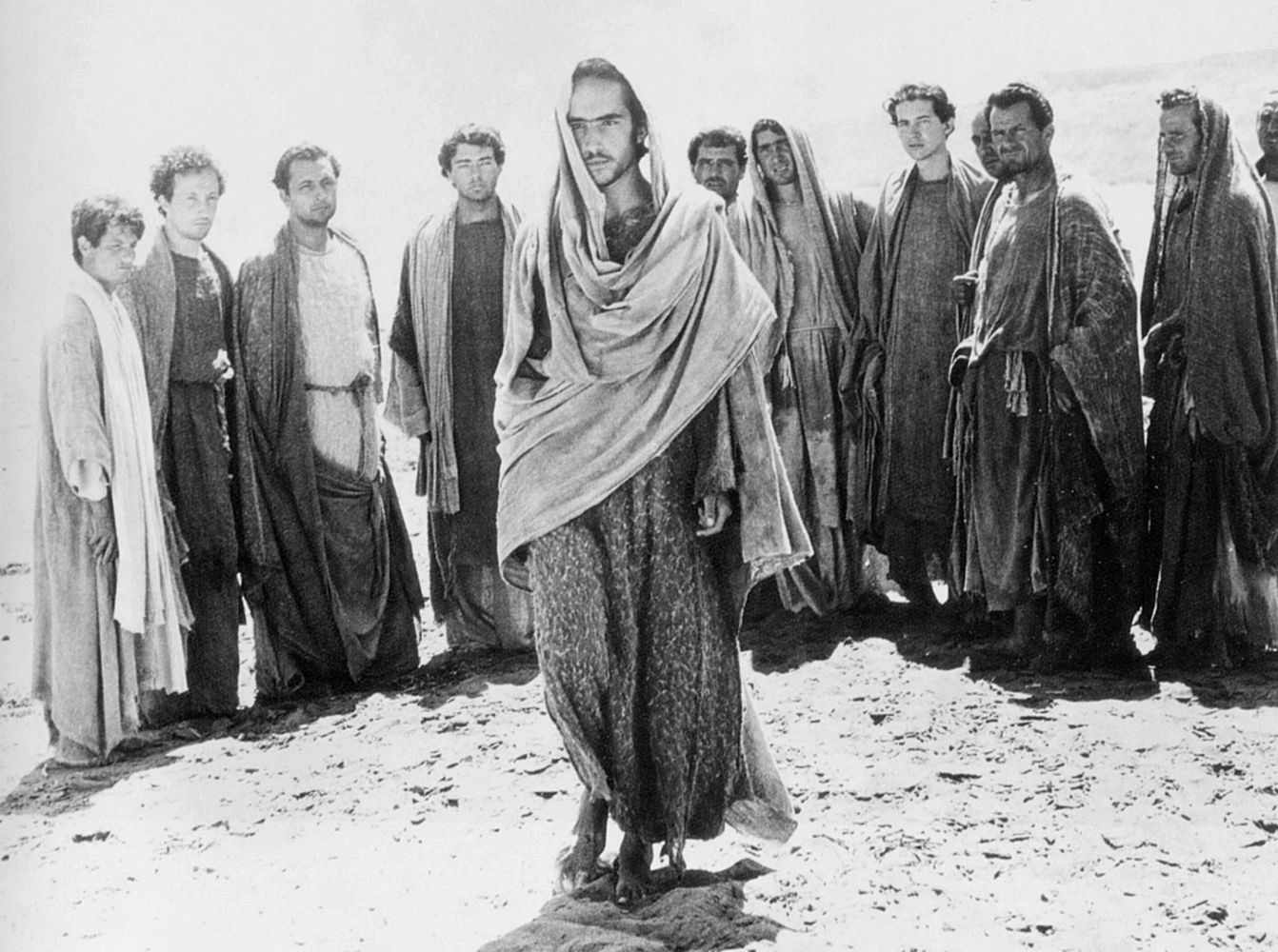
In contrast, the representation of Christ is a sort of semiotic coda, which can act as expressive Christian idealism, and simultaneously a container for both Christian and non-Christian producers to use in reverence or jest. The coda can touch on the contemporary and become dated, though with the Islamic representation, there is a resistance to historicising; that the presence through its inability to take concrete form becomes a timeless and placeless edifice for all; unlike the eponymous Caucasian Christ of the western hemisphere. Christ in image, becomes a sort of canvas upon which projections can abound. What the distinctions between the two reveals are the cultural agencies that the pragmatism of the Islamic social world and in particular, Bamyeh’s notion of a lifeworld are felt; a heteroglossic order within rising and falling waves of change engrossing and absorbing one another without losing the essential quality of the sea they emerge from.
Beyond the unique cultural response of the Islamic world to the divine, with its own unique aesthetics of emptiness, there have been drawbacks to so delicate a rendering of immanence in the visual medium of film. The very presence of a globally visual world means that culturally sacred artifacts enter the marketplace of the common; and so an invisible war rages over the representation, ownership, and fundamentally semiotic force of presenting a human perspective upon the Prophet (PBUH).
Within the modern world, there is an overwhelming force to be found in the image. The image has become a semiotic form, particularly in the post-modern, where an image that carries with it, its own representations can come to be recontextualised and hold new, subversive, and challenging meanings that even counter the original coda of language it carries. Visual sociology is a form of sociology that takes visual data as its area of study, and particularly in our case, within the context of our age, the image and its industrial/mass consumable cultural component – film – is an area of particular interest. Within Islamic society, the central challenge of rendering the foundational myths of its own civilisation has been one upon which no other tradition has faltered. Islam, broadly forbids the representation of Prophetic figures, although, it remains a contentious topic of conversation from the earliest times of Islamic art unto the present; posing a unique and particular problem in light of the contested spaces of global cultural production that Christians and Christian cinema hasn’t encountered. Even when images have been present, there is a key difference in Islam to all other religious traditions - images in Islam can’t be sacralised, and so the images of the sacred, do not hold any spiritual weight in themselves.
“According to Bamyeh, religion is most powerful as a social practice animated by the daily experiences of ordinary people. In analytically differentiating Islam from political power structures, the Professor… narrates a history of Islam as an antagonist to formal politics and its historical institutionalization in the modern national state.” Taking films produced across the Muslim world depicting Muhammad as a locus of this civil conversation, can we see how the conversation is politically charged and that this shift in modernity through the construct of modern cultural apparatuses is at the forefront of the confrontation of ideologues as to who controls the discourse regarding Islamic normatives (https://www.aljazeera.com/opinions/2015/2/9/picturing-the-prophet-muhammad)? This issue spreads further in the case that the taboo of representation has in itself been utilised by Islamophobic media and cultural producers to antagonise and ideologically attack Muslims around the world.
We can see Bamyeh’s lifeworld’s in action, when “The Innocence of Muslims” (2012) was produced by a virulent bigot, to worldwide and singular protests and condemnation across the board. The fact is that the representations of the Prophet Muhammad (PBUH) are exactly scarce due to this. That in comparison to the Christians, whose Jesus for the majority of Caucasians across Europe and America is white as snow, or to the Ethiopians a dark brown man and to the Greeks a man of the Mediterranean like themselves. Within Bamyeh’s concept, there is an idea of the sacred protecting itself from the contamination of the profane and that this sacrality is expressed through the possession of the sacred not by the political establishment but by a civil society that includes religious scholars, leaders, and cultural producers of the communities.
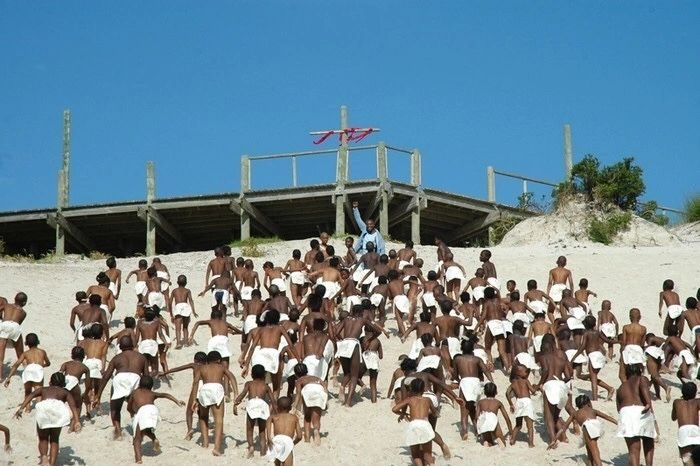
The question then becomes where do we find Islam at the point that it must make a transition from being a culture resting on a literary/oral tradition that renders the sacred imminent solely within the recesses of the heart and mind and not materially through visual form? What can we learn by examining the Christian corpus of cinema by taking an equal body of films from the same time frame of data to analyse and compare? By beginning with an examination of aesthetics (style) and moving to form (content) in isolation and then contrasting within the texts themselves; what can we learn about the social and cultural dialectics from which they emerge, engage or challenge? Ultimately, what does this sociological transformation, in light of Bamyeh’s lifeworld spell for a society that was entirely oral/literary towards a monoculture of shared hegemonic global image-based semiotics; where the boundaries between taboo and sacred can be worn away by the force of mass and spectacle media particularly in the case of Islam?
Works Cited
Bamyeh, Mohammed A. “Lifeworlds of Islam: The Pragmatics of a Religion.” (Oxford University Press. 2019)
Fahd Ahmed is a British/Pakistani editor and producer based in London. He is the founder and creative director of Studio Amorem, a studio located in East London. He was the producer on the leading multi-series Arab Ramadan show, Kannak Tarah. He has edited for the BBC and was a story editor on the PBS-funded 3-part docuseries, A Town Called Victoria. He has been an editing fellow in the Gotham Edit Lab, Close-Up Initiative Edit Lab as well as the Sundance Story and Edit Lab. Recently, he co-produced and edited the feature documentary - Q (Jude Chehab, 2023.) Q has been awarded the Albert Maysles Award (Tribeca), the Grand Jury First Feature Award (Sheffield Docfest) and was named by Vogue as one of the best documentaries of 2023. He was nominated for an IDA Award for Best Editing.