Essays29
The Architecture of Protest: How Public Squares Shape Revolutions
Shaden Ali Mahmoud
A public square is never just stone and pavement. It breathes with the footsteps of its people, carries the weight of their voices, and remembers what those in power would rather forget. Some squares are built for spectacle, others for silence. But then there are squares like Tahrir—designed for movement, seized by history, and forever inscribed with the echoes of revolution.
In 2011, Tahrir Square became more than a landmark; it became a pulse, a battlefield, a dream made tangible. The square did not merely witness the revolution—it sculpted it. It was not a passive stage but an active force, shaping the way resistance took root, how it spread, and how it held its ground. Protesters moved like currents in a restless sea, filling the vast openness with a singular demand: freedom. The square, with its chaotic arteries and wide embrace, allowed the revolution to swell beyond control.
Its geography was an unspoken strategy. Unlike narrow alleyways where dissent could be cornered, or isolated buildings where voices could be swallowed by walls, Tahrir’s vastness made suppression difficult. Every side street was a vein feeding the uprising, every exit a promise of return. It was a place where strangers became comrades, where tents became homes, where chants rose like minarets calling not to prayer, but to justice.
The square itself was never meant for defiance. Before the revolution, it was a place of transit, a liminal space where people moved but never lingered. The 19th-century designs of Khedive Ismail sought to impose a European order upon Cairo’s organic chaos, and Tahrir, echoing Parisian roundabouts, reflected this ambition. Later, the imposing bulk of the Mogamma—an architectural embodiment of state bureaucracy—cast its shadow over the square, a silent reminder of authority’s reach. But in the uprising, the buildings around Tahrir lost their original function. The Mogamma ceased to be a site of endless paperwork and became a backdrop to resistance. The Egyptian Museum, its neoclassical columns once a symbol of heritage, stood as a quiet observer to history in the making.
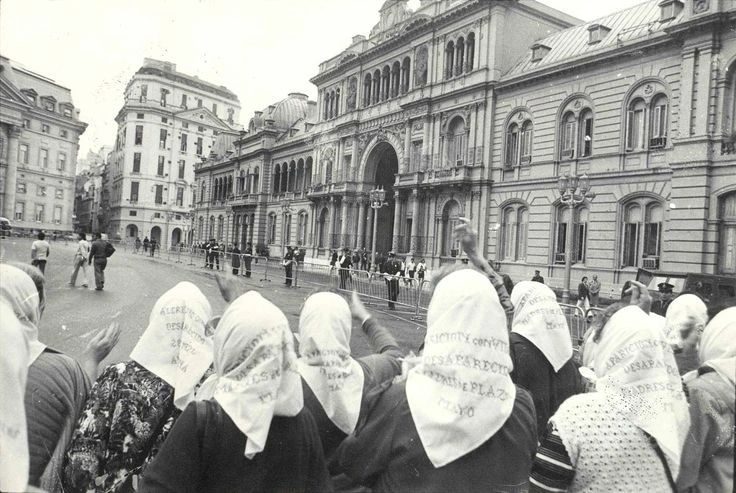
Tahrir is not alone in its transformation. Across history, public squares have served as the geographic heartbeats of uprisings. There is something inherently political in open space—something threatening to power and empowering to people. In 1789, revolutionaries in Paris stormed the Bastille and later gathered at the Place de la Bastille, turning the square into a symbol of defiance and democratic rebirth. Nearly two centuries later, in Beijing’s Tiananmen Square, students and workers occupied the vast expanse demanding reform and freedom, only to be met with a massacre that etched silence into its stones. In Buenos Aires, the Plaza de Mayo became the weekly gathering point for mothers holding up photos of their disappeared children during Argentina’s Dirty War—a square turned sanctuary and tribunal. More recently, Istanbul’s Gezi Park protests of 2013 transformed the adjacent Taksim Square into a staging ground for environmental and political resistance. In each case, the square became more than just a setting—it was a living participant. These were not randomly chosen coordinates but deliberate sites of convergence, where visibility meant power and presence became resistance. The scale of a square, its accessibility, and its symbolic weight allowed for a kind of spontaneous democracy: people could see each other, join in real time, and co-author the shape of dissent. Despite cultural and political differences, the pattern is startlingly consistent: when the ruled rise up, they gather in the open, on the stones meant for parades, traffic, or state ceremony—and they make them their own.
The transformation of space did not stop at symbolism. Protesters reshaped the square itself. Tents spread like a city within a city, with their own hospitals, supply stations, and gathering spots. Barricades rose where once there were pedestrian crossings, and makeshift podiums emerged where before there had been nothing but pavement. The architecture was no longer static; it breathed, adapted, and resisted.
But architecture was only one of many things being rewritten. Relationships changed. Strangers shared food, blankets, and stories. Some fell in love amid the tear gas and chanting; others grieved together in silence. Children painted the sidewalks with colors of hope, while elders recalled past uprisings that never reached this scale. A sense of collective authorship took hold. History was no longer written from above, but scrawled across cardboard signs and walls, told through graffiti and song. For a brief moment, the square was a republic of possibility.
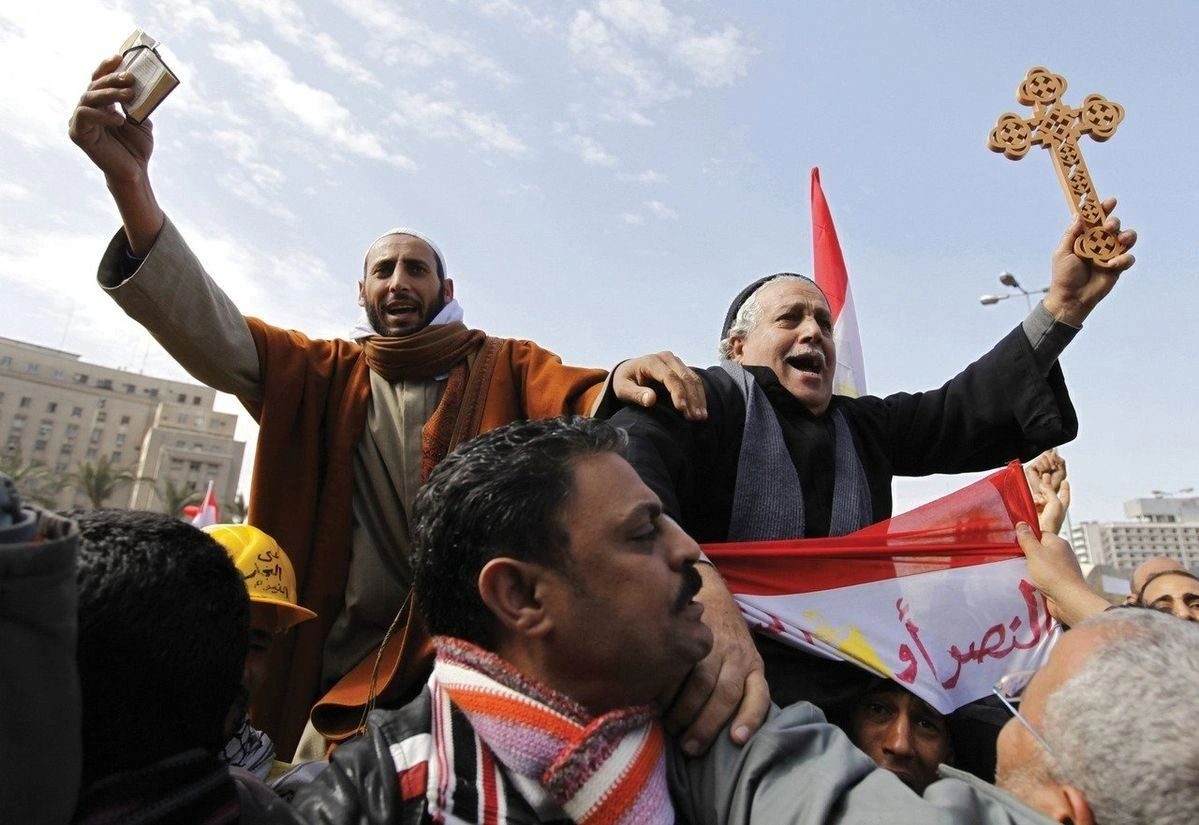
However, revolutions are not written only in slogans and speeches. They are also inscribed in blood. For eighteen days, Tahrir Square saw a thousand stories end too soon—lives that were spent in the hope of a dawn they would never see. The young, the old, the nameless, and the known—all fell into the earth so that the rest might walk freer upon it. And though time moves forward, the ground remembers. The air still holds the final cries of those who stood unarmed against bullets, those who faced tanks with nothing but their bodies, those who refused to be erased.
But what happens to a square after the crowds leave? Power does not forget. It became a contested site of erasure and memory. The state reclaims, reconstructs, and rewrites. Barricades are replaced by monuments, cameras replace watchful eyes, and history is smoothed over like cracks in concrete. The revolutionaries who once turned pavement into purpose find themselves exiled, imprisoned, and silenced. Tahrir, too, is forced into quietude, as if it were just another intersection, as if it had not once been the heart of a nation’s uprising.
Even when physically emptied and politically subdued, a square like Tahrir continues to live on in the cultural imagination. It reappears in songs, poems, street art, and whispered stories. Children grow up hearing its name not as a location, but as a feeling—a moment when everything once felt possible. Artists sketch its contours not for their symmetry, but for their significance. Writers return to it like a chorus, mining it for meaning. It becomes a symbol not just of what happened, but of what could still happen. In this way, Tahrir refuses closure. It is not a completed chapter in a history book, but a recurring note in the unfinished anthem of a nation still dreaming of liberation.
Yet architecture, like memory, is stubborn. It carries the residue of what it has witnessed. The stone remembers the blood that was spilled upon it, the walls recall the hands that pressed against them for support, and the air still holds the echoes of voices demanding dignity. Tahrir, like all great revolutionary spaces—Place de la Bastille, Tiananmen, Plaza de Mayo—may be reshaped, but it cannot be unmade. Its architecture has learned the shape of defiance.
Now the question remains: can a square, once awakened, ever return to silence? Or does it simply wait—quietly, invisibly—for the next pulse to rise beneath the surface, for the next generation to reclaim the space not as a memory, but as a promise still unfinished?
Shaden is a 25-year-old Egyptian writer and home cook based in Heidelberg, Germany. She studies English Literature and Sociology at Heidelberg University and is passionate about storytelling, poetry, and food, especially as expressions of memory, identity, and emotion.