Essays27
The City and the Sea: A Marginalised Mediterranean Dialogue
Vasiliki Poula
The City and the Sea: Reclaiming a Marginalised Dialogue in the Mediterranean
Growing up in Athens, the Greek capital, I was living in a coastal city while feeling fundamentally landlocked. I learned early that proximity to the sea doesn’t guarantee meaningful engagement with it.
Spending summer holidays on Greek islands provided a jarring counterpoint to my Athenian understanding of coastal living. On the islands, the sea isn’t something you seek through a maze of streets – it announces itself in every salt-laden breeze that rustles through and in the rhythmic lapping of the waves that serves as the islands’ perpetual heartbeat. Time itself flows differently, measured in ferry arrivals and the sea’s shifting moods. These interludes of maritime intimacy made returns to Athens’ disconnect with the waterfront increasingly discordant.
The city has turned its back on the sea. In ancient times, the Long Walls – massive fortifications connecting Athens to its port of Piraeus – stood as a testament to the city’s intimate relationship with the sea, protecting the vital umbilical cord between urban centre and maritime commerce. Thucydides understood this peculiar nature of Athens when he described it as a ‘city-island,’ where the Long Walls transformed the capital into a virtual peninsula, making the sea both protection and lifeline. Today, this maritime intimacy is nowhere to be felt.
On the contrary, the city seems to be working overtime to minimise any reminder of its coastal nature, as if embarrassed by this natural feature. Ultimately, the story of Athens’ estrangement from its coastline reads like a cautionary tale of post-war urban development. Athens in the 1960s and 70s appeared determined to present itself as a thoroughly modern European capital. Both planners and urban residents had a specific notion of urban living in mind – one that specifically rejected the maritime lifestyle of Greek coastal villages. Their aspirational vision of city life was shaped not by the traditional relationship between Greeks and the sea, but by imported images of continental European ‘sophistication.’ The resulting urban landscape reflected this collective desire to distance itself from what was perceived as a more primitive, provincial sea-dependent past, only acknowledging it when absolutely necessary and then with a kind of forced, performative enthusiasm that only heightened the sense of disconnection.
Take the city’s transportation arteries, which seem almost deliberately designed to discourage coastal access. Metro lines snake with impressive efficiency through inland neighbourhoods shying from the beachfront, while the coastal tram, added with much fanfare for the 2004 Olympics, crawls along the shoreline like an elderly tortoise who’s forgotten both its destination and purpose, transforming what should be a breezy seaside journey into an exercise in meditation. Even more telling is what’s missing: no ferry services connecting coastal neighbourhoods, no seasonal water taxis, no integrated transport hubs where land meets sea. It’s as if the city’s transit planners, when drawing up their metropolitan networks, encountered the coastline on their maps and collectively decided to treat it as an awkward terminus rather than a vital node of urban life.
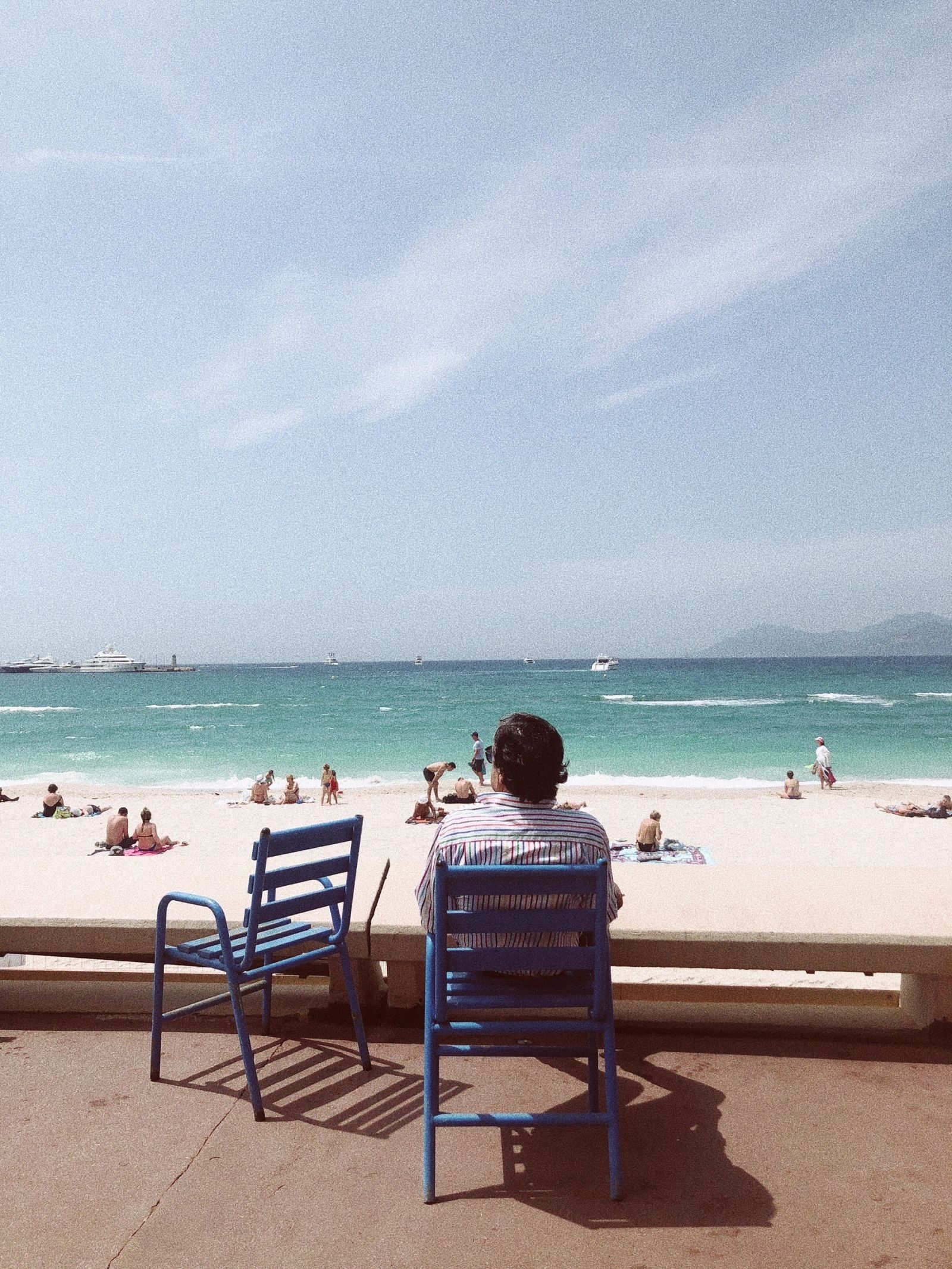
Attempting to find a public slice of shoreline in Athens is equally challenging. The path to the sea reveals itself full of obstacles as enclaves of beach clubs, luxury hotels, and premium restaurants politely but firmly redirect those who wander across the coast. Even the supposedly public beaches have mastered the art of subtle deterrence with broken sidewalks, benches that seem strategically positioned to face anywhere but the sea, and lacking facilities. The few remaining truly public access points feel less like celebrated civic spaces and more like grudging concessions to the legal requirement of keeping some coastline accessible.
This thin connection of the city with its coast is further undermined by its seasonality, as during most of the year, the entire shoreline seems to disappear into winter storage like a hibernating creature: beach bars stack their loungers into melancholy towers, waterfront cafés reduce their tables to a skeletal crew, and the few coastal promenades become wind-swept corridors where single joggers appear as occasional punctuation marks. While inland neighbourhoods maintain their year-round pulse of daily life, the coast slips into a kind of urban cryogenic freeze, preserved in amber until the next summer surge. As if acknowledging that their slice of the city has been temporarily decommissioned.
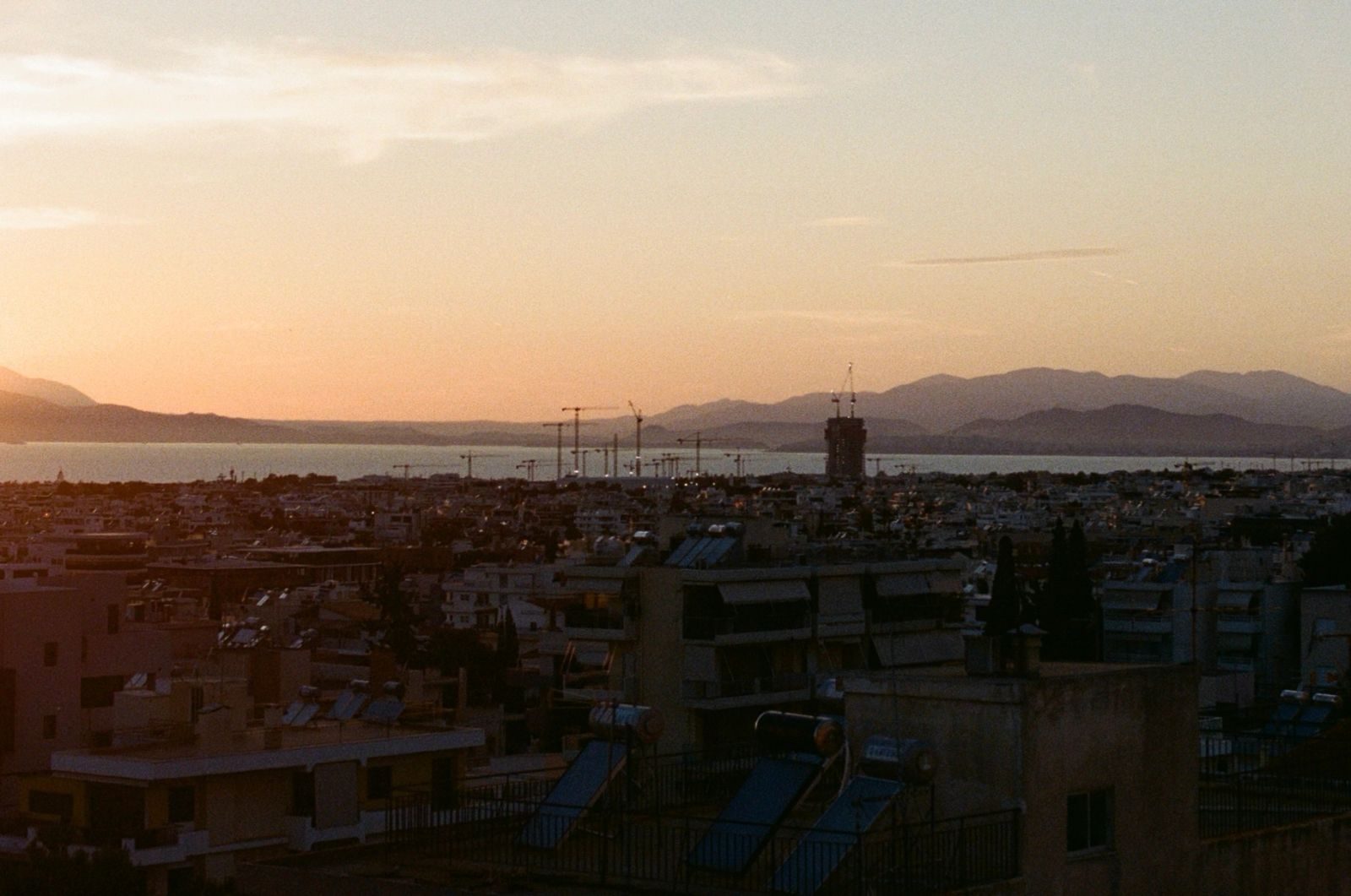
Athens’ inverted social geography serves as an additional testament to its estrangement from its coast. While cities like Barcelona, Nice, or Rio de Janeiro traditionally saw their waterfronts evolve into prestigious addresses, Athens developed an unusual cartographic logic in which distance from the sea—rather than proximity to it—signified status, transforming coastal proximity from an asset into a liability. The connotation is clear – to be near the sea is to be reminded of commerce, of labour, of ships and containers, and all those unglamorous elements of maritime life. Even the wealthy Athenians who do embrace coastal living perform an elaborate dance of distance, eschewing the immediate shoreline for the more carefully curated ‘Athens Riviera’ further south, where the port’s working-class associations fade away.
In rediscovering its relationship with the sea, Athens needs to rejoin a conversation between coastal cities that has been ongoing for centuries, centring not just on physical access to the sea but on an entire way of being by the sea. The Mediterranean has always been less a border than a liquid commons, its waves carrying not just ships but shared stories, collective knowledge, and a particular way of understanding time and space. The sea offers not just a physical presence but an epistemology of both opportunity and peril, celebration and lamentation, infinite striving and ceaseless collapse, intimacy and estrangement – a way of learning and unlearning beyond binaries. Mediterranean cities need to tap into this system of belonging that the sea made possible. This coastal humanism suggests a different model of urban life, one where city edges become centres, where the horizon serves not as a boundary but as a constant reminder of connection, and where rigid hierarchies dissolve into the fluid, generative dynamics of water.
Vasiliki Poula currently pursues her DPhil on spatial planning and material infrastructure amidst political and economic transitions at the University of Oxford. She has co-founded Liminal, a project that works on the cultural activation of meanwhile spaces and raises awareness on cultural place-making.