Essays55
The Concept of Compassion Towards and Between Animals in Islam
Halima Anwar
“Spread wheat on the mountain tops so it could not be said that a
bird went hungry in the land of the Muslims”
This profound statement by Umar Ibn Abdul Aziz has made way for age-old tradition in Islamic countries with Muslims taking to the snowy mountains of Turkey to spread grain throughout the depths of winter and pilgrims from around the world feeding flocks of pigeons around the Masjid al-Haram.
Umar Ibn al-Khattab, the second caliph, - often referred to as the architect of the Islamic empire, extended his exemplary leadership to all living things, taking into consideration how rulings, infrastructure, and strategy passed by him would impact humans, animals, and vegetation alike. He is reported to have said, “If a mule falls in Iraq, I fear that Allah will ask me ‘Why didn’t you make the road straight for it, oh Umar’'. Compassionate leadership is central to governing a people, and to be a leader is to be in servitude to all things spanning that territory. According to historians, the reason for Umar Ibn Khattab’s long and successful reign is his strength, bravery, and deep compassion for humanity.
The word compassion comes into the English dictionary through the Latin root “com” meaning together, and “Passio” meaning suffering - to suffer together. Compassion, or Rahma, is central to Islam. One of the first things we learn about God is that He is Ar-Rahman and Ar-Raheem. The attribute of Rahma (mercy, grace) is described as the light of the sun which illuminates the whole sky, and Ar-Raheem (compassion) is like a particular ray of light that touches a creature (Dagli & Nasr, 2015). From this perspective, every creature in the universe is brought into existence and sustained by nothing more than a divine breath of love, mercy, and compassion. The heavens and the earth are sewn together with vegetation sprouting from between broken soil to sustain creatures big and small. All living things have a divine origin, value, and purpose. Animals in particular bear a theological and spiritual significance in Islam, with six chapters of the Quran named after animals, varying in size and social value, from the Cow (Al-Baqarah) to the ant (Al-Naml). From an Islamic perspective, the concept of compassion and justice encompasses all things.
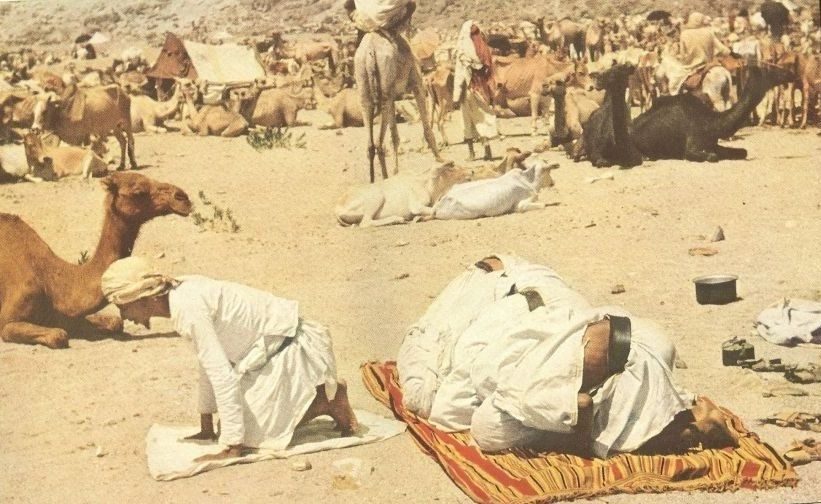
Although animal rights may seem like a relatively modern concept, Abrahamic faiths possess extensive literature in both scripture and transmission, highlighting the spiritual significance and the profound importance of treating animals compassionately. Both Christianity and Islam acknowledge that God has created animals to be subservient to man on earth. For sustenance, provision, ease, and comfort, and in turn, humans have a duty to treat them fairly, not to overburden or mistreat them or kill them unnecessarily. The Prophet Muhammed (peace be upon him) was sitting under the shade of a tree in a garden, when a distressed camel approached him, grunting and crying. The prophet (peace be upon him) patted the camel and held it close to himself, asked for its owner, and told him, “The camel has complained to me that you beat it, overwork it, and do not feed it. He told him, “Fear Allah with regards to creatures who cannot express their pain.”
Islam acknowledges animals as sentient beings and spiritual entities who exist in communities and colonies of their own (Quran, 6:38), who’ll be resurrected on the day of judgment and paid dues for the wrong done to them by humans, jinns, and other animals. “Allah will let the hornless animal settle its score with the horned animal and even one ant with another.” (Sahih, Musnad Uthman Ibn Affan).
As beings who have been honored with reason, intellect, and the power to make change, Muslims should strongly consider the treatment of animals in farming, agriculture, and experimentation. In a modern world where some animals are viewed as nothing more than fast-moving consumer goods, it is important to contemplate their divine origin and our duty of stewardship and compassion over them.
In a heart that turns toward God, there is a subtle and
encompassing awareness for everything in existence.
Halima is a British-Kashmiri student, writer, digital marketer, and all-round creative based in London. Her writing interests span music, faith, culture, and poetry.