Essays40
The Rules of the Craft: Islamic Metaphysics and Sacred Creativity
Ali Hussain
In his groundbreaking work, What is Islam? The Importance of Being Islamic, the late Shahab Ahmed distinguishes between two sources of authority in traditional Muslim societies: the ‘prescriptive’ authority of the scholarly class and the ‘explorative’ authority of the lay masses (Shahab 2017, 282). Whereas the former dictates what is allowed and forbidden through religious edicts and scholarly consensus, the latter pertains to the messiness of everyday life and the prerogative of individual Muslims to make sacred meaning of their everyday rituals.
William Chittick reiterates this point in the introduction to Divine Love: Islamic Literature & the Path to God. The author discusses his initial adherence to the vision of Islam as a tradition of ‘knowledge triumphant’, to quote Franz Rosenthal. However, after studying Islam for two decades, Chittick comes to regard love, not knowledge, as the more apt description of Islam as a faith and tradition (Chittick 2013, xi-xxvii). The author also reflects on Muslim societies before the advent of mass literacy and the industrial revolution.
At the time of the Muslim polymath Abu Hamid al-Ghazali (d. 1111), for example, most Muslims could neither afford to attend a prestigious religious school like al-Nizamiyya where al-Ghazali taught nor were they able to live in a metropolis like Baghdad. As a matter of fact, most Muslims were illiterate and had no investment in the discourses and debates of al-Ghazali and other Muslim scholars of his time.
So how did the lay masses ‘participate in the sacred’? It is through the orally transmitted poetry of Sufi masters which the lay people recited while tilling their fields, building furniture, weaving clothes, or cooking that they transformed their vocations into sacred acts of worship. This provides a window into the notion of craft as a sacred path to walāya (sainthood) and ultimately God.
In modern Islamic education, which has inherited much – knowingly or otherwise – from the modernist idolization of rationalism, the path to becoming a walī (saint) and reaching God is ipso facto that of the ʿālim (religious scholar). In turn, Muslims from all walks of life and vocational inclinations find no alternative to learn their religion than to take the same courses offered to ṭullāb al-ʿilm (seekers of sacred knowledge) at seminaries and mosques.
The arts, among all the vocations, have suffered the most from this westernization of Islamic learning. Not only can Muslim artists not find specific curricula catered to their needs as painters, musicians, sculptors or architects, but their crafts have been altogether deemed as corruptive or forbidden by many Muslims who still adhere to the most restrictive scholarly edicts regarding the arts in Islam, itself a topic with many differing opinions.
Consider, for instance, the portrait that Naser Dumairieh paints of 18th-century Mecca and Madina in Intellectual Life in the Ḥijāz in the 17th Century: The Works and Thought of Ibrāhīm al-Kūrānī, where Muslim scholars like Siddiq b. Hisham al-Hindi (d. 1747), Muhammad al-Rumi (d. 1758), Ali al-Daniq al-Yamani (d. 1727), and others not only taught music theory but also played musical instruments like the ʿūd, kamanja, ṭanbūr and nāy in the vicinities of the two sacred precincts (Dumairieh 2021, 62 ).
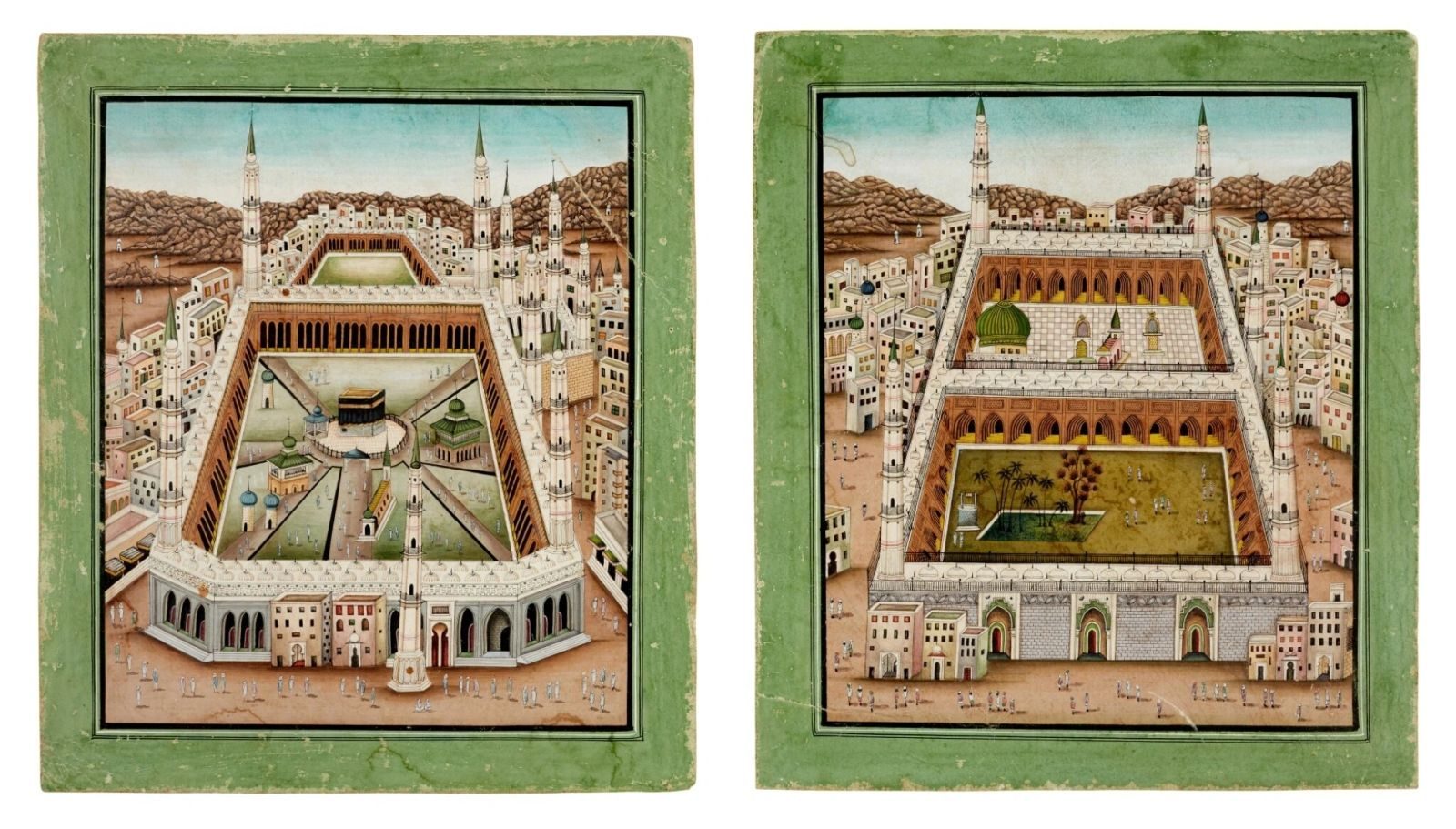
Moreover, this wasn’t a unique moment in Islamic history, but rather the norm for centuries from the early generations of the companions of the Prophet Muhammad ﷺ until the onslaught of modernism in the 19th century. Unfortunately, what has been lost through this neglect of the arts in contemporary Muslim societies is more than just an abundance of artists and artworks. Rather, what been forgotten is a creative process that undergirds not only the production of art but also the very perception of reality in Islamic metaphysics.
The notion of khayāl (imagination) plays a central role in traditional Islamic metaphysics. Perhaps no other Muslim thinker has written about this concept more than the Greatest Master Muhyiddin Ibn al-ʿArabi (d. 1240). Among the numerous excerpts in his magnum opus al-Futūḥāt al-Makkiyya (The Meccan Openings) about imagination, he says in one that “every human being with an imagination, when they imagine, then their gaze extends to the divine imagination" (Muhammad b. al-ʿArabi, 47). Ibn al-ʿArabi does not restrict this vision to Muslims or even believers, but all of humanity.
The divine creative process, through which God creates the universe, can be found in a ḥadīth qudsi that, despite its doubtful authenticity, has been consistently transmitted by many Muslim saints. Therein, God states: “I was a Hidden Treasure and loved to be known. Thus, I created creation so that I may be known by them.” For Ibn al-ʿArabi and many other Muslim saints, this narration outlines the different stages of the divine creative process and, in turn, its mirror reflection in human creativity.
‘I was a Hidden Treasure’ is the absence of creation, as referenced by the ḥadīth: “God was, and nothing was with Him” and can be found as the ‘creative block’ in our creative process. ‘I loved to be known’ is the unfolding Divine Mercy and Will to externalize the created things and the rush of creative inspiration in human artists. ‘I created creation’ is the process of creating the world or a work of art while the last stage, ‘so that I may be known by them’, is when the cosmos and artwork stand as a mirror wherein God reflects upon His Perfection and the human artist perceives his or her imperfection, respectively.
In conclusion, the role of creativity in Islam transcends perceiving art as sacred, but also perceiving the sacred rituals of Islam as creative. It is to place oneself as a translator from scripture to prefecture, from al-Ghazali to Emerson, Ibn al-ʿArabi to Shakespeare, and all in-between.
Works Cited
Chittick, William C. 2013. Divine Love: Islamic Literature & the Path to God. Yale University Press.
Dumairieh, Naser. 2021. Intellectual Life in the Ḥijāz before Wahhabism Ibrāhīm Al-Kūrānī’s (D. 1101/1690) Theology of Sufism. Boston: BRILL.
Muhammad b. al-ʿArabi. 1911. Al-Futūḥāt Al-Makkiyya III . Cairo: Al-Maymaniyya.
Shahab, Ahmed. 2017. What Is Islam? : The Importance of Being Islamic. Princeton; Oxford: Princeton University Press.
Dr. Ali Hussain is a poet, Oud musician and has a PhD in Islamic studies from the University of Michigan, Department of Middle Eastern Studies His research focuses on the image of Jesus Christ in the writings of Muhyiddin Ibn al-ʿArabi. He is also the founder of the Adhwaq Center for Spirituality, Culture and the Arts (@adhwaq.center), an initiative focused on "exploring the intersection of spirituality and creativity in contemporary culture". He is also the senior creative advisor @greenmedicalonline and president of @artofhealingio, a social impact initiative therein that focuses on "curating a space for artists to cultivate their creativity at the intersection of science, faith, and culture" His publications include "A Nostalgic Remembrance: Sufism and the Breath of Creativity" and "40 Conversations With the Prophet ﷺ on Art and the Creative Process"