Essays42
Epiphany of the Infinite: Ibn ʿArabī & the Veil of Divine Beauty
Faris Abdel-hadi
It is reported…that the Messenger of God said, ‘God is beautiful and He loves beauty.’ It is God who made the world and endowed it with existence. The entire universe is therefore supremely beautiful. There is nothing ugly in it. On the contrary, in it God has brought together all perfection and all beauty…
The gnostics see it as being nothing other than the form of the divine Reality…for God is He who is epiphanised in every face, He to whom every sign refers back, He upon whom all eyes rest, He who is worshipped in every object of worship…The whole universe offers up its prayers to Him, falls down before Him, and sings His praises. All tongues speak of Him alone, and Him alone all hearts desire…If it were not so, no Messenger and no Prophet would ever have loved woman or child.
Born in southern Spain, behind the reclusive walls of Murcia, in 1165, Muhammad ibn Ali Ibn Al-ʿArabī al-Ṭāʾīal-Ḥātimī (d. 1240) would make his impression on the Muslim world in a way that never really had precedent. His parents did not expect it. Raised in an affluent family, Ibn ʿArabī was destined for the army, and probably a secure government post afterwards. He kept the company of friends who danced the night away, listened to talented musicians, and then walked bleary-eyed to the mosque for the dawn prayer before sunrise. “Didn’t the Prophet himself recommend that prayers be kept short?” he complained as the lengthy recitations became unbearable after an exhausting night. This was the time of his ‘ignorance’ that would later horrify Ibn ʿArabī, and no one who knew him would have guessed he would be one of the greatest minds and saints the Muslim world had ever seen.
He wasn’t totally ignorant of the spiritual path he was about to undertake. At the age of 10, a devastating plague sent him into a nightmarish coma, where ugly creatures tried to harm him and his only protector was a Qurʾānic chapter his father was reciting on his behalf. Ibn ʿArabī admired his neighbor ʿAbd Allāh al-Khayyāṭ, with whom he studied the Qurʾān, and was one of the first Sufis he ever met. “Of all the spiritual men I have met since returning to the Path,” he said, “there is not one of them I have wanted to be like – except for him and his brother.” But as he grew older, his love and veneration for all of his Sufi teachers knew no bounds.
Sometime before the age of 15, Ibn ʿArabī had a decisive experience that spurred him on to the spiritual path of the Sufis. Analogous to an illumination, Ibn ʿArabī’s ‘Opening’ occurred during a retreat in a cemetery where, in one moment beyond space and time, Ibn ʿArabī gained all the knowledge he would later write of in one, rapturous burst. Shortly afterward his experience was reinforced by a triple vision of Jesus, Moses, and Muhammad; subtly presaging the universal quality of his message.
Perhaps unsure of what this meant, Ibn ʿArabī’s father sent him to the great Aristotelian of the day, Averroes, on the pretext of an errand. Ibn ʿArabī clearly impressed Averroes, and thereafter actively sought Sufi masters to train him on the path to complete realization. It was hard work. Ibn ʿArabī’s training was typically characterized by hunger, long nights in vigil prayer, meditation, and actively monitoring his actions and even his own thoughts. In Sufism, the soul is something that can eventually be tamed and re-oriented in a higher direction of goodness. But the work that comes prior to that will be taxing.
Nevertheless, there was no contempt for the world here, because it has a Divine foundation in the ‘Names’ or qualities of God. Life, Desire, Power, and Speech are some of the fundamental Divine qualities that pervade all things throughout the universe, without exception, and Muslims typically name 99 such qualities including Beauty, Mercy, Justice, and Sovereignty. In this way, God ‘discloses’ or reveals Himself to us through the universe so that we may know Him. The universe is God’s Speech, and each thing is a ‘sign’ that points back to Him. Even the crawling worm is rushing with a message to us if we know how to decipher it. This is why – to the embarrassment of his fellow disciples – Ibn ʿArabī could be seen walking in the marketplace holding a repugnant, smelly fish because the latter knew that despite its odious appearance, it nevertheless acted as the foundation for God’s holy Names.
It is the Sufi’s endeavor, after struggling to tame and purify his soul, to ‘read’ the universe as part of his journey towards realization. Nothing is vain, because the entire cosmos is God’s self-disclosure, His manifestation, but without being God Himself. It is His Names we come to know, but as for His essence, that remains forever unknowable. Such a notion is one aspect of the doctrine Ibn ʿArabī would later be famous for: “The Unity of Being” (though he does not use this phrase). This connection of the universe to God is what allows Ibn ʿArabī and his fellow Sufis to enjoy what the Qurʾān calls “the good things” of this world [5:5]; such as eating honey-spread pancakes with his teacher and companions, or a spiritual discussion with his master Mahdāwī in the steaming public baths of Tunisia (whilst appropriately covered in long towels).
It might be misleading to call Ibn ʿArabī an intellectual, even though his writings may evince that quality. Nothing he wrote was ever founded on anything other than pure experience, or better known in Sufism as ‘tasting’. In his training, he remembers how his own masters, when posing a question to their students, rejected answers that were thought of in advance, reported from someone else, and did not come straight from the heart. “We don’t want to eat dried meat. Come on, bring me fresh flesh!” as Abū Madyan, the master of masters, has said. Commenting, Ibn ʿArabī explains, “He meant: this is the words of so and so. What do you yourself say? What God-given knowledge has God singled out for you?”
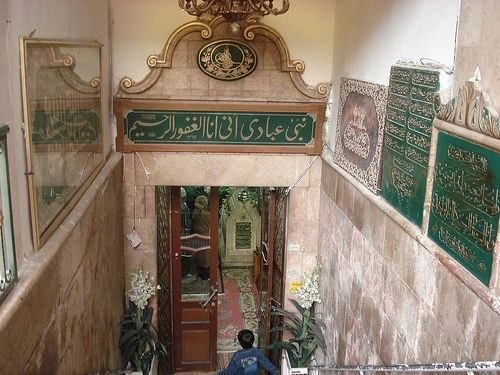
Deeply connected to this first-hand experience is Ibn ʿArabī’s doctrine of sainthood. The saints are the heirs to the prophets who have been sent throughout history to guide humanity, and they ‘realize’ a specific mode of knowing God through any of the 124,000 prophets sent to various historical civilizations. The saints inherit this legacy and realize it in its deepest sense for the benefit of people; Ibn ʿArabī would come to see himself as the Prophet Muḥammad’s ultimate inheritor, and thereby the inheritor of all 124,000 prophets. For Ibn ʿArabī, it is the Prophet Muḥammad’s example which is the model par excellence for attaining the highest levels of sanctification and deepest gnostic secrets. Just as the Prophet is the seal of the prophets, likewise, Ibn ʿArabī argued that there must be a seal for sainthood – and Ibn ʿArabī, the Shaykh al-Akbar, doctor maximus, assumed this role as the Seal of Muḥammadan Sainthood, the supreme inheritor to Muḥammad’s sainthood. Alongside Ibn ʿArabī Jesus, in his second coming, will act as the Seal of Universal Sainthood and seal off the highest levels of sainthood. It is the Seal of Muḥammadan Sainthood who, as watcher of the last part of the final night, before the coming of the dawn, guards the prophetic treasury and preserves it for future generations of saints – and the whole of humanity.
Ibn ʿArabī traveled extensively, from Spain, Tunisia, and Fes all the way to Egypt, Mecca, Anatolia, Baghdad, and Damascus. An immensely prolific writer, he would write non-stop, pouring the divine inspiration that seized him into well over 400 books. His magnum opus, the Futūḥāt al-Makkiyya, or the Meccan Revelations explores over thousands upon thousands of pages the exoteric and esoteric Islamic sciences that guide the saint towards his or her realization. For Ibn ʿArabī, men and women were equally capable of reaching the same spiritual levels. His monumental work was not only the fruit of his own spiritual realization, but an inheritance of 560 years of Islamic tradition and Sufism. He was also granted the Fuṣūṣ al-Ḥikam, the “Bezels of Wisdom”, by the Prophet Muḥammad in a vision. This particular work would become one of his most controversial books, and because of its small size, an easy target for polemicists.
Several common themes pervade his Futūḥāt. One is the vastness of the Divine Compassion that embraces everything, including Satan, who once told a great master, Sahl al-Tustarī, commenting on the Qurʾānic verse, “My Mercy embraces all things,” [7:156]: “I am one of those things which His Mercy embraces.” As such, no one is condemned to eternal suffering and everyone will eventually reach felicity. This is why eternal torment in Hell does not exist, albeit the location, as a manifestation of God’s Majesty, continues to exist. For the denizens of Hell, their torment eventually transforms into bliss and sweet numbness since God’s mercy must encompass everything, including them.
Another theme is the universality of faith. Everyone worships God whether they know it or not since there is nothing in existence save God’s self-disclosures. The Qurʾān says, “Wherever you turn, there is the Face of God” [2:115]. Because of this, it is the highest spiritual humans, ‘The Realisers’, who recognize the validity of each faith from a certain perspective and do not declare them as being simply false. The Realisers, the Perfect human beings, are able to join Ibn ʿArabī in saying:
The creatures profess a number of beliefs on the subject of God
And I profess all that they believe!
As well as:
Beware of becoming delimited by a specific belief and disbelieving in everything else, lest great good escape you…Be in yourself a matter for the forms of all beliefs, for God is wider and more tremendous than that He should be constricted by one belief rather than another. For He says, “Wherever you turn, there is the Face of God” [2:115].
This is why he was able to dialogue amicably with a group of pagan sun-worshippers he met in Anatolia.
But, as Ibn ʿArabī would repeatedly emphasize, it is the path of the sages and the prophets that forms the shortest road to happiness. Safety in the tumultuous journey towards the Divine lies in observance of the laws of revealed religion. Further, the New Age syncretism that characterizes post-modernity would probably have alienated Ibn ʿArabī. If each adherent of faith perceives something of this universality, they nevertheless remain firmly in their own without superficially mixing traditions. For Ibn ʿArabī, conformity to the prophetic laws and discovery of the spiritual realities were two dimensions of the same quest, and inextricably linked together.
A third theme is that – by virtue of the Unity of Being – none can be loved in the cosmos but God, no matter what that apparent object of love might appear to be. Your love for Hind is in reality a love for God; your love for your son, daughter, or companion is in reality a love for none other than God:
…none but God is loved in the existent things. It is He who is manifest within every beloved to the eye of every lover – and there is nothing which is not a lover. So the cosmos is all lover and beloved, and all of it goes back to Him…
Though no one loves any but his own Creator, he is veiled from Him by the love for Zaynab, Suʿād, Hind, Layla this world, money, position, and everything loved in the world. Poets exhaust their words writing about all these existent things without knowing, but the gnostics never hear a riddle, a panegyric, or a love poem that is not about Him, hidden beyond the veils of forms.
Nevertheless, even though this is a reality, it does not mean we always recognize what it is we are looking for or what we are in love with. From the Kitāb al-Tajalliyyāt, the Divine voice tells us:
Oh, my beloved! How many times I have called you without your hearing Me!
How many times I have shown myself without your looking at Me!
How many times I have become perfume without your inhaling Me!
How many times I have become food without your tasting Me!
How is it that you do not smell Me in what you breathe?
How do you not see Me, not hear Me?
I am more delicious than anything delicious,
More desirable than anything desirable,
More perfect than anything perfect
I am Beauty, and Grace!
Love Me and love nothing else
Desire Me
Let Me be your sole concern to the exclusion of all concerns!
Not everyone understood Ibn ʿArabī. It is true that his writings were aimed directly at the spiritual elite, those who took the path of realization very seriously. But his message of hope, as one author notes, is for everyone. He passed away peacefully in Damascus in 1240. Amongst the many gifts he has bequeathed to humanity, the Shaykh al-Akbar promised that he would intercede for everyone who fell within his eyesight – “those I know, and those I do not know.”
Ibn ʿArabī’s teachings were carried on by his gifted students, Ibn Sawdakīn and Ṣadr al-Dīn al-Qūnawī. Thereafter some of the most influential commentaries on the Fuṣūṣ were written by Qunawi’s student Jandī, then Kāshānī, Qayṣarī and Jāmī. There is no space here to investigate the enormous yet subtle impact his teachings subsequently had on Sufism, and thereafter on the Islamic world, but the very brief survey below suffices for a glimpse.
The effects of Ibn ʿArabī’s teachings have manifested in various ways throughout the centuries under his ‘spiritual children’. Liu Zhi (d. 1724) and Chinese Muslims had no problem in seeing Confucius as a prophet, and therefore completely in line with the Islamic tradition. It was Muḥibb Allāh Ilāhābādī (d. 1648), the ‘Second Ibn ʿArabī’, of Mughal India, who corresponded through letters with Prince Dārā Shikōh (d. 1659), heir to the throne, communicating Ibn ʿArabī’s complex teachings. Dārā himself had 52 copies of the Upanishads translated from Sanskrit into Persian, along with the Bhagavad Gita and the Yoga-Vasishta. Noteworthy is Seyyed Hossein Nasr’s remark, that “it was from his Persian version [of the Upanishads] that the Latin translation of Anquetil-Duperron was made, a translation which influenced many of the nineteenth century European philosophers like Schelling and a copy of which was owned by the mystic poet William Blake.”
One of the greatest exponents of the Ḥanafī legal school, ʿAbd al-Ghanī al-Nābulusī(d. 1731) felt at home socializing with Franciscan monks when visiting Palestine, and addressed the Patriarch of Antioch, Athanasius Dabbas, in a letter as one of his “brothers in spiritual practice”. Similarly one of the most original exponents of Ibn ʿArabī’s teachings, the Emīr ʿAbdel-Qādir Jazāʾirī(d. 1883) felt a warm kinship with the French bishop Louis Pavy. During the Druze revolts in Damascus in 1860, the Emīr single-handedly saved no less than 15,000 Christians. In a letter he wrote to the bishop, “All the religions brought by the prophets, from Adam to Muḥammad, rest upon two principles: the exaltation of God Most High, and compassion for His creatures.” ʿAbd al-Karīm Jīlī (d. 1424) in a vision even saw a joyful Plato irradiating light, who informed Jili, “I was the Pole of my time, and the Unique one of the age.” Certainly Ibn ʿArabī and his school were not the only ones who happily interacted with other traditions, but his methodology does seem highly conducive towards it.
An account of his life is full and filled with personal anecdotes. Quest For the Red Sulphur, The Voyage of No Return, and Unlimited Mercifier are biographies of him available in English; while an excellent introduction to his work is Ibn ʿArabī: Heir to the Prophets by William C. Chittick.
Dr. Faris Abdel-hadi has lectured and conducted seminar workshops on the Akbarian school and interfaith relations across the globe, including the United Kingdom, Australia, Germany, Malaysia, Lebanon, and Jordan. Abdel-hadi completed his PhD thesis from the University of Exeter on the subject of Ibn ʿArabī’s inclusivism, with a focus on the way the Shaykh conceptualizes non-monotheistic religions. He is currently in the process of publishing his first book and has a special interest in the way Akbarian frameworks can be used to approach other religions. Abdel-hadi has a background in commercial law and translation services. He currently resides in Amman, Jordan.