Essays43
In the Beginning Was the Word: Preserving Culture through Orality
Syed Kabeer Hassan
“Orality is the substratum of literacy. If you do not have an Oral Tradition, you cannot have a literate tradition (…) If you look at your children for the first five years, they are oral creatures, they are in the oral world, they are not literate. Traditionally, they would hear stories and their imaginations would be ignited; this took place in all cultures. Recently, these children are being raised in front of the television. So the mother is no longer transmitting the childish lore of the culture to children but it’s being experienced through the medium of visualization, which is a powerful medium but has its own effects, one of which is a lack of humanization. Orality is the process of humanization.” – Hamza Yusuf.
During Moharram, I was sitting in a majlis waiting with a cup locked between my fingers for my friend to show up. I remember it vividly. In the hall, angelic street light filtered through the windowpanes dragged across the wall, and fell on the shoulders of men wearing black fabrics. The laments from Karbala echoed like a breeze fading into the arms of another. From outside, came the shrieking and almost wailing voice of the speaker we couldn’t see and the rhythmic sounds of palms collapsing on the chest, always with a reverberation of “Ya Hussain.” My friend, who had invited me, returned, and we left the hall, but this image stayed with me—a room painted in mourning, laced with collective anguish as if its inhabitants were returning from the same event of bloodshed.
I asked him how it is that every year at the same time the sorrow doesn’t age, and people cry and weep, unlike any other community where an important event is woven around a tragedy. He replied, quoting a poet, “It has always been this way since I can remember; my mother has always felt Zainab’s loss as her own.” But what could have been the medium that brought down grief of such intensity throughout the ages? Literature could have conveyed the facts and the experience of such an event and even empathy to an extreme extent, but what preserved an emotion, a loss that remained untainted like a fresh wound? The answer I received was not from him, and it took some time to dismember what was in front of me the entire time. It was Orality.
In Shiite Tradition, grief is preserved through oral gatherings, through forms of Noha (lamentations), and Majlis (lectured ceremonies). What is oral tradition, if not inheritance? And then what is inheritance worth if it doesn’t give you the burdens of the past, the sanctity of your civilization? A true inheritance is always in upward mobility; you get the burdens of your past, the fables of the sea, and the unfolding of the dunes to reveal the fluidity of a civilization. What is it if not a reaffirmation: for everybody that exists, the same ancient blood gushes in the veins.
Oral tradition is a combination of information, memories, knowledge, beliefs, proverbs, riddles, tales, nursery rhymes, legends, myths, epic songs and poems, charms, prayers, chants, songs, dramatic performances, and more. Oral traditions and expressions are a recollection of culture and collective wisdom and its transmission through vocalized mediums. They play a crucial part in keeping cultures alive and have been held in common by a group of people for many generations.
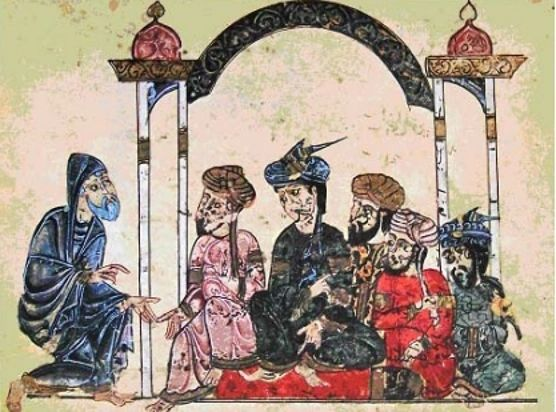
For generations in Europe, all data felt to be important was written down, with the most crucial texts prioritized, such as the King James Bible, while folk songs, legends, anecdotes, and proverbs remained unrecorded. In Arab and African cultures, however, all the principal political, legal, social, and religious texts were transmitted orally. The foremost civilizational book and literature that came to the Arabs was the Quran, which is at its core an oral book, composed and passed on through memory, even having its meaning as ‘recital.’ And that is quite evident in certain parts of the book, such as the repeated phrases "Which of the favors of your Lord will you deny?" in Surah Rahman—make more sense addressed to listeners rather than readers.
For every functional type of written source in Europe, one can find an equivalent oral source in the East. One of the prominent sources of Islamic Jurisdiction, ‘Hadith,’ stems from a chain of narrations about the sayings and actions of the Prophet (PBUH) that were finally recorded in a book. The rich oral tradition in the Arab and African world is one of collective imagination and a reflection of the collective consciousness, and how can it not be? For the Dogon of the Sudan, the world was created when speech was created: "In the beginning was the word.”
"Our books are in our heads"
--Mbope Louis (Congo, 1953)
From Homer’s epics to One Thousand and One Nights, stories are used to preserve and transmit both tribal history and environmental history, which are often closely linked. Rather than yelling or punishing, Arctic Inuit parents might stop their children from wandering too close to the water's edge by narrating a story about a sea monster with a pouch for children within its reach. One single story holds the potential to completely change life and its values. Stories were also used to assess whether traditional cultural ideas and practices are effective in tackling contemporary circumstances or if they should be revised. As such, one might say, the storyteller has been able to skin down the barriers between himself as reciter and the audience in terms of reception, creating a liberated space in which the auditor “was invited to enter into a special relationship of complicity” where he would be part of a shared experience. Reading a story is a personal experience, but hearing stories and reciting stories to others makes communities and breeds continuity to the past. Popular coffee shops in Baghdad even used to hire a qassakhoun (or oral storyteller) to ‘read’ tales and fables from around the world.
An oral traditional text, says John Foley, combines variable elements and rests on diverse instruments of verbal expression. It cannot be restricted, typologically, to the formal aspects of its linguistic physiology, in the same way we understand forms and genres in the modern age.
"The more you know of your history, the more liberated you are." -- Maya Angelou
But how is oral tradition important now more than ever before? Remind yourself we are living in a time where Western media rules over the consciousness of the world and with ongoing genocide, remember when Refat Alareer wrote, "If I must die, you must live to tell my story" he was telling us about the power oral history holds. It is the way we foment our collective human memory just the way the Iliad came down to us still intact. Remind yourself if we are living in these times, we are also living with a burden of remembrance, retelling, and action. We need orality now more than at any time in human history, so that we don't let our languages collapse, and also so the world and our children do not get chained by the dogmatism of the West and this is when we will get our communal renaissance when we pass on our struggles and stories like beads of a pomegranate to the world.
Rather than dictionaries, grammars, and databases, languages live in poems and stories, riddles and retellings. To protect our languages then would also mean that with the transmission of oral traditions and expressions, we are doing exactly the same thing. To protect a language, perhaps, we don’t require a shield, a sword, or even a fortress. Perhaps we just need a quilt and a story so that its inheritors don't ever leave.
Syed Kabeer Hassan is a student and a poet who owns a multiplatform blog: @fleurentcue. In addition to his poetic pursuits, he is an ardent reader, photographer, essayist, and translator, being published in Brown History and various other magazines. His interests lie in an attempt of finding beauty in the mundanity of life and exploring meaning in it’s endless mysteries.