Essays49
Exploring the Ineffable: The 'Absolute' in Sufism and Daoism
By: Mohamad Chehab
Some argue that all traditions are but one, it is imagination that fragments the Oneness of traditions into a plethora. This statement, although contentious, points to the notion of parallels between ancient traditions, which one cannot argue against. Two ancient traditions that prodigiously percolate resemblances are Sufism and Pre-Qin Daoism. A person grasps the essence of everything when they name it correctly; they say, however, when it comes to definitions it is mostly subjective, and more than one can be employed on a concept. For instance, a person may describe a building as red, while another might say that it consists of four floors, both describing it correctly, but partially. With that in mind, I employ the definition of Sufism put forward by Shahab Ahmad in his book What is Islam?: The Importance of Being Islamic , “the theory and practice of holistic, experiential knowing of Divine Truth” (Shahab 2017, p.20). While Pre-Qin Daoism delineates "early 'philosophical' Daoism, represented by the classical texts of Laozi and Zhuangzi” (Poceski 2009, p.55), distinguishing it from later iterations, emphasizing natural harmony and inner wisdom. This analysis aims to illuminate the core principles and meanings of the 'Absolute' in Sufism and Pre-Qin Daoism, enriching our comprehension of spiritual transcendence that surpasses cultural and geographical boundaries.
Everything created is underlined with secrets and all secrets spring from one secret in this oasis. The one secret, one can argue is the Absolute. The Absolute, which is referred to as haqq, simply means the Truth or Reality. However, there is a more profound meaning than just this. There is this notion of the Absolute in its Absoluteness, in which it is unconceivable and unapproachable, Something that cannot be defined, transcending all realities that are humanly conceivable, a mystery, the Mystery of all mysteries, in which “Absolute in this sense is said to be ankar al-nakirat, i.e., 'the most indeterminate of all indeterminates'” (Izutsu 1967). Now, we should elucidate on this matter, as some might come to question then how we are supposed to witness and know the Absolute in this sense. The Absolute in the notion of the unknowns of unknowns derives from the Prophetic tradition, which says “God hides Himself behind seventy thousand veils of light and darkness. If He took away these veils, the fulgurating lights of His face would at once destroy the sight of any creature who dared to look at it” (Sunan Ibn Majah 196).
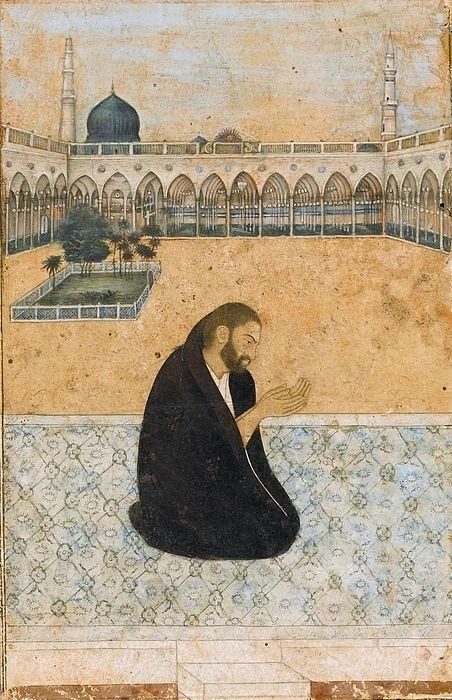
Hence, when we mention the Absolute in its Absoluteness, we are referring to the essential necessity of the Absolute, or one can say the absolute Absolute, the dhat (Divine Essence). The sage comes to know and witness the Absolute through a lower level than the dhat, and that is the ahadiyya (Unity), which “represents the Absolute as it is turning toward self-manifestation” (Izutsu 1967). In comprehending this witnessing, this quote from Ibn Arabi illuminates this matter in the utmost manner:
“The Divine Essence (dhat) discloses itself only in a form required by the very 'preparedness' of the locus in which occurs the self-manifestation. There can be no other way. Thus the locus of the Divine self-manifestation does not see anything, other than its own form as reflected in the mirror of the Absolute. It does not see the Absolute itself. Nor is it at all possible for it to do so, although it is fully aware of the fact that it sees its own form only in the Absolute (Burckhardt and Austin 1980).”
This parallels the experience of an individual gazing into a mirror in the physical world. Just as when we look at reflections or our own image in a mirror, we do not perceive the mirror itself, yet we are cognizant that our reflection exists solely because of the mirror's presence. Therefore, when the human tongue speaks of the Absolute it speaks of it at the level of self-manifestation, and for Ibn Arabi and the Perfect Man, which we shall dwell in detail later, the Absolute refers to the one with no limitations, the One who is beyond all existents, but de facto all existents derive from Him, it is Allah, the Arabic name for God, the Living, the Everlasting, the Being, the eternal reality that transcends the limitations of the material world; encompassing all dualities and contradictions within itself, reconciling them in a perfect unity. It is the source from which all manifestations arise and to which they ultimately return.
Encompassing a concept by defining it, alludes to outlining and giving the concept borders and therefore limiting it. And this is exactly what Zhuangzi realized after trying to define the Absolute through his train of reasoning, where he said:
“Thus the highest stage of Knowledge is remaining motionless in what cannot absolutely be known (by reasoning). Is there anyone who knows the Word which is no longer a word'? Is there anyone who knows the Way which is not even a 'way'?...no matter how much you pour water into it, it will never become full; and no matter how much you dip up water therefrom, it will never run dry. (Izutsu 1967)”
With this reasoning, the Absolute surpasses all conceptualizations. In Pre-Qin Daoism, the Absolute is synonymous with the Taoor the Way. The Tao is the central concept in Pre-Qin Daoism, representing the ineffable source and sustainer of the universe. It is the underlying reality that cannot be fully captured or described by words or concepts. The Tao is both transcendent and immanent, pervading all things while remaining beyond conceptual grasp. Hence, aligning with Laotzu’s conception of the Way, “The Way in its absolute reality (ch'ang) has no name. Interminably continuous like a thread, no name can be given to it. The Way is hidden and nameless” (Izutsu 1967). Hence, this illuminates the indescribable nature of the Taoand the limitations of language in expressing its essence, as the renowned opening of the Tao Te Ching states “The 'way’ which can be designated by the word ‘way’ is not the real Way. The 'name’ which can be designated by the word ‘name' is not the real Name” (Laozi, Hamill, and Kazuaki Tanahashi 2007). Hence, the absolute Absolute is the gate of all wonders, the unknown and unknowable, it is, in essence, the ‘Nameless’. Reason and thought cannot conceive it, nor can the senses observe it, it is “an absolute Transcendent”. Thus, it is the same as non-Being, for whatever is unthinkable and undetectable, for man, is ‘Nothing’ (wu’) since it transcends our human cognition. As Izutsu (1967) states it “appears as ‘Nothing’ only when looked at from our point of view…Otherwise the Way in itself is- far from being ‘nothing’- Existence in the fullest sense of the word”. Therefore, it is the origin of all existents. It represents positive absence, in which it is Non-being carrying the potential for Existence, like darkness, which is not absent of light, but too full of it, it is itself Light, as Laotzu says “A ‘way’ which is (too) bright seems dark” (Laozi, Hamill, and Kazuaki Tanahashi 2007).
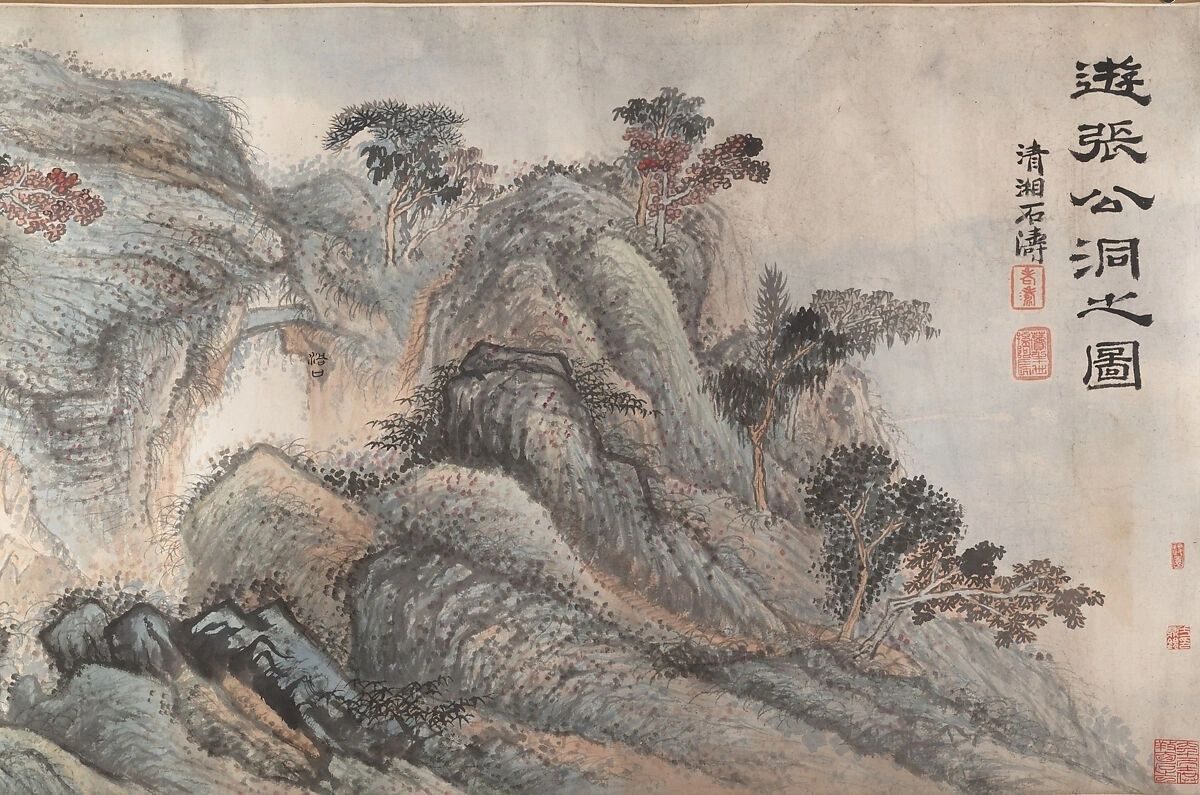
Additionally, it is pivotal to note that Laotzu also mentions that it can be named through several names such as the ‘Great’, hence proposing no fixity to the Absolute. In a sense, similar to water in that only when water assumes different colors does it have ‘names’. It is this difficulty that we encounter in trying to employ a name on the Absolute, in which it is not a ‘thing’ the way we comprehend ‘things’. That is the reason why “Lao-tzu emphasizes so much that all the names he proposes are nothing but makeshifts” (Izutsu 1967). Hence, we come back to the Way or the Absolute as the Mystery of the Mysteries.
Ultimately, Sufism and Pre-Qin Daoism converge on an indefinable, transcendent Absolute—haqq in Sufism and Tao in Daoism. Thinkers like Ibn Arabi and Laozi illustrate that the Absolute defies human comprehension and language. This paper reveals a universal quest for the divine, transcending cultural boundaries. Ultimately, the Absolute invites us to embrace the mystery beyond names, urging us to ponder: Can the ineffable ever truly be known?
Works Cited
Burckhardt, Titus, and R W J Austin. 1980. The Bezels of Wisdom. New York: Paulist Press.
Izutsu Toshihiko. 1967. Sufism and Taoism: A Comparative Study of the Key Philosophical Concepts of IbnʻArabı̄ and Lao-Tzŭ and Chuang-Tzŭ.
Laozi, Sam Hamill, and Kazuaki Tanahashi. 2007. Tao Te Ching : A New Translation. Boston: Shambhala.
Poceski, Mario. 2009. Introducing Chinese Religions. London ; New York: Routledge.
Shahab, Ahmed. 2017. What Is Islam? : The Importance of Being Islamic. Princeton; Oxford: Princeton University Press.
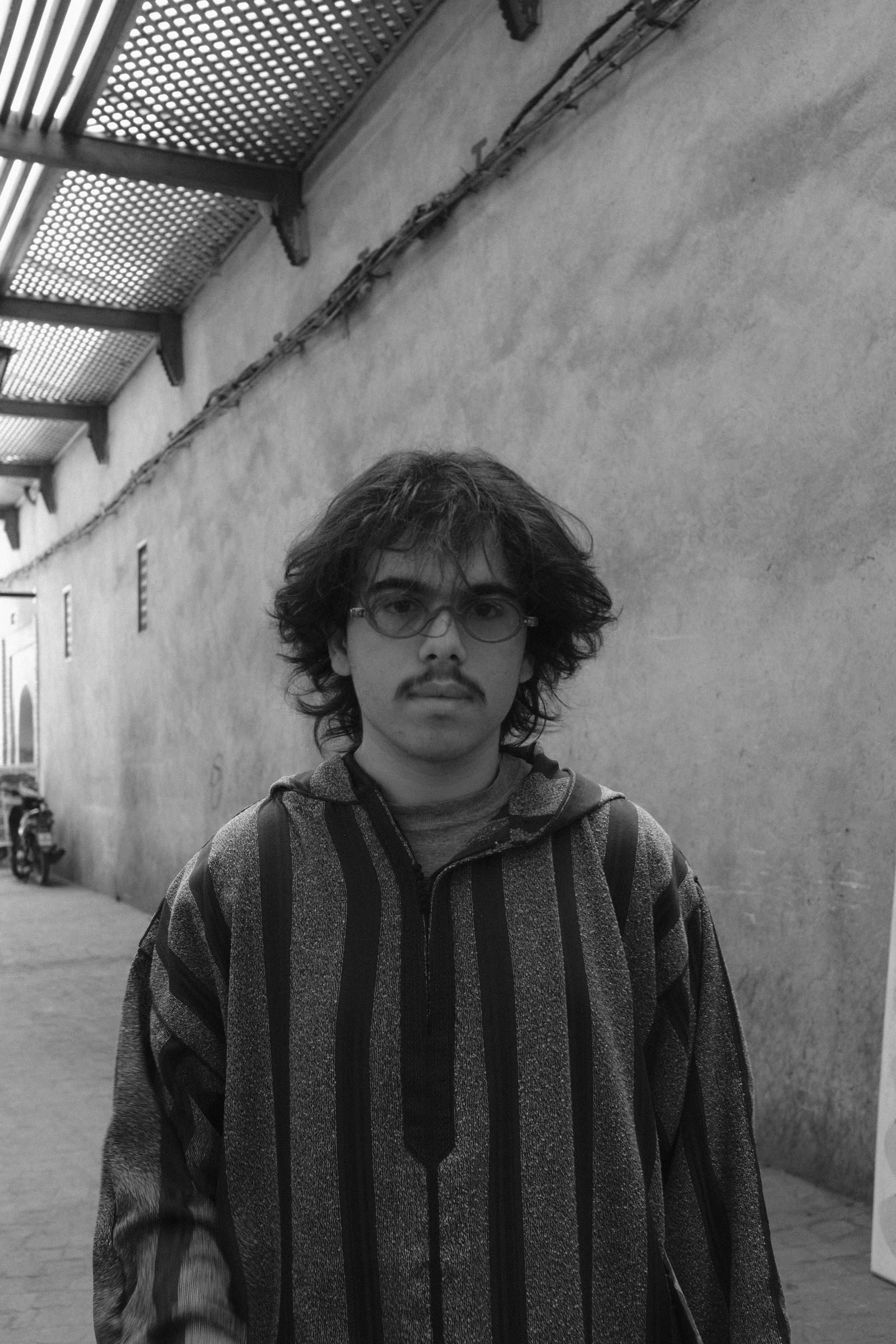
Mohamad Chehab is a dedicated student currently pursuing a Bachelor's degree in Sociology with a minor in Anthropology at the University of Florida. Prior to his studies at UF, Mohamad spent two years in Istanbul, where he attended Ibn Haldun University and Usul Academy. During his time in Istanbul, he also had the privilege of studying under traditional Islamic scholars, enriching his academic and cultural perspectives. Mohamad's diverse educational background reflects his commitment to a comprehensive understanding of social sciences and humanities.