Essays48
Holistic Healing: The Bimaristans of Early Islamic Medicine
By: Hajar Ziyat
Imagine a time in history when hospitals not only healed the body but also nurtured the soul—this was the transformative era of Bimaristans in early Islamic societies, where holistic healthcare flourished under the guiding principles of Ilm al-Nafs, the study of the soul. This article encourages an in-depth exploration of Bimaristans (also known as Dar al-Shifa), which were pioneering medical institutions in the Islamic world and influential on the broader development of hospitals and healthcare systems.
To understand the use of Bimaristans in Islamic civilization, we must comprehend the principles of Islamic psychology, which laid the foundation of these hospitals. One of the many initiators of this practice is Abu Zayd Ahmed ibn Sahl Balkhi. This 9th-century Persian Muslim polymath made significant contributions to various fields, including geography, mathematics, medicine, psychology, and science. Among his most notable works is the manuscript “Masalih al-Abdan wal Anfus” (The Sustenance of the Soul), which discusses both physical and mental illnesses with astonishing modern relevance. Balkhi's manuscript is particularly remarkable for its detailed descriptions of conditions resembling what we now call obsessive-compulsive disorder (OCD), centuries before the earliest Western descriptions. This work, recently translated in part by Dr. Rania Awaad, highlights the sophistication of early Islamic medicine and psychology, with striking similarities to the Diagnostic and Statistical Manual of Mental Disorders (DSM-5-TR), the foremost resource for contemporary mental health clinicians.
Islamic teachings, particularly the sayings of Prophet Muhammad, played a crucial role in the development of medical knowledge. The hadith "For every illness is a cure" (Sahih Muslim) inspired early Muslim scholars to explore and understand all forms of illness, without discrimination between physical and mental ailments. This holistic approach is reflected in the term "psychology," which combines the Greek "psychē" (soul) and "logia" (study), translating to "the study of the soul." The Arabic equivalent, "علم النفس" (Ilm al-Nafs), also means "the study of the soul," indicating a broader understanding of mental health compared to the often limited scope of modern psychology, which tends to focus primarily on cognitive and behavioral sciences.
The concept of institutional healthcare can be traced back to pre-Islamic civilizations, such as the Greeks, Romans, and Persians. However, the Islamic world uniquely integrated these influences and expanded upon them, creating a comprehensive healthcare system that was accessible and advanced for its time. The Greco-Roman tradition of Asclepions (healing temples) and the Persian Empire's Gondeshapur Academy, a center for medical learning, influenced early Islamic medical practices. The synthesis of these traditions, combined with Islamic principles, laid the groundwork for the development of Bimaristans.
Accordingly, the emergence of Bimaristans was significantly influenced by Islamic values and teachings. The Qur'an and Hadith emphasized the importance of caring for the sick and the needy, enriching a culture of compassion and charity and encouraging the provision of healthcare as a form of charity (sadaqah) and community service. Distinguished figures in early Islamic society, including Prophet Muhammad, advocated for the treatment of the sick, reinforcing the moral imperative to establish healthcare institutions. The establishment of Bimaristans, or "Dar al-Shifa" (houses of healing), was a direct outcome of this integrated approach to health. The term "Bimaristan" is derived from the Persian words "Bimar" (illness) and "stan" (place), and was Latinized to "maristan." These institutions were not just hospitals but comprehensive healing centers that addressed both physical and mental health issues. Initially, mobile healing units accompanied Muslim expeditions to provide medical care, but by the 8th and 9th centuries, substantial and permanent Bimaristans were established, featuring specialized sections for various medical fields, including psychiatry.

Furthermore, leading figures and rulers notably contributed to the development and patronage of Bimaristans. Caliph Harun al-Rashid, who reigned from 786 to 809, established one of the earliest Bimaristans in Baghdad, setting the stage for Baghdad's emergence as a major center of medical knowledge. Nur ad-Din Zangi, ruler of the Zengid dynasty, founded the renowned Bimaristan al-Nuri in Damascus in 1154, which set new standards in hospital management. Similarly, Sultan Al-Mansur Qalawun, who ruled from 1279 to 1290, established the Qalawun Complex in Cairo, including an advanced Bimaristan known for its comprehensive medical services and training.
The translation movement during the Abbasid Caliphate played a pivotal role in the development of Bimaristans by integrating and expanding upon medical knowledge from various cultures. The House of Wisdom in Baghdad was a key institution where Greek, Persian, and Indian medical texts were translated into Arabic. This knowledge was then disseminated through Bimaristans.
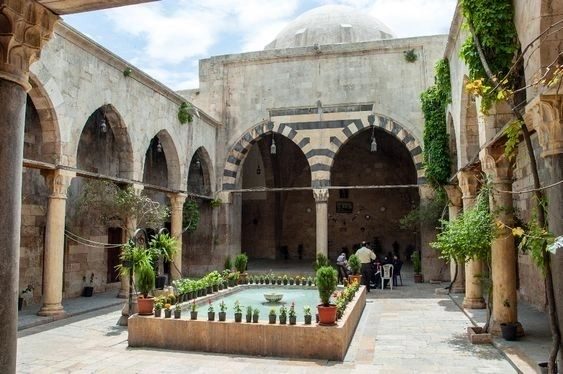
Noteworthy physicians like Ibn Sina (Avicenna) contributed significantly to medical science. He created a complete philosophical system in the Arabic language. Considered as the successor to Galen, his great medical treatise, The Canon of Medicine, an encyclopedia in five books, was the standard textbook on medicine in the Arab world and Europe in the 17th century. Moreover, Bimaristans were innovative in their holistic approach to health, incorporating both physical and mental health treatments. They utilized talk therapies, medications, environmental and exposure therapies, such as sound therapy and music (maqamat), to promote overall well-being. These institutions also featured beautiful gardens and fountains, providing a therapeutic environment that addressed all the senses.
Despite their decline due to colonization, political instability, and the shift towards secular medical concepts, the legacy of Bimaristans remains monumental. Modern Muslims and society as a whole are encouraged to reclaim this heritage and rewrite the narrative, one that demonstrates their contribution in the forefront of psychology and medicine. Recognizing the historical contributions of Islamic scholars like Abu Zayd al Balkhi, Al-Razi, Ibn Sina, and many more to the fields of psychology and medicine will undoubtedly enrich modern practices and reaffirm the impact of early Islamic scholarship on holistic healthcare.
Aylin Hajar Ziyat is a student with a strong passion for psychology and biology.