Essays47
Sacred Tongues: Unveiling Yoruba Language's Spiritual Essence
By: e.Soul
The Golden Thread is the notion or belief that across the known world's diverse spiritual beliefs, religions, and faiths, there exists an element of truth that is inherent to them all. To borrow a thread for the sake of discourse with you, and amid this unifying thread of wisdom, since even before antiquity, there has existed and persists a principle that dictates, “In the beginning was the Word” (John 1:1, NIV).
Language can truly be considered both a spiritual and, in some respects, a scientific phenomenon. Empirically quantifiable phenomena occur as a result of cognitive intentions and processes that emanate from our volition, or spirit. To postulate further and more concisely, language serves as the medium through which the spirit interacts with the mind, thereby manifesting in the physical realm. Consequently, the language we use to express ourselves determines the efficacy with which we manifest, transmute, and transmit the intentions of the spirit, resulting in the creation of our shared physical reality. Language, therefore, is greater than just a means of communication; it can be considered the essence of life itself. All words thus have and hold the power of creation, and none understand this more than the Yoruba people.
The Yoruba people and their language encapsulate an ancient and profound heritage, steeped in millennia of rich cultural and historical significance. Stephen Adebanji Akintoye notes that "the Yoruba civilization is one of the oldest in Africa, with its people known for their profound spiritual and cultural contributions" (Akintoye, 2010, p. 12). This deep historical consciousness has helped the Yoruba maintain their cultural identity despite the pressures of modernity and globalisation.
The city of Ile-Ife, often considered the spiritual heart of the Yoruba people, stands as a testament to the depth and antiquity of their spiritual practices. Founded around 500 AD, Ile-Ife is renowned for its intricate bronze and terracotta sculptures, which depict the Orishas and other sacred symbols. As Samuel Johnson describes, "Ife is regarded by the Yorubas as the centre of the creation of the world and the birthplace of mankind" (Johnson, 1921, p. 5). According to the Encyclopedia Britannica, "Ile-Ife is considered the mythical birthplace of the Yoruba people and holds great cultural and historical importance" (Encyclopedia Britannica, 2023).
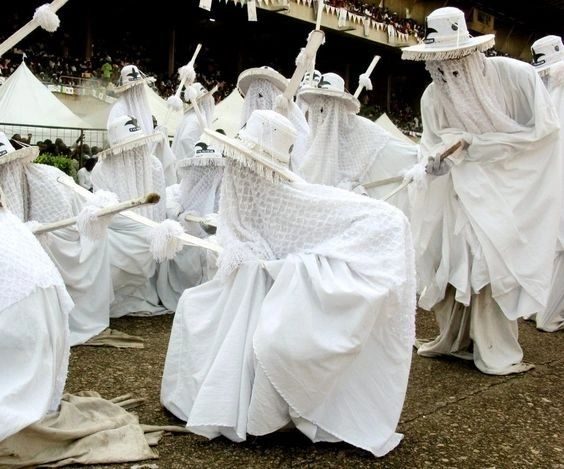
The Yoruba spiritual pantheon consists of a myriad of deities known as Orishas, each representing different natural, human, and energetic phenomena. They are revered through rituals, prayers, and offerings. The potency of these spiritual practices is heightened by the language's inherent musicality, which transforms spoken words into powerful invocations and in other realities, music.
The contribution to global spirituality extends far beyond the borders of the Yoruba lands. The transatlantic slave trade, a dark chapter in human history, inadvertently facilitated the spread of African spiritual practices to the Americas and the Caribbean. In places like Brazil, Cuba, and Haiti, Yoruba spirituality merged with indigenous beliefs and Catholicism, giving rise to vibrant syncretic religions such as Candomblé, Santería, and Vodou. These religions, deeply rooted in Yoruba traditions, emphasise the importance of community, the veneration of ancestors, and the cyclical nature of life.
The Yoruba concept of 'Ase' (pronounced 'ah-shay') epitomises the intrinsic link between language and spirituality. Ase is the vital force that empowers words and actions, enabling them to produce change. As Laurenti Magesa explains, "The notion of ‘Ase’ is central to Yoruba cosmology, representing the life force that permeates all existence and the power of the spoken word to invoke change and manifest reality" (Magesa, 2013, p. 87). It is the divine energy that flows through all things, connecting the physical and spiritual realms. When Yoruba people speak, pray, or perform rituals, they invoke Ase to bring their intentions to fruition. This concept underscores the belief that words are not merely symbolic but are imbued with the power to shape reality.
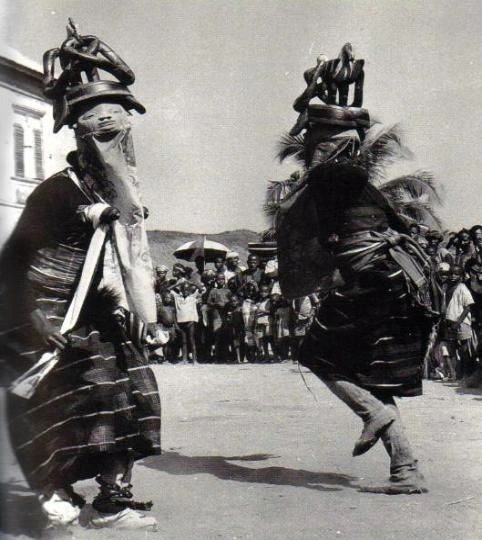
Spirituality in Yoruba culture is also expressed through Ifa divination, a sophisticated system that combines oral tradition with intricate symbolism to provide guidance and wisdom through a binary system (predating computers by millennia). Awo Fa’lokun Fatunmbi notes, "Ifa divination is not just a means of seeing the future but a way of understanding the present and guiding actions to align with one's destiny" (Fatunmbi, 1992, p. 45). The Ifa corpus, a vast collection of sacred texts, is recited in Yoruba and contains a wealth of knowledge on ethics, cosmology, and human nature. Ifa priests, known as Babalawos, use divination tools such as the Opele chain or kola nuts to interpret the divine messages from Orunmila (pronounced oar-roon-me-la), the embodiment of wisdom and divination. This practice highlights the Yoruba belief in the interconnectedness of all things and the cyclical patterns of life.
In modern times, the resilience of Yoruba spirituality and its language can be seen in the global Yoruba diaspora, where traditions are preserved and adapted. Festivals such as Osun-Osogbo celebrated annually in Nigeria, and Brazilian Candomblé ceremonies exemplify the enduring cultural practices. Yoruba music genres like Juju and Afrobeat, pioneered by artists such as King Sunny Adé and Fela Kuti, continue to celebrate and disseminate Yoruba culture globally. Spiritual movements, including Vodou in Haiti, Santería in Cuba, and Candomblé in Brazil, have their roots in Yoruba religious practices and highlight the adaptability and widespread influence of Yoruba spirituality. Laurenti Magesa in What Is Not Sacred?: African Spirituality underscores this adaptability, stating that "Yoruba spirituality, with its deep reverence for life and nature, adapts seamlessly to different environments, while retaining its core principles" (Magesa, 2013).
The preservation of the Yoruba language, with its rich lexicon and idiomatic expressions, is essential in maintaining the integrity of these spiritual practices, ensuring that the essence of Yoruba heritage remains vibrant and relevant. Patricia Smith Churchland emphasises the importance of language in cognitive processes, noting that "language not only reflects our thoughts but also shapes the way we understand and interact with the world" (Churchland, 1986, p. 102).
In embracing the spiritual essence of the Yoruba language, we not only honour the heritage of a remarkable people but also acknowledge the enduring power of African spirituality in shaping our collective human experience. Awo Fa’lokun Fatunmbi in Ori: The Ifa Concepts Of Consciousness asserts that "the Yoruba understanding of consciousness and language connects the individual’s inner spiritual essence with the outer world, creating a holistic approach to existence" (Fatunmbi, 1992, p. 78). The Yoruba language, with its eloquent expressions of divine truths, serves as a bridge between the earthly and the spiritual, offering a glimpse into a world where every word is imbued with sacred significance.
The Yoruba tradition offers a profound insight into the interconnectedness of all life, where language, spirituality, and science converge to reveal deeper truths about our existence. The resilience of Yoruba spirituality and language in the global diaspora, alongside the celebration and preservation of its rich traditions, music, and art, keeps its spiritual heritage alive, ensuring that the legacy of the Yoruba people continues to inspire and thrive.
Africa's contribution to global spirituality, exemplified by the Yoruba culture, is a testament to the continent's profound influence on the human quest for meaning and connection. The Yoruba language, with its eloquent expressions of divine truths, serves as a bridge between the earthly and the spiritual, offering a glimpse into a world where every word is imbued with sacred significance. In embracing the spiritual essence of the Yoruba language, we not only honour the heritage of a remarkable people but also acknowledge the enduring power of African spirituality in shaping our collective human experience. As we continue to explore and celebrate these contributions, we enrich our understanding of the diverse and beautiful ways in which humanity connects with the divine.
e.SOUL is a multifaceted creative whose eclectic journey spans property, music, art, philosophy, and technology. As an empath, he draws on his diverse experiences to explore and showcase the intricacies of the human experience through written and spoken word. Embracing an all-encompassing perspective, e.SOUL blends contrasting elements to find deeper meaning in art and life, inviting others to join his quest for understanding and connection