Essays45
Muhammad Asad: The European Trailblazer of Islamic Thought
Khaled J. Mehio
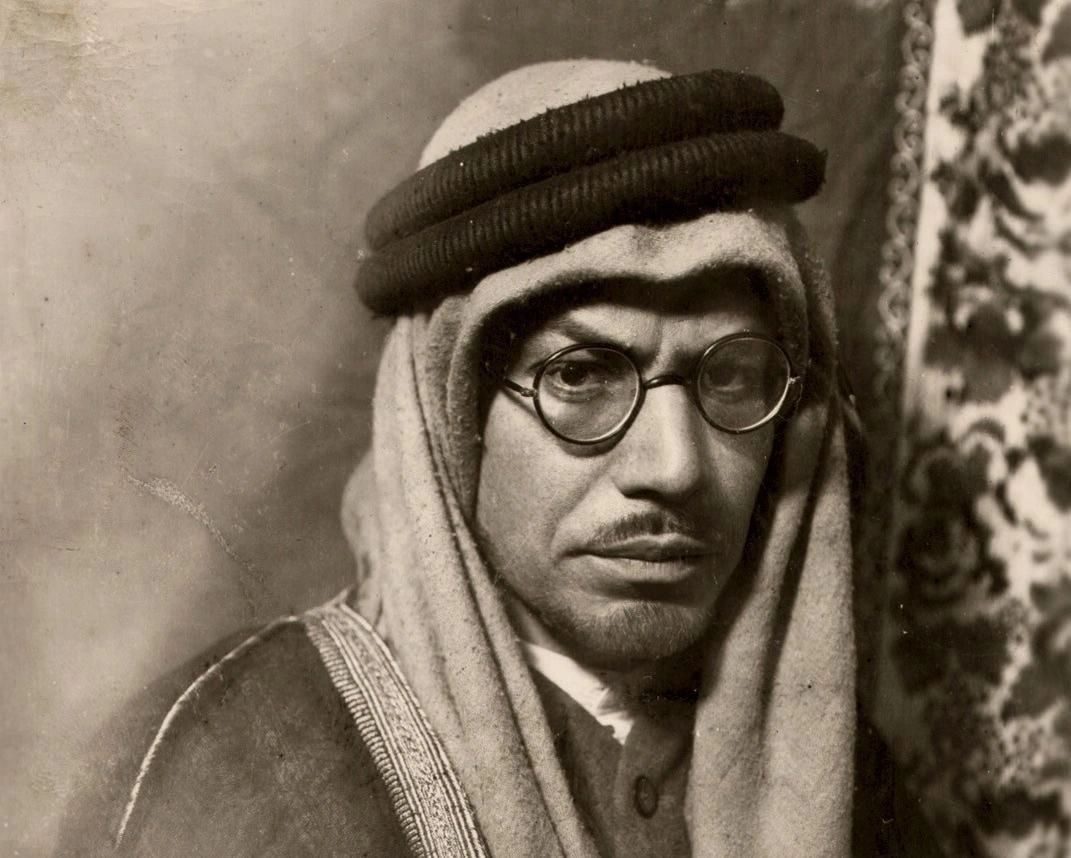
On a bright day in Spring 1922, a young twenty-one-year-old Austrian jew, who was working as a correspondent for the renowned Frankfurter Zeitung, ventured into an unusual journey to discover the East. A journey to the romantic Orient full of romantic experiences and tales. Little did he know that this journey would bring such a pivotal change in his life that he would cease to be the man he had known.
Leopold Weiss was born in the city of Lwow in the summer of 1900 to a conservative Jewish family and his grandfather was an orthodox rabbi. At a young age, his father pushed him to acquire religious knowledge by studying the Old Testament and Talmud, which enabled him to pick up Hebrew and Aramaic. The more Weiss studied the Talmud, the more alien he became to Judaism. At the time he crossed the sea and the desert to the east, he came into his first experience at dawn on the train heading to Jerusalem. It was a very cold dawn when an Arab Muslim shared half his cake with Weiss saying “Tafaddal”. He said to himself “Where in Europe do you find this?”. There, in Jerusalem, he started to discover Arab-Islamic culture. He read extensively and was supposed to write his experiences to be published by Frankfurter Zeitung. Unlike what his European friends expected, Weiss took the side of Arabs, even getting into long disputes with the Zionist leader Weizmann; defending Arab’s rights in Palestine. The book was finally published under the title of “The Unromantic Orient”.
In 1926, Asad came back from the east to Berlin to meet the manager of Frankfurter Zeitung after his successful writings that made him prominent in Europe. He decided to resign from his post so that he could do more research about Islam. A few months later, he had embraced Islam after reading a Surah from the Quran, when he realized that no man could ever write such a book, as the author seemed to know more about humankind than they do about themselves. He took the name of Muhammad Asad and headed to Mecca and Medina to perform Hajj. In Arabia, Asad fell in love with the bedouins, with whom he lived and from whom he picked up Arabic. He crisscrossed Arabia by dromedaries with his bedouin friend Zayd. The experiences of the desert were close to his heart, which he vividly expresses in his autobiography. “We ride, ride, two men on two dromedaries, the sun flames over our heads, everything is shimmer and glimmer and swimming light. Reddish and orange-colored dunes, dunes behind dunes beyond dunes, loneliness and burning silence, and two men on two dromedaries in that swinging gait that makes you sleepy, so that you forget the day, the sun, the hot wind, and the long way (Asad 1996)." During the time Asad was in Arabia early in the 1930s, Grand Sanusi came to Medina. Asad spent long hours in his company discussing the desperate situation of the mujahidin who were fighting against the Italian occupation. Upon the order of Grand Sanusi, Asad set out on an adventure to Cyrenaica to support the lion of the desert Umar Al Mukhtar in his rebellion against the colonial forces in Libya.
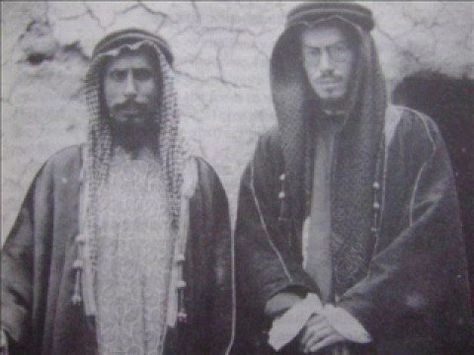
In 1932 Asad decided to leave Arabia to British India after realizing that Arabia wouldn’t be the same anymore after the discovery of oil. There, in British India, he started receiving invitations to lecture about his journey of embracing Islam to University students. He decided to address the relationship between the East and West instead. Those lectures were a huge success and were later published in a small book titled “Islam at the Crossroads”. Asad states that the Muslim world must decide either to maintain its culture or lose its morals to Western ideologies and lifestyles. He warns that the Muslim world doesn’t have much time to decide on which road to take. Upon the suggestion of the prominent scholar Muhammad Iqbal, Asad embarked on the laborious work of translating the Sahih Al Bukhari to English for the first time in history.
After World War II erupted in 1939, Asad was arrested in British India because of his Austrian passport. The police inspector suddenly broke in and showed him a list where Asad’s name was at the very top regardless of Asad’s anti-Nazi attitude. He spent six years in prison as an internment till the war ended and was set free on December 14th, 1945. Upon his release, Pakistan was about to be recognized as an independent state. After the partition from India, Asad took part in writing the constitution of Pakistan as well as establishing his own press ‘Arafat’ subtitled ‘A Monthly Critique of Muslim Thought’. He also led the Department of Islamic Reconstruction. Afterward, the Prime Minister suggested that Asad should go as soon as possible on an official tour to the Middle East to pursue the possibility of forming a League of Muslim Nations. Thus, it was indispensable to have a passport to set off on this task, and he became the first Pakistani citizen to own the very first official passport. Early in the 1950s, Asad represented Pakistan as a diplomat at the United Nations Headquarters in New York. He was determined to defend the rights of Arabs and Muslims while assuming this role at the UN. One day, after a long discourse with a diplomat in the UN about his journey, that diplomat suggested that Asad should write down his encounters with the Muslim world as they could be of high value for Westerners to read. Asad resigned from his post at the UN in 1952 to write his masterpiece spiritual autobiography: “The Road to Mecca”.
Asad then proceeded to publish several other works including “The Principles of State and Government in Islam” which was published by the University of California Press during his stay in Beirut between 1955 and 1957. Years later in 1964, Asad began a long journey spanning over seventeen years where he worked on writing a translation as well as commentary on the meanings of the Quran. In 1980 The “Message of the Quran” was finally published and it is highly cited to this day. Towards the end of his life, Asad was convinced that he should write a sequel to his autobiography, and thus “Home-coming of the Heart” was the last book Asad had written.
The story of how Asad walked out of Berlin, away from his people, away from the West, and into an unusual spiritual life can be best expressed in his own words: “After all, it was a matter of love; and love is composed of many things; of our desires and our loneliness, of our high aims and our shortcomings, of our strengths and our weaknesses. So it was in my case. Islam came over me like a robber who enters a house by night; but, unlike a robber, it entered to remain for good (Asad 2005)". He passed away peacefully and was buried in a small Muslim graveyard in Granada opposite Al-Hambra Hill on February 20th, 1992.
Works Cited
Asad, Muhammad. 2005. Islam at the Crossroads. The Other Press.
Asad, Muhammad. 1996. The Road to Mecca. Kuala Lumpur: Islamic Book Trust,, R.
Khaled J. Mehio is a passionate lifelong learner about the world of literature, civilization, and culture. His desire to discover all the beauty the world has to offer is fueled by his full dedication and immersion in various kinds of arts, music, and sports. In addition to his vocation in the financial field, he blends his technical expertise with a special delight in arts and literature. Khaled is a Certified Management Accountant with more than ten years of experience, holding an MBA in Finance from the Lebanese American University.